Cannabis Hardware: Hub for Licensed Brand Buyers
Cannabis hardware guide for licensed brands: compare vape formats, current MOQ and lead-time quotes, child-resistant packaging, QA, and supplier questions.
.jpg&w=1920&q=75)
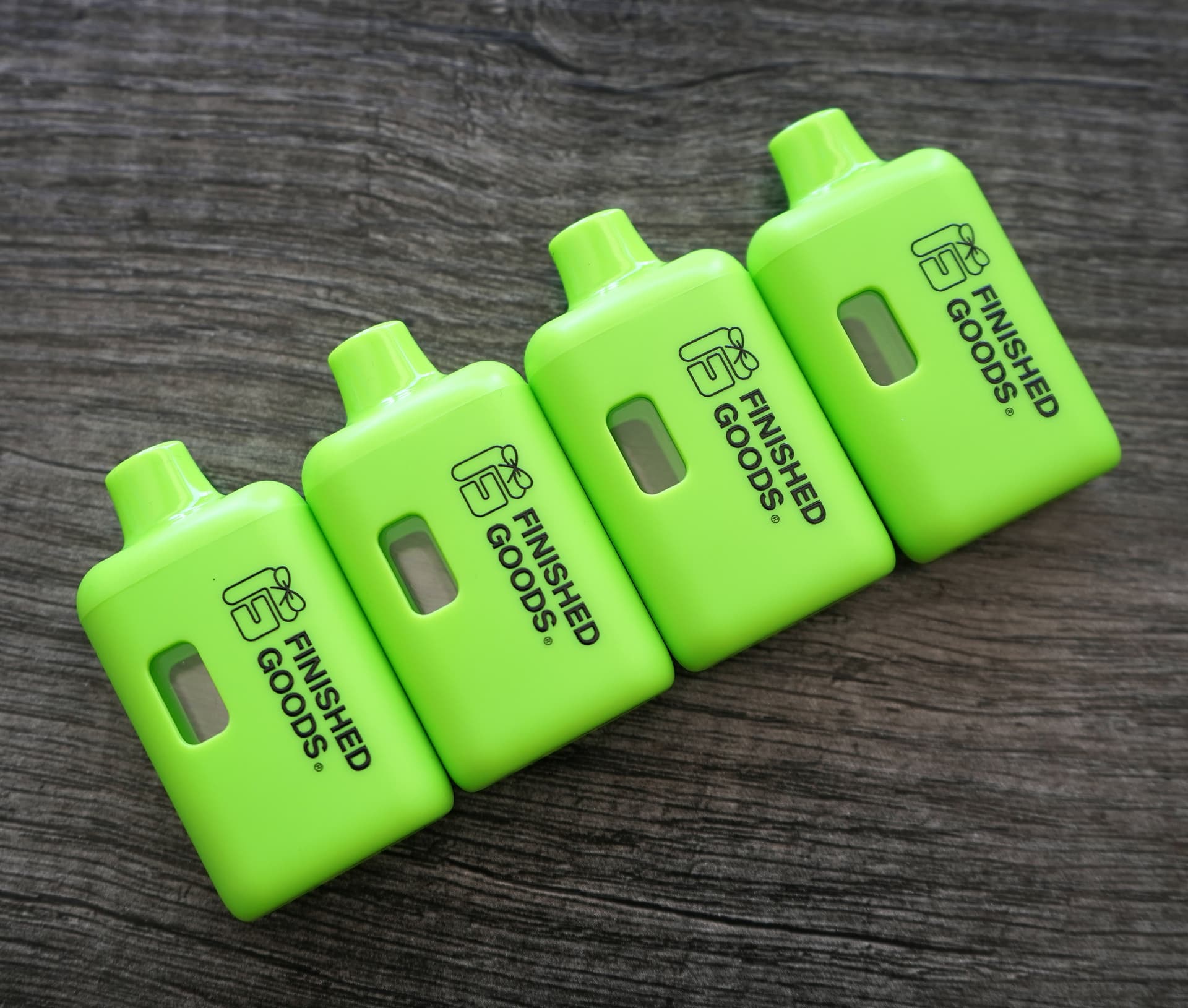
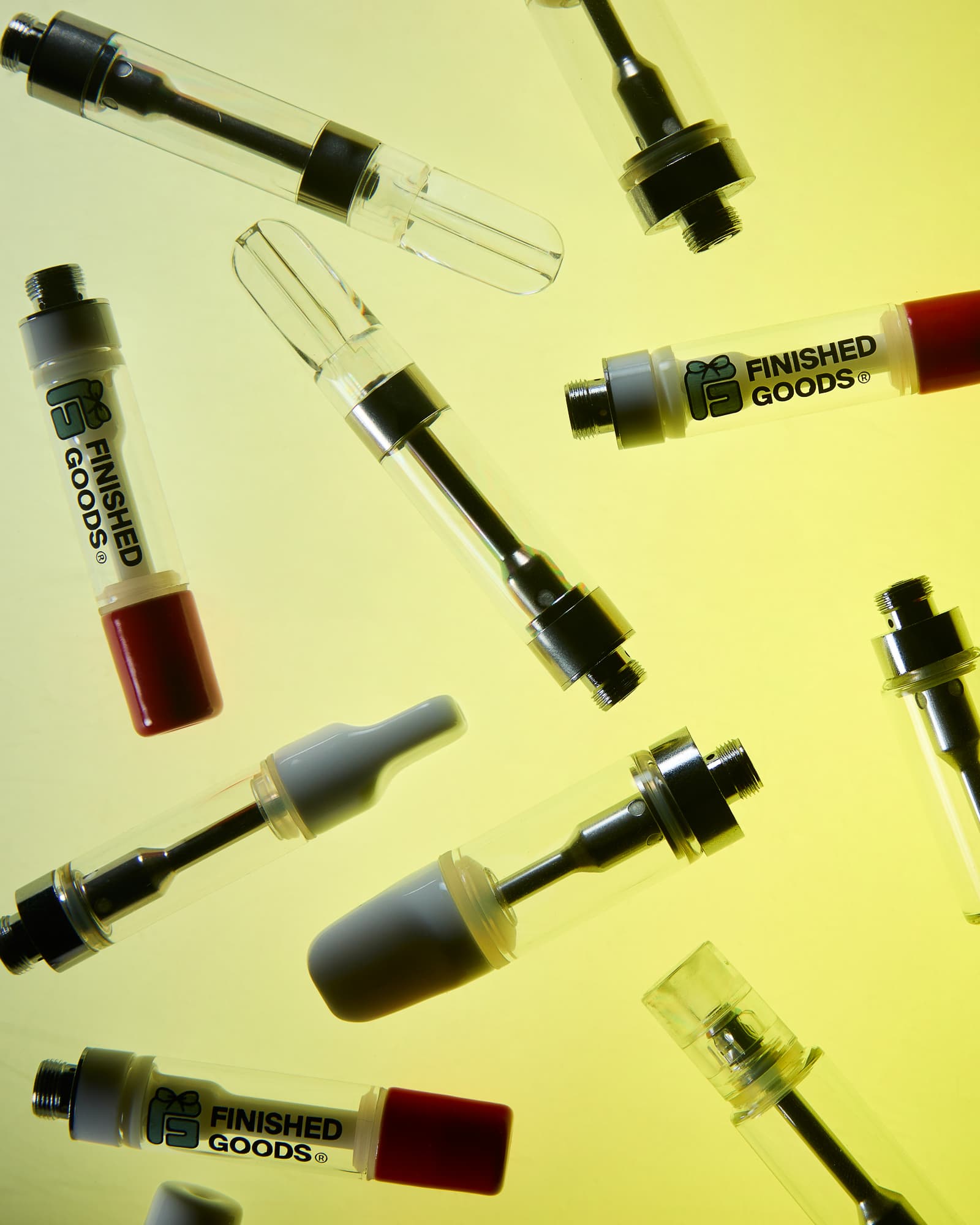
Cannabis hardware for licensed brands covers 510 cartridges, AIO disposable vapes, batteries, child-resistant packaging, and pop-top tubes. Finished Goods supplies white-label and custom cannabis hardware and scopes MOQ, production timing, documentation, and packaging against the exact configuration and current quote. The most common hardware failures, clogs, leaks, burnt hits, and fill incompatibility, are sourcing decisions, not production accidents. This hub explains what each hardware category controls and what to validate before signing a supplier PO.
Buyer brief: before requesting samples, define the oil type and viscosity band, fill equipment, capacity, target landed cost, power requirement, acceptable clog and leak threshold, launch states, packaging format, launch date, and forecast volume. Send the same brief to every supplier, require the same test evidence back, and reject any recommendation that is not tied to your oil and production process. That makes vendor comparisons faster and exposes generic, one-device-fits-all proposals before they reach a purchase order.
Cannabis Hardware Buying Guide for Dispensary and Retail Teams
Dispensary and retail buyers evaluating finished vape products or hardware programs should compare the complete, market-ready configuration, not a device in isolation. Confirm the licensed supply path, exact SKU and revision, packaging compatibility, current commercial quote, delivery milestones, and the evidence that applies to the product being ordered.
| Format | MOQ and timing to compare | Child-resistant packaging and evidence |
|---|---|---|
| 510 cartridge program | Request a current quote by cartridge revision, finish, decoration, sample stage, and forecast quantity. Separate approval, production, freight, and delivery dates. | Confirm the cartridge, battery if bundled, tray, and retail package fit. Obtain the test report or certificate applicable to the complete package when required. |
| AIO vape program | Request a current quote by device revision, capacity, finish, decoration, sample stage, and forecast quantity. Record each launch milestone in writing. | Confirm the filled-device orientation, tray, closure, and retail package as one system. Verify that any child-resistant evidence covers the actual package and revision. |
| Hardware plus retail-packaging bundle | Quote the hardware and packaging as a linked bill of materials so quantity breaks and production dependencies are visible. | Require matched artwork proofs, compatibility checks, applicable compliance documents, lot traceability, and a retained approved sample. |
Use those quote-specific answers to compare suppliers on the same basis. Reconfirm them before every reorder because availability, production calendars, packaging requirements, and product revisions can change.
Frequently Asked Questions: Cannabis Hardware for Licensed Brands
What is cannabis vape hardware?
Cannabis vape hardware refers to the physical devices used to vaporize cannabis oil: 510-thread cartridges, all-in-one disposable vapes, batteries, and supporting accessories. For licensed brands, hardware selection determines product reliability, compliance exposure, and consumer experience across every SKU.
What MOQ should I expect from a cannabis hardware supplier?
MOQ depends on the exact hardware revision, finish, decoration, packaging, sample stage, and production route. Ask for a current written quote for each SKU and separate stock, white-label, custom, and tooling quantities rather than relying on a category-wide range. Keep the approved quantity, revision, and inclusions with the purchase order.
What are typical lead times for cannabis hardware?
Lead time also depends on the exact configuration and current production calendar. Request separate dates for artwork approval, samples, production, quality review, freight, and delivery, and confirm whether any expedited option is actually available for the quoted SKU. Build the launch plan from that dated supplier commitment rather than a generic category timeline.
What documentation should a cannabis hardware supplier provide?
Ask the supplier for the documentation applicable to the exact product and destination market, such as available materials declarations, heavy-metals test records, lot-level QC records, and any child-resistant package test report or certificate that applies to the complete package being purchased. Verify the document scope, product revision, laboratory, date, and market requirement with the brand's compliance team before treating it as approval.
Cannabis hardware is not a commodity purchase, and licensed brands that treat it that way often discover that assumption later at the worst possible moment, at retail, during a compliance review, or when customer complaints start stacking up.
For a licensed brand, hardware decides whether the product works in the field, passes compliance review, launches on time, and earns a repeat purchase. The wrong cartridge, AIO device, battery, tube, or child-resistant package does not just create a vendor issue. It creates returns, regulatory exposure, and margin loss.
This hub covers the formats that matter most: 510 cartridges, all-in-one vapes, batteries, child-resistant packaging, pop-top tubes, and retail accessories.
What Cannabis Hardware Actually Decides
Most licensed brands evaluate hardware too late, after pricing and marketing decisions are already made. They compare unit cost, MOQ, color options, and lead time before confirming whether the hardware is engineered for the oil going inside it. That sequence is backwards.
Cannabis hardware controls four operational outcomes:
Reliability. Clogs, leaks, flooding, burnt hits, weak vapor, and poor seals all become customer-facing problems. The consumer does not blame the atomizer or fill process. They blame the brand.
Compliance risk. Hardware and packaging both sit inside regulated supply chains. Heavy metals documentation, child-resistant certification, tamper evidence, and state-specific requirements all need supplier support. A supplier who cannot document the details is not reducing your risk.
Launch execution. Hardware delays cascade into fill delays, which push back retail. A supplier who cannot hold lead times or communicate production risk early turns your launch calendar into guesswork.
Consumer experience. Draw resistance, vapor density, flavor, mouthpiece feel, device weight, and packaging usability all influence whether a consumer comes back.
These are not separate decisions. They all begin with hardware selection, before the first unit is filled, packaged, or shipped.
Objective First. Subjective Second.
Most brands start hardware sourcing with subjective preferences: tighter airflow, larger clouds, a specific mouthpiece, a premium finish. Those things matter. They just do not matter yet.
The correct sourcing sequence is:
No clogs. No leaks. No flooding. No burnt or dry hits. No returns.
Only after those are solved should a brand optimize for airflow preference, vapor density, flavor intensity, form factor, and retail presentation.
A beautiful device that leaks during fill or in a consumer's pocket is a failed product regardless of how it looks. A cheap cartridge that clogs after a few uses is expensive once returns, refunds, and reputation damage are counted. A high-voltage battery cannot fix an atomizer that was never matched to the oil. Reliability is the foundation, everything else builds on it.
Category One: 510-Thread Cartridges
The 510-thread cartridge is the most established cannabis hardware format on the market, but its maturity does not make it a simple sourcing decision. A cartridge has to manage oil flow, heat, air, pressure, and consumer handling across the full life of the product.
The performance variables that actually matter include: atomizer core design, intake hole configuration, ceramic porosity, coil resistance, center post construction, tank material, mouthpiece fit, seal integrity, thread tolerance, and fill compatibility.
The most important question is whether the cartridge matches the oil going inside it. Thin oils can flood the atomizer and create leaks. Thick oils can starve the wick and produce dry hits. Rosin can burn quickly if the heat profile is wrong. Distillate can underperform if the atomizer cannot feed it consistently across the full fill volume.
Most cartridge failures are labeled "bad hardware." The real issue is usually mismatch, the oil, atomizer, airflow, voltage, fill process, and storage conditions were never treated as one system.
A serious supplier should explain in plain terms what viscosity range the atomizer was built for, how intake geometry manages saturation, how the cartridge is tested across temperatures, and what documentation supports the raw materials. Samples filled with your specific oil, tested under real use conditions, are required before any production scale-up.
Category Two: All-in-One Disposable Vapes
All-in-one disposable vapes integrate cartridge, battery, airflow path, oil chamber, atomizer, charging system, and enclosure into one finished consumer device. That integration reduces friction for the consumer and creates complexity for the brand, because any single component can mask or amplify a failure elsewhere.
With an AIO, a weak battery can look like poor vapor. A bad seal can look like an oil formulation issue. Poor airflow can feel like a clog even when the atomizer feeds correctly. The most common failure points to evaluate: battery underperformance, internal leaking, poor oil saturation, overheating, charging failure, condensation buildup, and inconsistent draw activation.
Larger-fill formats require more scrutiny. A 1-gram AIO and a 5-gram AIO are fundamentally different engineering problems. More oil in the device does not automatically mean a better consumer experience, if the device cannot vaporize that oil consistently from first hit to last, the value proposition collapses regardless of the per-gram cost advantage.
Category Three: Batteries
Batteries are routinely treated as accessories. That is a mistake. A 510 battery directly controls how a cartridge performs in the consumer's hand. Voltage output, preheat behavior, draw activation, battery capacity, charging quality, and connection tolerance all shape the vapor experience.
If the battery runs too hot, the oil burns. Too low, and vapor feels weak. An inconsistent connection sends the complaint back to the cartridge brand. Poor cell or charger quality still lands on the brand on the box.
Key questions before placing a battery order: What voltage settings are available? Is output consistent under load? Does it include preheat? How does it perform with the cartridge being sold? What is the expected cycle life? What failure rate has the supplier seen in the field?
A battery should never be selected in isolation. It should be tested as part of the finished product, with the cartridge, oil, and packaging it will ship alongside.
Category Four: Child-Resistant Packaging and Pop-Top Tubes
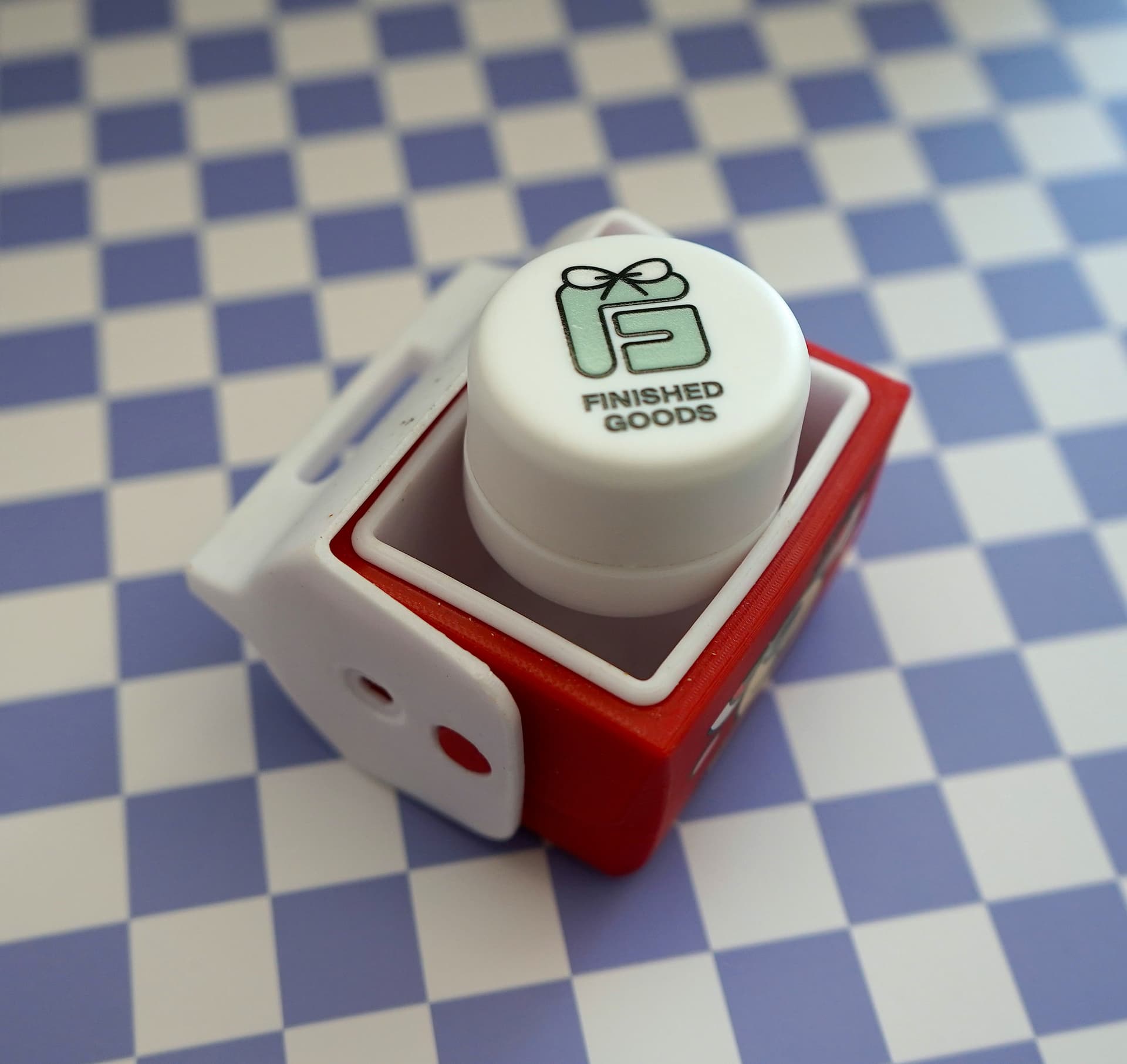
Cannabis packaging has two jobs: protect the product and satisfy every state program where the brand sells. Pop-top tubes, flexible pouches, boxes, glass, and custom child-resistant formats all carry compliance and execution risk. A packaging failure may not create a clog or leak, but it can stop a product from launching.
Key variables: child-resistant certification, tamper-evident design, dimensional consistency, closure force, material quality, print accuracy, label area, product fit, and state-specific compliance requirements.
"Child-resistant" is not enough on its own. Brands need to know whether the package has been tested by an accredited third party, whether the certification applies to the exact configuration being used, and whether the supplier understands the state program requirements.
Physical fit matters as much as compliance. A tube, box, or pouch should hold the product securely without rattle, damage, or poor shelf presentation. Packaging is the consumer's first physical interaction with the brand. Execution on the production floor matters as much as the original design intent.
Category Five: Supporting Accessories and Retail-Facing Hardware
Supporting cannabis hardware, branded mouthpieces, charging cables, display units, inserts, adapters, and trays, carries less direct regulatory risk but still affects brand perception.
A weak charging cable creates a battery complaint. A poor display makes premium products look cheap. A loose insert damages unboxing. Consumers do not separate the core product from its accessories during the purchase decision. They experience the full kit as one brand impression from unboxing through repeat use.
Source supporting cannabis hardware accessories with the same discipline applied to the primary device: not necessarily the same testing protocol, but the same fundamental standard, does this component support the product experience, or does it introduce a new failure point that reflects back on the brand?
The Supplier Questions Licensed Brands Should Ask
Every cannabis hardware supplier should answer operational questions without hiding behind vague claims. Start here:
What oil types or viscosity ranges is this hardware designed for? What are the known failure modes? How do you test for leaking, clogging, flooding, and dry hits? What is your lot-level QC process? What documentation is available for materials, heavy metals, and child-resistant compliance? What is the real lead time, not the best-case lead time? What happens if a lot fails during filling or in the field? How do you isolate root cause when there is a quality issue?
The specific answers matter less than the clarity, honesty, and detail behind them. A strong supplier can explain the tradeoffs behind every design and material decision. A weak supplier promises everything works with everything and avoids the harder engineering conversations.
Common Mistakes in Cannabis Hardware Sourcing
Optimizing for unit cost before understanding failure cost. A few cents saved on hardware disappears quickly once returns, refunds, and reputation damage are counted. Cheap hardware is only cheap when it works.
Treating components as interchangeable. Two cartridges with similar specs can perform differently with the same oil. Specs provide a useful starting point but they do not replace hands-on testing with your actual oil, fill process, and storage conditions.
Using higher voltage to compensate for poor atomizer selection. Higher heat can create more vapor short-term. It can also burn oil, mute flavor, and mask the real issue. Voltage is not a fix for cannabis hardware mismatch, it is a workaround that eventually makes the underlying problem worse.
Skipping pilot production runs before scaling. A sample that works once on a desk is not proof the hardware will survive filling, storage, transport, retail conditions, and consumer use.
Assuming supplier quality stays fixed. Factories drift. Materials change. Tooling wears. Assembly teams turn over. Supplier qualification is not a one-time event, it has to be built into the ongoing relationship.
What a Real Cannabis Hardware Supplier Relationship Looks Like
A good supplier relationship does not end at the purchase order. The right partner understands your oil, fill process, packaging constraints, launch calendar, and tolerance for risk. They communicate upstream changes before those changes appear as failures.
Quarterly business reviews should consistently cover: production yield, lead-time performance, field failure data, material or process changes, QC findings, open quality issues, and corrective actions.
The most important conversation is not what happens when everything goes right. It is what happens when something fails. Every supplier will eventually face a bad lot, a process miss, or an unexpected compatibility problem. What separates serious suppliers from weak ones is how fast they communicate, isolate root cause, protect the brand, and prevent recurrence.
Get that escalation and recovery process documented before the first purchase order is issued, not after the first return wave has already damaged customer trust.
The Pre-PO Hardware Approval Gate
A strong cannabis hardware program does not stop when an empty sample looks acceptable. Before a purchase order is released, the brand should have a signed record showing that the selected revision works with the production oil, filling equipment, operating procedure, packaging, storage conditions, and intended consumer use.
The approval gate should cover:
- the component drawing, revision, materials, tolerances, and traceability documents;
- oil identity, viscosity or formulation class, fill temperature, fill equipment, and closure process;
- leakage, clogging, flooding, dry-hit, airflow, and electrical-contact observations;
- use-life testing through the full intended fill, including the final portion of the cartridge or device;
- fit with the intended battery, tray, package, and filling-line fixtures;
- approved appearance, color, decoration, and packaging reference samples;
- supplier response, replacement, credit, and investigation terms for a failed lot; and
- the material, tooling, firmware, factory, or process changes that require customer notification and reapproval.
End-of-fill testing matters because hardware that performs well for the first few draws can change as the oil level falls. Qualification should include multiple filled units used from start to finish, with retained controls from the same sample lot.
Supplier Evidence to Keep With the Purchase Order
Do not rely on a verbal claim that the hardware works with a broad class of oils. Keep the supplier’s recommended operating window, QC report, lot identifier, applicable materials or compliance documents, artwork proof, approved sample reference, lead-time commitment, and escalation contact with the purchase order. Ask how incoming and finished lots are inspected, how failed lots are contained, and how corrective action is verified.
This creates one auditable source of truth for procurement, production, quality, marketing, and customer service. It also prevents a future reorder from silently drifting away from the configuration the brand actually approved.
The Bottom Line for Licensed Brand Buyers
Cannabis hardware determines whether the product works, not just whether it looks good, lands at the right cost, or checks a compliance box.
For licensed brands, the job is to evaluate hardware as a system: oil, atomizer, airflow, heat, battery, package, fill process, storage, and consumer use. When those pieces are aligned, the product has a real chance to perform from first hit to last.
Reliability in cannabis hardware is designed into the product system from the start, not hoped for after the product reaches the consumer, and that discipline is what separates high-performing cannabis hardware brands from those that struggle with persistent field failures.
To understand the engineering philosophy behind this approach, read how Finished Goods built a better cannabis cartridge hardware company.
Related Reading
- 510 cartridge manufacturer: sourcing guide for licensed brands
- Types of vape cartridges: B2B format comparison
- OEM vape battery manufacturer: B2B buyer guide for cannabis brands
- Why the 4-gram disposable vape is the future of cannabis hardware
- The pod system strategy problem: why giving away the device might be your smartest move
- Cannabis vape hardware tariffs: 2025 cost impact guide
- Inside our vape sample station: how Finished Goods specs pens for each brand's oil
- How to evaluate zero-clog vape hardware performance claims
- Pre-roll packaging guide: pop-tops, tubes, and slide boxes compared
- How to unclog a vape: hardware and oil compatibility
- Cannabis packaging supplier hub