510 Cartridge Manufacturer: Sourcing Guide for Licensed Brands (MOQ, Lead Time, Custom/White-Label)
510 cartridge manufacturer sourcing guide for licensed cannabis brands: compare MOQ, lead times, and white-label options before signing a supplier PO.
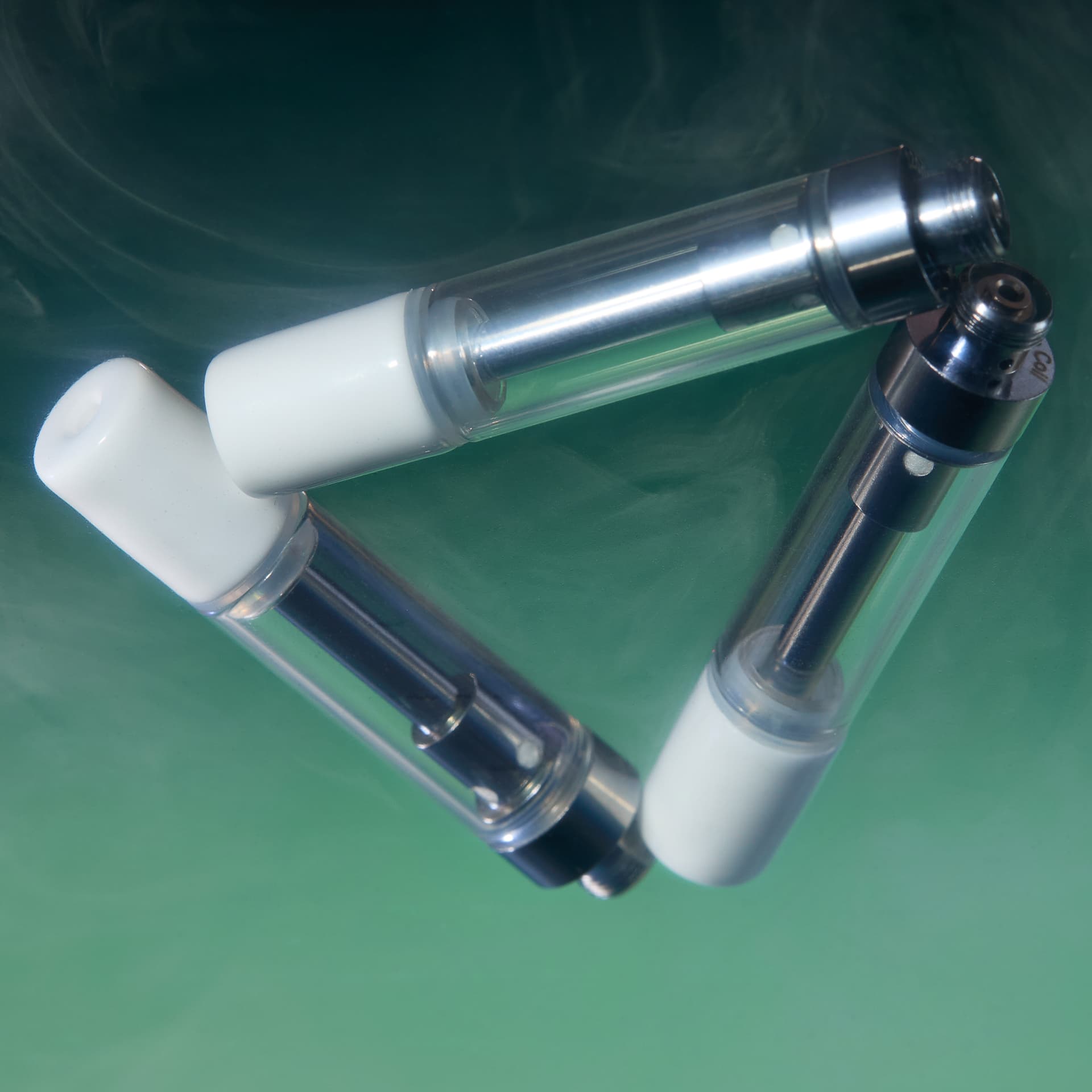
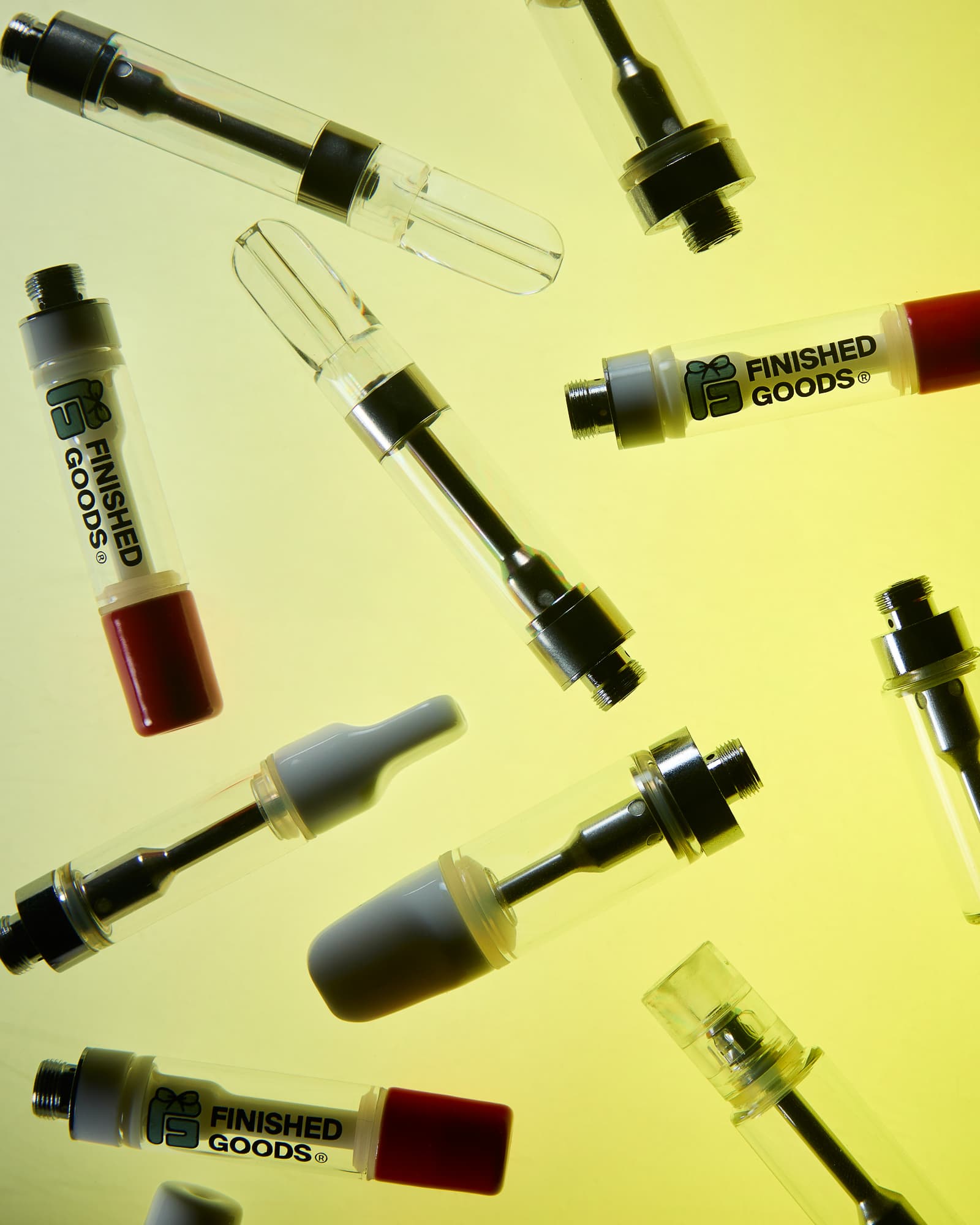
Licensed cannabis brands sourcing bulk 510-thread vape cartridges with custom branding are choosing between a few supplier models: a direct manufacturer that controls the line and matches hardware to the oil (Finished Goods, at MOQ 500 units with full custom branding and US-based QC), a ceramic-cartridge specialist selling through distribution at higher minimums, a broad-catalog wholesaler with fast availability and surface-level customization, and a low-minimum fulfillment house with limited custom options. This guide covers what separates a credible 510 cartridge manufacturer from a trading company, and the questions to ask before signing a supplier PO.
Choosing a 510 cartridge manufacturer is one of the higher-stakes sourcing decisions a licensed cannabis brand will make in a given year. The 510 cartridge manufacturer you select drives the failure rate of your finished product, the consistency of your draw experience, the regulatory exposure on your heavy metals testing, and the lead time on every new product launch. This sourcing guide is for procurement leads, brand operators, and MSO buyers who need a practical framework for evaluating a 510 cartridge manufacturer against the things that actually matter.
The guide focuses on B2B buyers. If you are evaluating a 510 cartridge manufacturer for wholesale or white-label supply, the questions below are the diligence we run when we onboard a new factory. The answers are the ones a credible 510 cartridge manufacturer can give without flinching.
What a 510 cartridge manufacturer actually controls
A 510 cartridge manufacturer controls four things that drive product performance. The ceramic atomizer, the coil, the mouthpiece geometry, and the assembly process. Each of those variables determines how the finished cartridge behaves in the consumer's hand and how it ages over its shelf life.
The ceramic atomizer is the most expensive component and the one that drives the most field complaints when it goes wrong. A 510 cartridge manufacturer with credible ceramic capability will be able to discuss pore size distribution, firing temperature curves, and saturation testing in concrete terms. A manufacturer who deflects on these questions is buying ceramic from a third party and assembling it, which is a different business model and a different risk profile.
The coil determines vaporization temperature and heavy metals risk. A good coil is made from a known alloy with documented elemental composition, bonded to the ceramic in a controlled atmosphere. A bad coil drifts in resistance after a few hundred draws and is the most common source of burnt taste complaints.
The mouthpiece geometry and the assembly tolerances determine draw resistance, leak resistance, and how the cartridge fits into downstream packaging. These are the variables that look trivial on a datasheet and that turn into real problems on a production line if the manufacturer has poor process control.
MOQ expectations from a serious 510 cartridge manufacturer
Minimum order quantities are where many brand buyers first learn whether they are talking to a real factory or to a trader. A serious 510 cartridge manufacturer will quote different MOQs for different products. White-label cartridges drawn from existing tooling can be quoted at low MOQs, sometimes one to five thousand units, because the tooling investment is already amortized.
Custom 510 cartridge tooling, on the other hand, requires real money to commission. A 510 cartridge manufacturer who quotes a low MOQ on custom hardware is almost always shipping you a near-identical existing part with cosmetic modifications. A genuine custom tool carries a higher minimum than a cosmetic variant. Finished Goods runs custom 510 programs from 1,000 units per SKU.
Lead time benchmarks from a 510 cartridge manufacturer
Lead times tell you whether a 510 cartridge manufacturer actually controls their supply chain or is reselling finished inventory. A real custom 510 cartridge program runs about six weeks of production from purchase order, plus freight. That window covers ceramic firing, coil bonding, assembly, and end-of-line testing.
White-label 510 cartridge programs from a factory that holds finished inventory can ship in two to four weeks. A 510 cartridge manufacturer who promises two-week turnaround on custom hardware is either pulling from a stock geometry that resembles your spec or skipping a step in the production process that you would not want skipped.
Custom versus white-label sourcing from a 510 cartridge manufacturer
The choice between custom and white-label is a strategic one. White-label sourcing lets you launch a new SKU quickly, learn from real customer behavior, and avoid the tooling investment. The tradeoff is that the cartridge is not optimized for your specific oil viscosity or draw profile.
Custom sourcing lets you tune the ceramic geometry, the coil resistance, and the mouthpiece to your formulation. It also gives you a defensible product story that competitors cannot easily copy. The tradeoff is the tooling cost, the longer lead time, and the burden of validating the new geometry through pilot runs.
Most brands we work with start with a white-label 510 cartridge manufacturer relationship for at least one product cycle. They learn where the failure modes concentrate, what customers respond to, and what the unit economics need to look like. Only then do they commit to custom tooling, and at that point the tooling spend is informed by real data rather than by guesses.
Compliance diligence on a 510 cartridge manufacturer
Heavy metals testing is the compliance category that most often catches a 510 cartridge manufacturer who has cut corners. The required panel includes lead, cadmium, arsenic, and mercury in most state programs. A credible 510 cartridge manufacturer will produce a current certificate of analysis from an accredited third-party lab on every production lot.
Verify the lab independently. There is a small but persistent population of suppliers who provide certificates of analysis from labs that either do not exist or that do not have the claimed accreditation. A five-minute search against the lab's accreditation body is the difference between catching this and finding out from a state regulator.
Child-resistant packaging is the second compliance category that intersects with the 510 cartridge manufacturer decision. Some 510 geometries are difficult to package in compliant child-resistant blisters. If you are sourcing a 510 cartridge manufacturer for a market where child-resistant packaging is required, validate the packaging fit before you commit to the geometry.
How to qualify a 510 cartridge manufacturer in one meeting
There are five diligence questions we ask on every qualification call with a prospective 510 cartridge manufacturer. What is your monthly production capacity on this geometry, and what is your yield rate over the last three months. What is your field failure rate over the last twelve months and how do you measure it. What does your heavy metals testing protocol look like and can we audit the lab. What is your real MOQ and lead time for a custom geometry versus a white-label pull. What is your warranty position if a production lot fails on our line.
A 510 cartridge manufacturer who answers those five questions cleanly is worth a sample order. A manufacturer who deflects, who quotes failure rates without a methodology, or who cannot produce a current heavy metals certificate from an accredited lab is not worth a second meeting regardless of how attractive the unit price looks.
Common mistakes when sourcing a 510 cartridge manufacturer
The most common mistake is anchoring on unit price. A two-cent difference per cartridge is rounding error compared to the cost of a field failure event or a heavy metals recall.
The second mistake is treating the 510 cartridge manufacturer as a commodity supplier. Two factories that quote identical specs can produce cartridges that behave very differently in the hands of real consumers. Insist on samples, test against your actual oil, and run them through your real packaging and shipping conditions.
The third mistake is skipping recurring diligence. A 510 cartridge manufacturer who delivered two percent failure rates last year may be at six percent this year because of a tooling change or a production-line personnel change. Failure-rate diligence is a recurring process, not a one-time gate.
The bottom line on choosing a 510 cartridge manufacturer
A 510 cartridge manufacturer relationship is a long-term sourcing commitment that touches product performance, brand reputation, regulatory exposure, and margin in the same purchase order. The brands that win on hardware are not the brands with the lowest unit cost. They are the brands that ask the right diligence questions early, qualify suppliers against a real benchmark, and treat MOQ and lead time as strategic variables rather than friction.
If you are evaluating a 510 cartridge manufacturer right now, start with the five questions above and let the answers do the filtering for you. The framework is not complicated. The discipline to apply it consistently is what separates brands that ship clean cartridges from brands that spend their margin on refunds.
A practical procurement checklist for a 510 cartridge manufacturer
Before issuing a purchase order, confirm the ceramic material grade and the alumina or zirconia purity in writing. Ask the 510 cartridge manufacturer for the coil resistance specification and the tolerance band. Request the production yield over the last three months and the field failure rate over the last twelve months. Get the heavy metals certificate of analysis and verify the lab accreditation independently. Confirm the MOQ, the lead time, and the payment terms in the same document so there is no ambiguity once the order is in flight.
A credible 510 cartridge manufacturer will also walk you through their position on oil compatibility. Distillate behaves differently than live resin or rosin in a porous ceramic. The wicking holes, the pore size, and the coil temperature profile all interact with oil viscosity. A 510 cartridge manufacturer who has done this work will tell you which geometry pairs with which oil class.
For the broader sourcing context, start with our cannabis hardware hub for licensed brands.
Related reading
Related buyer guides
For broader sourcing context, compare this 510 cartridge manufacturer guide with our cannabis hardware hub for licensed brands. For oil-specific fit, review cartridge hardware for distillate viscosity. For ordering thresholds, use the vape cartridge MOQ guide.