The Pod System Strategy Problem: Why Giving Away the Device Might Be Your Smartest Move
A smart pod system strategy treats devices as customer acquisition costs. Learn how giving away batteries prevents churn and drives recurring revenue.

Pod systems are one of the most popular hardware formats in cannabis vaping. They're sleek, they're refillable (or replaceable), and they give brands a proprietary ecosystem that encourages repeat purchases. In theory, it's the perfect model.
In practice, there's a problem that's costing brands customers, and most of them aren't even measuring it.
The $40 Mistake
Here's the scenario, and it plays out more often than anyone in the industry wants to admit: a consumer walks into a dispensary, spends $40 or more on a pod system, the battery, the pod, the whole setup. They use it for a few weeks. Then they lose the battery.
Maybe it fell out of a pocket. Maybe it ended up in a couch cushion and never resurfaced. Maybe it just stopped working. Whatever the reason, the battery is gone, and with it, the consumer's willingness to reinvest.
They're not going back to the dispensary to spend another $40 on a replacement. They're switching to a competitor's disposable, or they're trying a different brand entirely. That's not a lost sale. That's a lost customer, potentially for life.
The Real Cost of Customer Churn
Most cannabis brands track sales volume and revenue per SKU. Very few are tracking the lifetime value implications of pod system churn. But the math is straightforward.
To compare hardware choices with your own inputs, use the vape hardware cost calculator and replace its default assumptions with numbers you can defend.
If a consumer buys two pods per month at $25 each, that's $600 per year in recurring revenue. Lose that customer because of a $15 battery, and you've traded a small hardware margin for hundreds of dollars in future pod sales. Multiply that across hundreds or thousands of consumers, and the revenue impact is staggering.
The battery isn't your product. It's the gateway to your product. And right now, that gateway has a failure point that's silently draining your customer base.
Rethinking the Battery as a Customer Acquisition Cost
The solution isn't complicated, but it does require a shift in thinking. Instead of treating the battery as a profit center, treat it as a customer acquisition cost.
- Run a "buy two pods, get the battery free" promotion
- Bundle the device into a starter kit at cost
- Give it away as part of a loyalty program
The specific tactic matters less than the underlying principle: reduce the barrier to entry and eliminate the risk of losing a customer over a piece of hardware they can't use your pods without.
The brands that are winning in the pod space right now understand this intuitively. They're absorbing the upfront cost of the device because they know the real margin is in the consumable, the pod itself. It's the razor-and-blade model, and it works.
Making It Work Operationally
For this strategy to be sustainable, the hardware cost has to be manageable. That's where the relationship with your hardware partner matters.
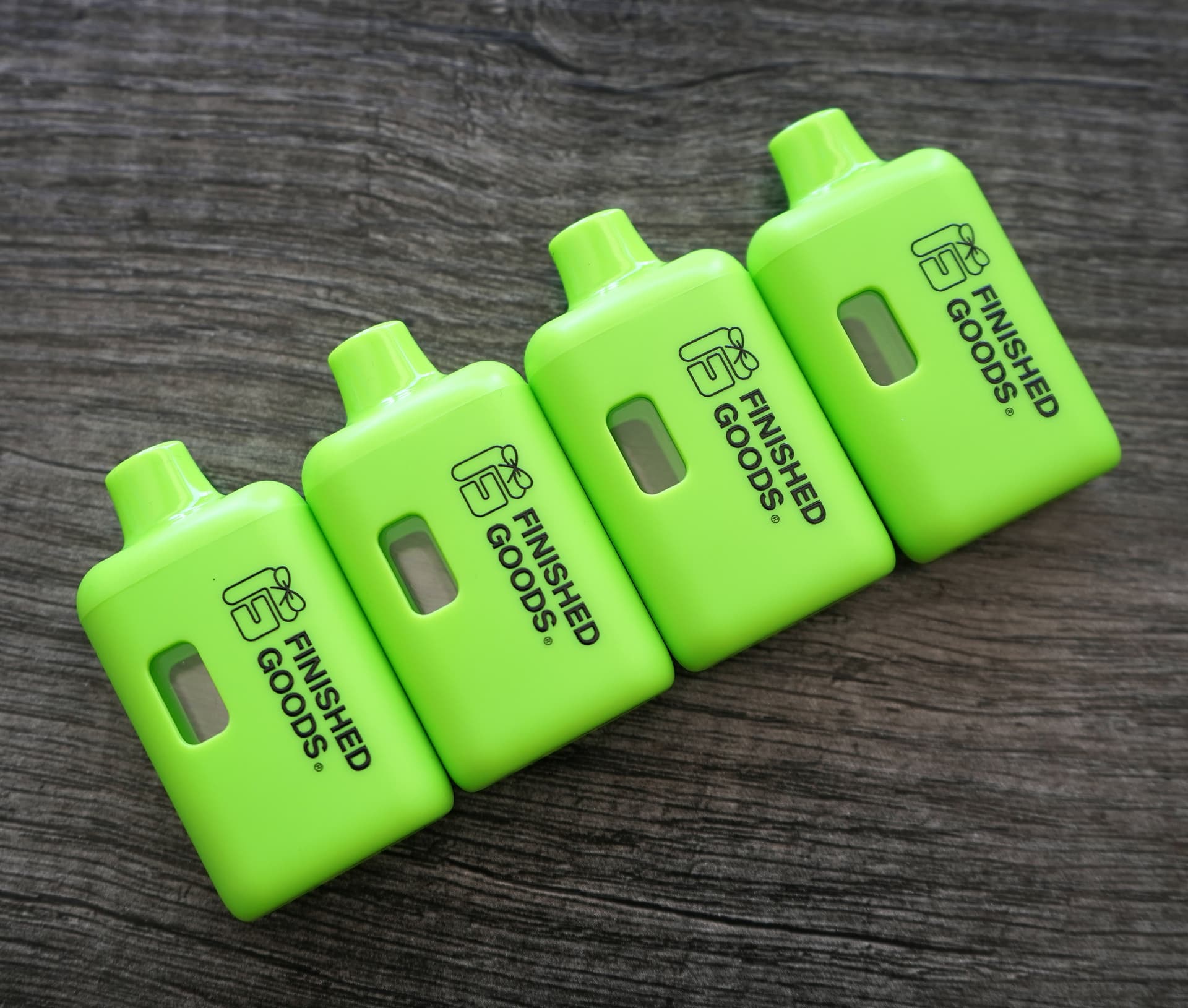
At Finished Goods, we work with brands to design pod systems where the battery unit cost is low enough to absorb as a promotional expense without wrecking your margins. That means smart engineering, reliable enough that consumers don't churn from quality issues, affordable enough that giving it away makes financial sense.
It's a balance, and it requires hardware that's purpose-built for this go-to-market strategy from day one, not retrofitted after the fact.
The Long Game
The cannabis market is getting more competitive every quarter. Customer acquisition costs are rising, and brand loyalty is harder to earn than ever. In that environment, losing customers over a replaceable battery is an unforced error.
The brands that think of the device as a gateway, not a product, are the ones building the kind of recurring revenue that sustains real growth. The device gets them in the door. The pod keeps them coming back.
If your pod system strategy doesn't account for battery loss, it's time to rethink the math. The answer might be simpler than you think: just give it away.
The Data Behind Pod System Churn
To really understand why a modern pod system strategy has to put the device in a different bucket, it helps to look at the numbers behind consumer behavior in cannabis vaping. Industry surveys consistently show that a meaningful share of pod system customers stop repurchasing their original brand within the first ninety days of their first device purchase. A large portion of that drop-off is not about flavor, potency, or price. It is about the hardware itself. Devices get lost, batteries die, charging cables go missing, and the friction of replacing a forty-dollar piece of plastic is enough to push consumers toward a disposable or a competing pod system.
When you layer lifetime value on top of that churn, the cost of an outdated pod system strategy becomes obvious. A customer who stays with your brand for twelve months is worth several hundred dollars in pod revenue. A customer who churns after one battery loss is worth whatever tiny margin you made on that initial hardware sale. The math almost always favors absorbing the device cost.
What a Modern Pod System Strategy Looks Like
A well-designed pod system strategy builds the economics of the device, the pod, and the customer relationship into a single model. Instead of optimizing each piece in isolation, smart brands ask a simple question: what is the total margin we earn across the full lifetime of this customer, and what is the cheapest, most reliable way to keep them in our ecosystem?
In practice, that usually means three things. First, the device is priced at or near cost, and sometimes below it, so the consumer never has to think twice about picking up a replacement battery. Second, the pods themselves carry the margin, which means quality control on the oil, the ceramic, and the airflow has to be excellent. Third, the brand tracks repeat purchase behavior closely so it can spot churn signals early and intervene with loyalty offers or bundled refills.
Building a Pod System Strategy Around Reliability
Giving the device away only works if the device actually works. A cheap battery that fails after two weeks does more damage than charging forty dollars for a reliable one. That is why the most effective pod system strategy starts with hardware engineering, not marketing. Batteries need to deliver consistent voltage across the life of the cell. Connections need to be tight enough that pods do not leak or misfire. Charging circuits need to be safe, fast, and forgiving of the way real consumers actually treat their hardware, which is rarely gentle.
Brands that try to cut corners on device quality to fund a giveaway program usually end up worse off than brands that charge full price for premium hardware. The goal is not the cheapest possible pod system. The goal is a pod system strategy where the unit economics of the device make it easy to absorb, while the performance of the device keeps customers loyal to your pods.
Pairing Pod System Strategy with Loyalty Programs
Another lever that strong brands use is a loyalty program built on top of the pod system. Once the device is in the consumer's hand, every subsequent pod purchase becomes a data point. Point-based rewards, free pods at milestone purchases, referral credits, and early access to new flavors all reinforce the relationship that the device opened up.
A pod system strategy that treats the battery as a gateway and then layers loyalty on top of it creates a compounding effect. The more pods a customer buys, the more rewards they earn, and the less likely they are to try a competitor when their device eventually wears out. At that point, replacing the battery is a small cost inside a relationship that is already generating hundreds of dollars a year in recurring revenue.
Common Objections to Giving Away the Device
The most common pushback on this kind of pod system strategy is margin anxiety. Finance teams look at the cost of the battery and see a profit line disappearing. That is a real concern, but it usually reflects a narrow view of the transaction. The right frame is to compare the cost of the hardware to the expected lifetime value of the customer, minus the cost of acquiring a new customer if this one churns. In almost every scenario we have modeled, absorbing the device cost up front leads to materially higher total margin over twelve to twenty-four months.
The second common objection is perceived value. Some brands worry that a free device signals a cheap product. In reality, pairing a free or heavily discounted device with premium pods, strong packaging, and consistent branding reinforces quality. Consumers do not resent getting the device for free. They appreciate it, and they reward the brand with loyalty.
Getting Your Pod System Strategy Right from Day One
The brands that struggle most with pod system strategy are the ones that try to bolt on a giveaway program after the device has already been engineered and priced as a profit center. Retrofitting a pod system for this kind of go-to-market model is harder than building it in from the start. The component costs, the margin structure, and even the packaging all need to be aligned with the idea that the real product is the pod.
If you are launching a new pod system, or if you are rethinking an existing one, the most important conversation to have with your hardware partner is about unit economics. What is the true landed cost of the battery at realistic order volumes? What tradeoffs in components would let you reduce that cost without sacrificing reliability? How does that cost compare to your expected pod margin and your current churn rate? Those questions turn pod system strategy from an abstract idea into a concrete operating plan.
Key Takeaways
A strong pod system strategy starts with a simple shift in mindset: the device is not the product, it is the gateway to the product. The brands that internalize this are the ones building durable recurring revenue in cannabis vaping, while the brands that treat the device as a standalone profit center are slowly handing customers to their competitors every time a battery disappears into a couch cushion. The math is not complicated, and the path forward is not mysterious. It starts with a hardware partner who understands the economics, a device engineered for reliability, and a willingness to treat the first forty dollars as an investment in everything that comes after.