What Is a Vape Atomizer and Why Does It Matter More Than Anything Else in Your Vape Cartridge?
What cannabis brands should know about vape atomizers before bulk orders: ceramic core matching, saturation rate, and the supplier questions that prevent clogs.
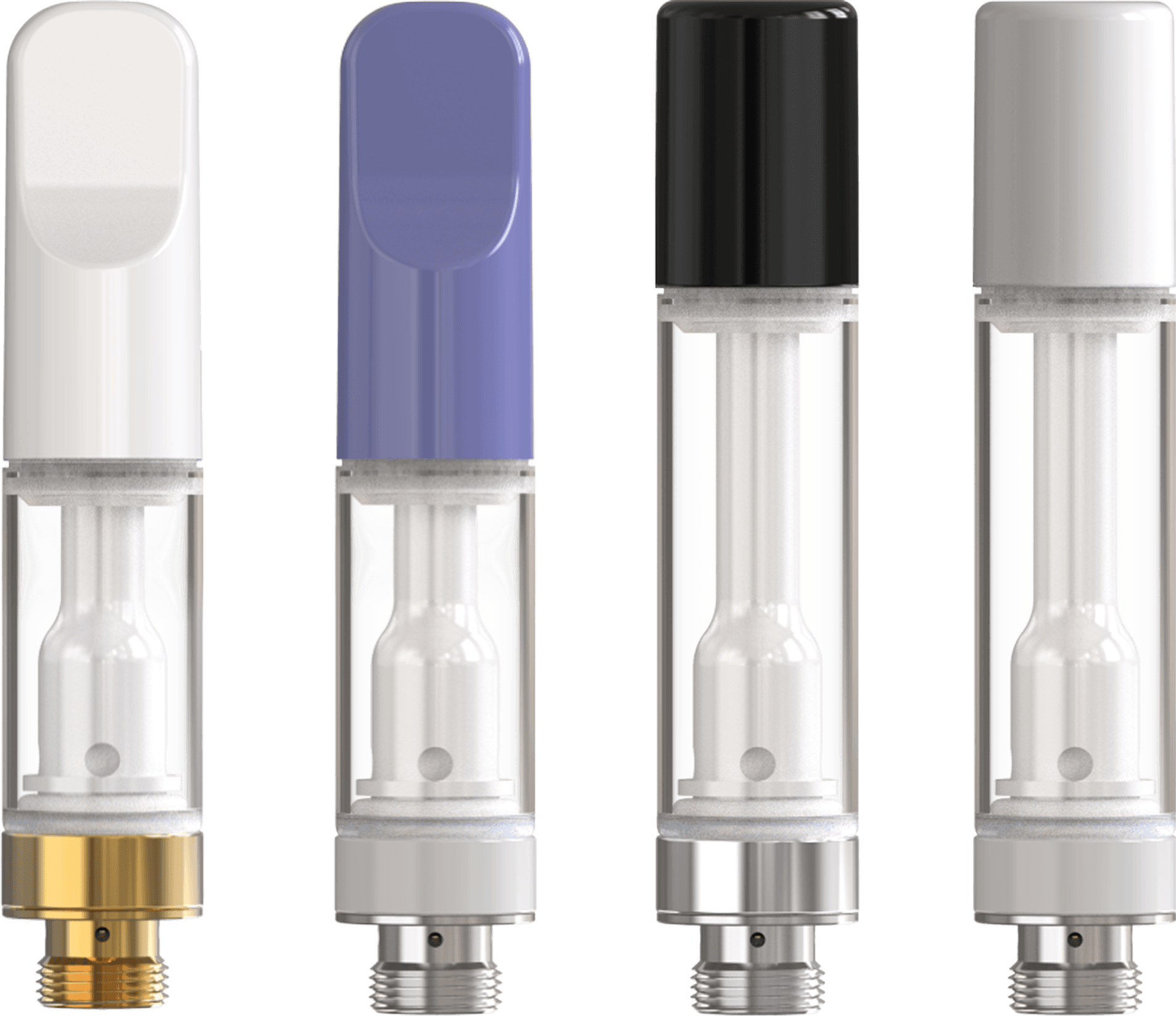
A vape atomizer is the heating assembly at the base of a cartridge or all-in-one device that converts cannabis oil into inhalable vapor, and it is the single most important component licensed cannabis brands should evaluate before placing a hardware order. The atomizer is the only part of the cartridge that touches the oil directly, so it determines whether the product clogs, leaks, burns, or performs cleanly from first puff to last. What brands should look for is not the word "ceramic" (every cart on the market uses ceramic) but the specific ceramic compound inside and whether its saturation rate was matched to the viscosity of the oil being filled. Finished Goods engineers five distinct PrecisionFlow ceramic compounds, each tuned to a defined viscosity range, and maintains a hardware failure rate under 0.02 percent across more than 96 million units shipped because of that matching.
Most brand operators can describe their oil with surgical precision: strain, terpene profile, cannabinoid percentages, extraction method, post-processing steps. Ask those same operators about the atomizer in their cartridge and the answer is usually "it's ceramic" or "it's whatever the vendor sent us last quarter." That gap is where reliability problems are born. The real red flag is not the word ceramic itself but the practice of using one atomizer for every oil type a brand produces. When a single ceramic compound is expected to handle everything from thick winterized distillate to thin terpene-rich live resin, the physics do not support consistent performance. This guide covers what a vape atomizer actually does, why it matters more than any other component, and what to ask a cannabis vape hardware manufacturer before your next purchase order.
What does a vape atomizer actually do?
The vape atomizer converts liquid cannabis oil into inhalable vapor without burning the oil, leaving residue, or starving the heating coil. It sits at the base of the cartridge or all-in-one device. A ceramic core absorbs oil from the reservoir through capillary action, and a heating element wrapped around or embedded in that core vaporizes the oil at a controlled temperature. Every puff a consumer takes depends on this system functioning correctly thousands of times across the life of a single cartridge.
The critical variable inside the atomizer is what engineers call the saturation rate: how quickly the ceramic core absorbs oil from the reservoir into the heating zone. Saturation rate is determined by two factors, the composition of the ceramic compound and the viscosity of the oil being vaporized. When the two are properly matched, the cartridge performs reliably from first puff to last. When they are mismatched, the cartridge fails in one of three predictable and consumer-visible ways: clogging, leaking, or producing burnt and harsh-tasting hits. Selecting the right atomizer for the specific oil being filled is the single intervention that prevents all three failure modes at once.
Why does the atomizer matter more than any other cart component?
The atomizer is the only component in the entire cartridge assembly that interacts directly with the oil and converts it into the vapor the consumer actually inhales and experiences as your brand. Every other component has a defined and necessary role. The tank holds and protects the oil from light and oxygen during shelf life. The mouthpiece shapes the draw and influences airflow resistance. The battery delivers regulated voltage on demand. The airpath channels airflow from the inlet through the heating zone and out to the consumer. But none of them touch the oil the way the atomizer does.
A cartridge with an average mouthpiece and a properly matched atomizer will perform well in the field and earn repeat purchases. A cartridge with a precision-engineered mouthpiece and a mismatched atomizer will clog, burn, or flood regardless of how good every other component looks on a spec sheet. The atomizer is the bottleneck through which every variable must flow, and it is where reliability is won or lost in the consumer's hand.
What causes carts to clog, leak, or taste burnt?
Every major cartridge failure mode traces back to the atomizer rather than to the battery, the airflow geometry, or the center post hardware. In fact, the center post is one of the most commonly blamed and least responsible parts; see why the center post has nothing to do with clogs.
Clogging happens when the atomizer's saturation rate does not match the flow behavior of the oil. Thick distillate cannot saturate the ceramic core fast enough to keep the heating zone supplied with fresh oil, and thin live resin saturates the core too quickly and floods the chamber. Both situations create downstream failures the consumer experiences as a blocked or unresponsive cart. (If your product is already in the field and clogging, our guide on how to unclog a vape covers the consumer-side fixes, but the permanent fix happens at the hardware spec.)
Burnt hits happen when the atomizer dries out between draws and the coil heats accumulated residue rather than fresh oil, which is fundamentally a saturation failure. Flooding and leaking happen when oil passes through the atomizer faster than the coil can vaporize the supply, and the excess migrates into the airpath and eventually leaks out of the mouthpiece. Flavor degradation happens when the heat transfer characteristics of the atomizer do not match the optimal vaporization temperature of the oil, causing scorching at the high end and incomplete vaporization at the low end.
If every cart is ceramic, why does the specific ceramic compound matter?
Because "ceramic" is a material category, not a specification, and two ceramic cores can have completely different saturation rates, heat transfer characteristics, and durability profiles after thousands of heating cycles. The vast majority of cannabis vape atomizers use a ceramic core because ceramic offers three properties that are hard to find in any other material at this price point: it absorbs oil effectively through its porous structure, it is chemically inert and will not react with terpenes or cannabinoids during heating, and it is thermally stable across the vaporization temperature range. Treating ceramic as a single spec is the most common mistake operators make when evaluating cart hardware from competing vendors.
The performance of any ceramic core depends on the specific composition of the compound, the particle size distribution within it, and the manufacturing process used to fire and finish the core. A ceramic core engineered for fast saturation absorbs oil quickly, which is the correct behavior for thin, terpene-rich live resin formulations. That same fast-saturation atomizer is wrong for thick distillate, where it will saturate unevenly and create hot spots that scorch the oil. A slow-saturation core absorbs oil gradually, which is correct for viscous distillate and wrong for thin live resin, where the oil floods past the heating zone and leaks into the airpath.
This physical reality is why Finished Goods engineered five distinct PrecisionFlow atomizer compounds rather than offering a single one-size-fits-all ceramic core. Each PrecisionFlow compound has a different ceramic composition tuned to a specific oil viscosity range covering distillate, live resin, rosin, blends, and specialty formulations including high-terpene full-spectrum extracts. A distillate PrecisionFlow atomizer and a live resin PrecisionFlow atomizer are not the same product with different labels; they are fundamentally different ceramic cores built from different compounds for different oils, and using one in place of the other produces predictable failures in the field. For a practical mapping of oil types to hardware, see our distillate compatibility and viscosity chart.
What should I ask a hardware vendor about their atomizer before a PO?
Start with five questions: the exact ceramic compound, the viscosity range it targets, how many distinct compounds the vendor offers, their documented failure rate, and whether you can validate with your actual oil before committing. If the atomizer is the most important component in the cartridge, vendor evaluation should start there rather than with aesthetics or unit price.
Ask exactly what ceramic compound is in the core and what viscosity range that compound was engineered to target. The word ceramic alone tells you nothing about whether the core will work for your oil, and any vendor who cannot get more specific is selling generic hardware. Ask how many distinct atomizer compounds the vendor offers across their lineup, because one compound necessarily means one saturation rate for every oil type, which guarantees mismatches across at least some of your formulations. Multiple compounds, each matched to a defined viscosity range, indicates the vendor has done the engineering work that single-compound vendors have skipped.
Ask whether the proposed atomizer was validated with your specific oil rather than a similar oil or another product in the same general category. Viscosity varies meaningfully within categories, and a ceramic core that performs perfectly with one live resin formulation may not work for another built on a different terpene percentage or base distillate. Ask for the documented hardware failure rate across the vendor's existing customer base, because a vendor confident in their atomizer match tracks that data and shares it openly. Across more than 96 million units shipped, Finished Goods maintains a hardware failure rate of less than 0.02 percent, a direct result of matching the atomizer to the oil at the manufacturing stage rather than at the consumer's complaint inbox. Finally, ask to test a small batch with your actual oil before committing to a full production order. Any vendor who resists a small validation run is betting you will not catch the mismatch until after the invoice has been paid.
What should I not prioritize over the atomizer when buying cart hardware?
Do not let aesthetics, unit price, battery specs, or airflow geometry lead the purchasing decision; all four sit downstream of the atomizer match. Operators frequently optimize for these variables because they are easier to see, easier to compare across vendors, and easier to market at trade shows.
Aesthetics matter for shelf appeal and brand identity, but a beautiful cartridge that clogs on the third hit generates customer service tickets and returns rather than repeat purchases. Unit price matters for margin calculations, but the cheapest hardware per unit almost always carries the highest cost per repeat customer once you factor in warranty claims, replacement orders, and lost loyalty in a category where consumers freely switch brands. Battery quality matters for power delivery, but the battery sits downstream of the atomizer, and a great battery pushing regulated voltage through a mismatched ceramic core still produces a bad consumer experience. Airflow geometry affects draw preference, but airflow does not prevent clogs and should be evaluated as a separate variable from atomizer match.
None of these should be your first question when evaluating new cart hardware for a brand you actually care about. The atomizer should be the first question, the second question, and arguably the third question as well, with everything else flowing as a tuning decision once the atomizer match is locked in.
How does getting the atomizer right simplify every other hardware decision?
When the atomizer is properly matched to the oil, every other component decision becomes a tuning decision rather than a structural one. Airflow gets tuned for draw preference and brand identity, voltage gets tuned for vapor density and consumer feel, and aesthetics get tuned for retail shelf presence and packaging consistency. When the atomizer is wrong, no amount of tuning at the other layers can fix the underlying mismatch between ceramic compound and oil viscosity. Operators who understand this hierarchy build durable brands; operators who skip it spend their margin on returns and warranty replacements.
The question is not whether your cart contains a ceramic atomizer, because every cart on the market does. The real question is whether the specific ceramic compound inside was engineered for the oil your customers will actually receive. To see how Finished Goods matches PrecisionFlow compounds to specific oil profiles, start with the cannabis vape hardware manufacturer guide or reach out for a small-batch validation run with your formulation. Ready to move from understanding to procurement? Our 510 cartridge manufacturer sourcing guide walks through supplier qualification, failure rate benchmarks, and a pre-PO checklist.
FAQ
What is a vape atomizer in a cannabis cartridge?
A vape atomizer is the heating assembly at the base of a cartridge or all-in-one device. A porous ceramic core absorbs oil from the reservoir through capillary action, and a heating element vaporizes that oil at a controlled temperature. It is the only component that touches the oil directly, which makes it the part that determines whether the cart clogs, leaks, burns, or performs cleanly.
Are all ceramic vape atomizers the same?
No. Ceramic is a material category, not a specification. Two ceramic cores can have completely different saturation rates, heat transfer characteristics, and durability depending on the compound composition, particle size distribution, and firing process. A core built for thin live resin will fail with thick distillate, and vice versa. Ask your vendor for the exact compound and the viscosity range it targets.
What causes vape cart hardware to clog?
Clogging is almost always a mismatch between the atomizer's saturation rate and the oil's viscosity. Thick oil starves a fast-saturation core; thin oil floods a slow-saturation one. The same mismatch also drives leaking and burnt hits. It is a hardware spec problem, not a filling or consumer-behavior problem, which is why the fix belongs at the purchase order stage.
How do I choose a cannabis vape hardware manufacturer for my oil?
Evaluate the atomizer first. Ask what ceramic compound is in the core, what viscosity range it was engineered for, how many distinct compounds the manufacturer offers, and what their documented failure rate is across shipped units. Then run a small validation batch with your actual oil before the full production order. A manufacturer that resists any of those questions is selling generic cart hardware.
Does the center post affect cart performance?
Far less than most operators assume. Clogging, leaking, and burnt hits trace back to the atomizer's ceramic compound and saturation rate, not the center post. Our breakdown of ceramic center post myths covers what ceramic carts actually need.