Postless 510 Cartridge vs Standard Cart: Diameter, Specs & Sourcing
Postless 510 cartridge guide for licensed cannabis brands: postless vs standard cart specs, diameter tolerances, oil fit, MOQ, and custom hardware sourcing.

Postless 510 Cartridge vs Standard Cart: Why Diameter and Specs Actually Matter
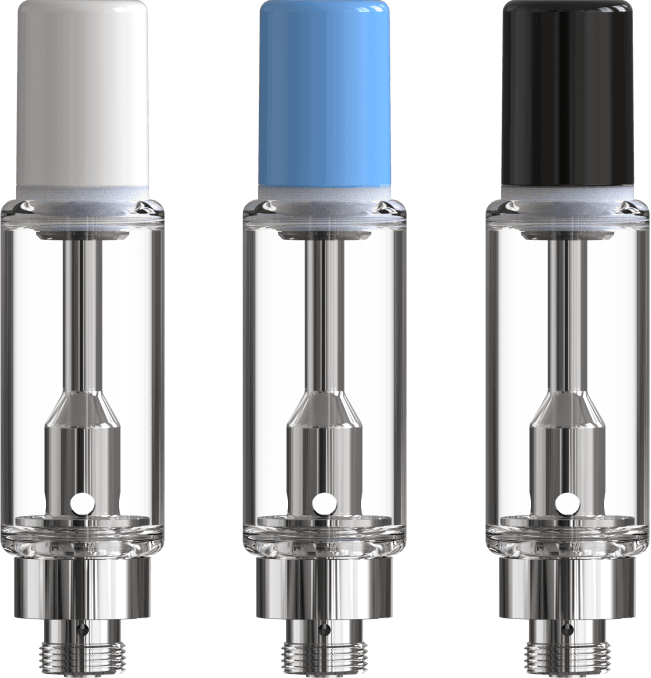
A postless 510 cartridge removes the center post from the tank, which lets a full 1g of oil fit inside a 10.5mm body instead of the 11mm or 13mm body a standard cart needs. That 0.5mm to 2.5mm difference decides whether the cartridge sits flush against the battery or sticks up proud of it, and for licensed cannabis brands building premium SKUs, flush is the spec that wins shelf space. Postless geometry also changes what the hardware needs from your oil: with the atomizer moved to the base, a postless 510 cartridge wicks low-viscosity live resin and rosin better than a posted cart, but it demands tighter diameter tolerances (a true 10.5mm body should hold roughly ±0.1mm at the widest point) to seal cleanly and sit flush. Finished Goods manufactures postless 510 cart hardware with a 0.02% failure rate, and this guide breaks down what postless actually means, how 10.5mm, 11mm, and 13mm compare on spec, oil compatibility, and diameter tolerances, and what to ask a supplier (including MOQ and custom-branding terms) before you commit to tooling.
What is the difference between a postless 510 cart and a standard cart?
A standard 510 cart uses a metal center post to anchor the heating element and wicks inside the tank; a postless cart eliminates that post, moves the heating element to the base, and holds the oil in a single open chamber. The difference matters because diameter, oil movement, visual fit, and flavor protection all change once the post is removed.
In a standard cartridge, the center post takes up internal volume, which is why standard carts have to be wider on the outside to hold a given amount of oil inside. Remove the post and you can shrink the outer diameter without shrinking the fill volume. That's the trick: postless lets a 1g cartridge live inside a 10.5mm body.
Postless geometry also wicks differently. Because the oil has a direct path to the heating element instead of climbing a wick around a post, postless atomizers generally do better with low-viscosity inputs like live resin and rosin. If you're deciding which hardware matches which oil, our guide to cartridge hardware and oil compatibility covers the pairing logic in detail.
Postless vs standard 510 cartridge specs, side by side
The fastest way to see why postless is a different product, not just a slimmer one, is to line the specs up. Diameter tolerance is the spec buyers skip and regret: a body advertised as "10.5mm" that actually varies ±0.3mm unit to unit will sit flush on some batteries and proud on others in the same case, which is worse than a consistent 11mm. Hold your supplier to a nominal diameter and a tolerance, spec by spec:
- Outer diameter (widest point): 10.5mm on postless, and a good one holds to about ±0.1mm; 11mm standard runs about ±0.15mm; 13mm legacy about ±0.2mm. Ask for the tolerance, not just the nominal number.
- Center post: postless has none (a single open chamber); an 11mm cart uses a slim or full center post; a 13mm cart uses a full post.
- Heating element: base-mounted on postless, versus post- or mid-mounted on standard and legacy carts. This is the spec that actually separates postless from standard.
- 1g fill: fits inside a 10.5mm postless body, is tight in an 11mm standard body, and sits easily in a wide 13mm body.
- Best oil viscosity: postless favors low-viscosity live resin, rosin, and thin distillate; 11mm handles a broad range; 13mm suits thick distillate.
- 510 thread: identical on all three (7mm diameter, 0.5mm pitch), so any of them screws onto a standard 510 battery.
- Battery fit: postless sits flush on most modern slim mods; an 11mm cart is slightly proud on many; a 13mm cart reads as a proud, mushroom silhouette.
Two things to read out of that list. First, the 510 thread is identical across all three: "510" describes the threaded connection (7mm diameter, 0.5mm pitch), not the body, so a postless 10.5mm cart still screws onto any standard 510 battery. The diameter conversation is entirely about the body, which is why a cart can be fully 510-compatible and still sit proud. Second, the spec that actually separates postless from standard is where the heating element lives: base-mounted in postless, post-mounted in standard. That single change is what frees the internal volume, changes the wicking path, and sets the oil-viscosity window.
Which diameter fits which product: 10.5mm, 11mm, or 13mm?
Use 10.5mm postless for premium and flagship SKUs, 11mm for broad compatibility and value programs, and 13mm only for legacy programs or unusually thick oil. Here's the breakdown:
10.5mm postless cart: best for premium distillate, live resin, and brand-forward SKUs where a flush battery fit and cleaner silhouette matter. Use when the oil has already passed leak and inverted-storage testing.
11mm standard or slim-post cart: best for broad compatibility, standard batteries, and programs that need familiar fill behavior across many oil types.
13mm standard cart: best for legacy programs, thicker oil, or SKUs where maximum tank tolerance matters more than a flush finished-device profile.
If you've ever pulled a finished vape off a retail shelf, slid it into your pocket, and felt the cartridge wobble against the battery housing, you've already met the diameter problem. Most cannabis brands never think about it. The cart works. It hits. It looks fine on a printed mockup. Then it ships, and the proud cartridge sticking up out of the battery quietly tells every consumer that this brand bought whatever was cheapest in Shenzhen.
What do the three diameters signal on shelf?
Each diameter tells a different story: 13mm reads as legacy, 11mm reads as the default upgrade, and 10.5mm postless reads as a 2026 product. Here's what's actually in circulation:
- 13mm carts are the legacy. These are the wide-bodied tanks you've seen for years: chunky, obvious, and easy to manufacture. Most low-cost OEM carts still default to 13mm because the tooling is paid off and the supply chain is enormous. A 13mm cart on a modern slim battery looks like a mushroom, wider at the top than at the base.
- 11mm carts became the default upgrade. For a stretch of 2022-2024, "11mm" was the spec brands asked for when they wanted to feel premium. They're slimmer, photograph better, and pair more cleanly with the slim batteries that took over the disposable and AIO market. But on a lot of batteries, an 11mm cart is still slightly proud; it sits a fraction of a millimeter above the battery housing.
- 10.5mm postless carts are where the category is moving now. At 10.5mm, the cartridge sits flush against the top of the battery on most modern 510 mods. There's no visible step-down. The cart and the battery read as one continuous object. This is the look you're seeing on the brands that consistently win shelf space in mature markets.
Why do consumers notice flush vs proud carts?
Consumers can't quote a diameter in millimeters, but they can feel the difference between a flush cart and a proud one within about three seconds of holding the pen. That feeling is almost entirely driven by the flush-vs-proud question.
A flush cart-on-battery reads as designed. It looks like a single product. It photographs cleanly for social. It doesn't catch on pocket fabric. When the consumer screws the cart in for the first time, it sits cleanly, and there's a small but real moment of "oh, this is a real brand."
A proud cart reads as assembled. It looks like a part on top of another part. It snags in pockets. It draws the eye to the seam between the cartridge and the battery, which is rarely the design moment you want to highlight. It signals "I picked this hardware from a catalog" rather than "I specified this hardware."
This is a perception problem, not an engineering problem. Both setups deliver oil to the consumer's lungs. But in a category where the consumer is choosing between forty pens behind glass, perception is the engineering problem.
Why is cart diameter a brand decision, not just a hardware decision?
Diameter became a brand decision when premium brands started locking the battery design first and choosing a cartridge that disappears into it, instead of the old approach of picking a battery to fit the cart. For most of vape's history, the cartridge was the variable and the battery was the constant. That logic flipped over the last 18 months.
That shift is what made postless 10.5mm the spec to ask for. The cart becomes a component of the device rather than the device itself, and the brand finally gets to control the silhouette of the finished product instead of inheriting it.
There's also a regulatory angle worth flagging. Slimmer hardware means less metal, less plastic, and (in some configurations) lower lead/PPM exposure surface. None of that lets you skip CR testing, but it does tend to produce cleaner heavy-metal results on third-party panels, which makes life easier in California, Massachusetts, and the other states with aggressive limits.
What do you trade off going postless?
Postless costs more per unit, demands tighter manufacturing tolerances, and requires the atomizer to be matched to your specific oil. The honest tradeoffs:
- Manufacturing tolerance. A 10.5mm body has less room for error. The seal between the mouthpiece, the body, and the base has to be tighter. Cheap postless carts leak. Good postless carts don't. The gap between those two outcomes is a quality-control problem, not a design problem.
- Atomizer matching. Postless geometry means the atomizer has to be matched to the oil. A postless cart engineered for distillate will run hot on live resin. A postless cart engineered for rosin will starve on distillate. You can't buy "a postless cart" and assume it works for every SKU in your lineup; you have to spec the atomizer to the input.
- Cost. A well-made 10.5mm postless cart costs more per unit than a 13mm legacy cart. Not dramatically, but enough that it matters at scale. The math usually works in your favor anyway, because the SKUs that justify postless hardware are the SKUs with premium price tags, where the hardware cost is a smaller share of retail.
One tradeoff that is NOT real: clogging. The center post gets blamed for clogs it doesn't cause; if that's shaping your spec, read what ceramic carts actually need before you decide.
When does a standard 11mm or 13mm cart still make sense?
Standard carts make sense on value SKUs, multi-packs, and co-branded promos, where the consumer isn't reading the cart-to-battery seam as carefully. An 11mm cart on a matching slim battery is a perfectly respectable build at that price tier.
Where standard stops making sense is on flagship SKUs. The half-gram and gram cartridges that anchor your brand identity, the ones with the foil packaging, the ones on the menu's top shelf, the ones in your launch photography: those should be flush. Proud carts on flagship products are the cannabis equivalent of a luxury watch with a plastic clasp. Everything else can be perfect, and the one detail blows the whole impression.
The other place standard breaks down is in dispensary photography. Menu services shoot product on white. A flush cart-on-battery photographs as a single silhouette. A proud cart photographs as a bump. Multiplied across thousands of menu cards, that visual difference compounds.
What should you ask a hardware supplier before signing?
Ask for the exact outer diameter and its tolerance, proof the design is truly postless, the atomizer's target viscosity, flush fit against your specific battery, the leak rate after 30 days of inverted storage, and the MOQ and custom-branding terms. In full:
- What's the outer diameter at the widest point, and what's the tolerance on it? (You want a number and a ± range, not a bare range.)
- Is the cart truly postless, or is it a slim post design marketed as postless?
- What atomizer is inside, and what oil viscosity is it tuned for?
- Will the cart sit flush against your specific battery, or just against the supplier's reference battery?
- What's the leak rate at the specified oil viscosity, after 30 days of inverted storage?
- What's the MOQ, and what does custom branding (mouthpiece color, printed or etched logo, matched battery) add to lead time and minimums?
If the supplier can't answer the diameter-tolerance, flush-fit, or leak-rate questions without an email back to their factory, that's a signal. For the full vetting checklist, from compliance paperwork to sample testing, see our 510 cartridge sourcing guide for licensed brands.
Postless 510 Cart Sample-Approval Workflow
A postless 510 cart sample should be approved as a filled system, not as an attractive empty component. Specify the tank capacity, outer diameter and tolerance, intake configuration, mouthpiece, atomizer revision, decoration, target battery, and oil used for the test. Ask the supplier to identify the recommended fill-temperature range, capping or closure process, saturation time, storage orientation, and measurable airflow target for that postless 510 cart.
Run each postless 510 cart on the actual filling equipment with the production oil and intended operating procedure. Evaluate fill consistency, closure, leak and clog behavior, draw resistance, electrical contact, fit against the target battery, and performance through the full fill. Hold untouched retain samples from the same lot so a later field complaint can be compared with the approved postless 510 cart configuration.
The approval record should include:
- component and drawing revision;
- sample lot and traceability documents;
- oil identifier and fill conditions;
- battery model and voltage used for testing;
- dimensional and cosmetic acceptance criteria;
- leak, clog, airflow, and end-of-fill observations;
- approved artwork and decoration standard; and
- the changes that require a new sample approval.
Production quantity, lead time, and decoration terms should be quoted only against the approved postless 510 cart configuration. If the supplier changes the postless 510 cart tank, atomizer, gasket, intake, mouthpiece, or manufacturing location, the brand should decide whether requalification is required before the next lot ships.
Is 10.5mm postless the new baseline?
Yes. Postless 10.5mm isn't a fad spec; it's the new floor for any cannabis brand that takes its hardware seriously, and it's going to keep being the floor until something even tighter shows up, which, given the trajectory of the category, will probably happen in 2027.
If you're building a flagship vape SKU for 2026, this is the conversation to have with your hardware partner now, before you commit to tooling. We designed the Pure 510 specifically around the flush-on-battery problem: a true 10.5mm postless body, an atomizer tuned for live resin and rosin viscosities, and a sealed architecture that doesn't leak when it sits inverted in a retail display for two months. If you want to talk through whether it fits your product, including MOQ and custom-branding options for licensed brands, we're happy to send samples.
The cart is the part the consumer puts in their mouth. It's worth getting the diameter right.
FAQs About Postless 510 Cartridges
What diameter is a postless 510 cartridge?
A true postless 510 cartridge is 10.5mm at its widest point, compared to 11mm for slim standard carts and 13mm for legacy wide-body carts. The 10.5mm body is what lets the cartridge sit flush against the top of most modern 510 batteries instead of standing proud of the housing. Ask for the tolerance too: a good 10.5mm postless body holds to roughly ±0.1mm, so it fits consistently from unit to unit.
Does a postless cart hold less oil than a standard cart?
No. Removing the center post frees up internal volume, so a 1g fill fits inside a 10.5mm postless body that would require an 11mm or 13mm body in a standard post design. You lose diameter on the outside, not capacity on the inside.
Is a postless 510 cartridge still compatible with standard 510 batteries?
Yes. "510" refers to the threaded connection (7mm diameter, 0.5mm pitch), which is identical on postless and standard carts, so a postless 10.5mm cartridge screws onto any standard 510 battery. The 10.5mm figure describes the body diameter, not the thread, which is why a fully 510-compatible cart can still sit proud on a battery designed around a wider body.
What oil works best in postless cart hardware?
Postless cart hardware generally performs best with low-viscosity oils like live resin and rosin, because the oil has a direct path to the base-mounted heating element instead of climbing a wick around a post. Distillate works too, but the atomizer must be tuned for it: a postless cart engineered for rosin will starve on distillate, and one engineered for distillate will run hot on live resin. Spec the atomizer to the specific oil in each SKU.
Can you get custom branded vape hardware in a postless design?
Yes. Custom branded vape hardware programs cover postless 510 carts the same way they cover standard carts: custom mouthpiece colors, printed or etched branding, and matched batteries so the finished device sits flush. Confirm the supplier's postless body is truly 10.5mm, ask what custom branding adds to the MOQ and lead time, and test fit against your actual battery, not just the factory's reference unit.
How do I know if a cart is truly postless or just a slim post design?
Ask the supplier directly and request a cutaway or teardown sample. Some factories market slim-post designs as "postless" because the post is narrower than legacy hardware. A true postless cart has no center column at all: the heating element sits at the base and the tank is a single open chamber. If the answer requires an email back to the factory, treat that as a red flag.
Why does my cart stick up above the battery?
Your cart's outer diameter is wider than the battery's housing opening, usually because it's an 11mm or 13mm cart on a battery designed around a slimmer profile. The fix is spec-side, not assembly-side: choose a 10.5mm postless cart, or confirm flush fit against your specific battery before you order, since suppliers typically validate fit only against their own reference battery.