Finished Goods
Back to Blog
Product Guide9 min read

The Center Post Has Nothing to Do With Clogs: What a Ceramic Cart Actually Needs

Understand what a ceramic cart center post does, what actually drives clogs and flavor, and how atomizer, intake, airflow, oil, and voltage work together.

Apr 10, 2026
The Center Post Has Nothing to Do With Clogs: What a Ceramic Cart Actually Needs

Vape Hardware PSA: what a ceramic cart actually needs is an atomizer core matched to your oil's viscosity, correct temperature and airflow, and documented QC. The center post material, or the absence of one, has nothing to do with clogging, leaking, or flavor. For licensed cannabis brands, that distinction is the whole purchasing decision: Finished Goods matches atomizer compounds to specific oil viscosity ranges and holds a 0.02% failure rate, which is exactly the data a "full ceramic" pitch is designed to distract you from. If you're being sold the center post as a performance feature, you're being misled.

Hardware vendors pitch ceramic center posts, or centerless "full ceramic" designs, as a differentiator for clog prevention and flavor purity. It sounds technical. It sounds like an upgrade. And it has almost no bearing on whether your ceramic cart actually performs.

Clogging is an atomizer saturation problem. Flavor is a function of temperature, airflow, and oil quality. The center post is a structural and electrical component. Confusing these systems leads operators to optimize for the wrong thing and miss the component that actually determines whether the cart works.

What does the center post in a 510 cartridge actually do?

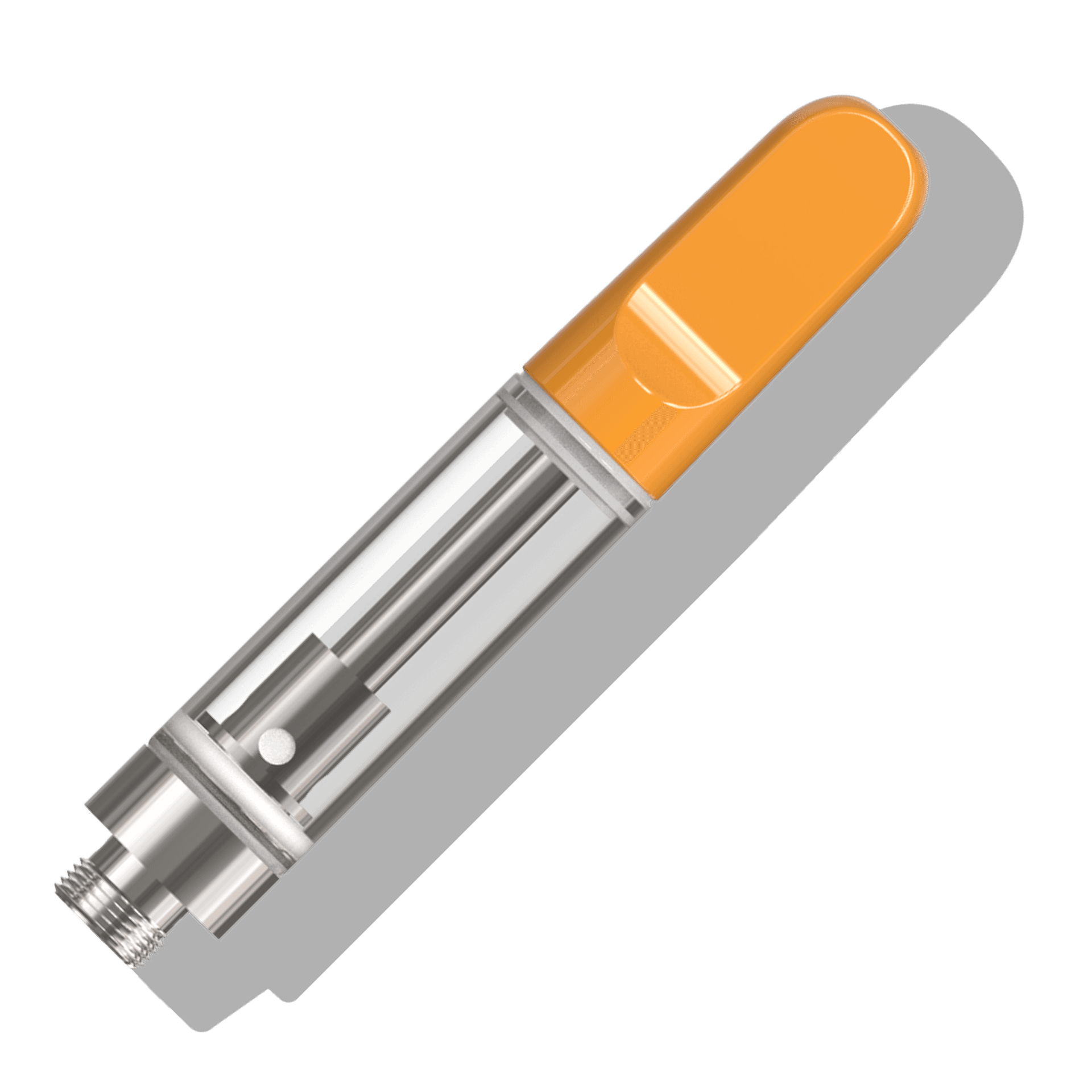
The center post is a structural and electrical component: it connects the base of the cartridge to the mouthpiece and carries current from the battery to the atomizer coil. That is the complete job description. It plays no role in how oil moves through the cart.

In a traditional design, the center post is metal, usually stainless steel. It sits in the middle of the cartridge, runs through the oil reservoir, and makes contact with the battery's positive terminal at the base.

In "full ceramic" designs, the center post is either replaced with a ceramic conductor or eliminated entirely, with the electrical path routed through the ceramic body of the cartridge itself.

The engineering difference affects the electrical pathway and the structural design. It does not affect how oil interacts with the atomizer core, how the atomizer saturates, or whether the cart clogs.

Does the center post material cause clogging?

No. Clogging is caused by a mismatch between the atomizer's saturation rate and the oil's viscosity, not by the material of the center post. A ceramic center post won't fix a clogging cart, and neither will removing the center post entirely.

The pitch usually goes something like this: metal center posts react with cannabis oil, causing degradation that leads to clogging and off-flavors. Removing the metal or replacing it with ceramic eliminates this interaction and produces a "cleaner" vaping experience.

As long as the center post uses high-grade materials that meet regulatory standards (see FDA cannabis hardware guidance), the material itself isn't the issue. The carts that clog on day one, day three, or halfway through the oil are clogging because the atomizer's saturation rate doesn't match the oil's viscosity. If your product is already in the field and clogging, the unclogging guide covers what consumers can do, but the durable fix is upstream in the hardware spec.

Does a ceramic center post improve flavor?

No. Flavor in a vape cartridge is determined primarily by oil quality, vaporization temperature, and the airflow characteristics of the hardware, and the center post influences none of those.

The second common pitch is that ceramic center posts produce "purer" flavor because the oil never touches metal. But oil in a cartridge contacts multiple surfaces:

  • the tank walls
  • the gaskets
  • the mouthpiece interior
  • the atomizer core itself

The center post is one of many contact points. Removing it from the equation while the oil still sits against every other surface doesn't produce the flavor improvement the marketing suggests.

The atomizer core material and its heat transfer properties matter far more than what the center post is made of. A cart with a metal center post and a properly matched atomizer running at the right temperature will produce better flavor than a full ceramic cart with a mismatched atomizer running too hot. The atomizer match and temperature profile dominate the flavor equation. The center post barely registers.

What do full ceramic cartridge designs actually change?

Full ceramic designs change structural durability, cost, and production handling, not clog resistance or flavor. Those are real engineering differences, just not the ones usually marketed. Internal diameter is another of those real differences: why postless 510 cart diameter matters for ceramic-core carts comes down to how much reservoir and airway room the design leaves the atomizer, not what the post is made of.

Structural fragility. Full ceramic designs break easier than metal-post designs. Ceramic is more brittle than metal. Drop resistance, capping pressure tolerance, and shipping durability all change with an all-ceramic construction. This matters more for operational reliability than center post material ever will.

Cost. Full ceramic cartridges typically cost more than traditional designs. Operators paying that premium should understand what they're getting: a different structural architecture. Not a clog-proof or flavor-superior product by default.

Filling and production considerations. Some full ceramic designs have different fill port configurations, headspace behavior, or capping requirements than traditional metal-post carts. These are practical differences that can affect your production line. If you're switching to a full ceramic design, validate the fill process separately from the atomizer match. Both matter, and they're independent variables.

Why are brands moving to postless 510 architecture?

Brands are moving to postless 510 cartridges because removing the central post can create more usable reservoir space, a different airflow path, and a cleaner visual presentation. Those are meaningful design choices, but postless does not automatically mean clog-free, leak-free, or better tasting. Performance still comes from the complete oil, atomizer, intake, airflow, seal, and battery system.

A posted cartridge uses a central structural and electrical path through the reservoir. A postless cartridge routes those functions through the base and body, leaving the center of the tank open. Buyers should compare the actual cartridge diameter, thread depth, intake geometry, airflow route, resistance range, materials, fill volume, and capping method, not treat “postless” as a complete specification.

Oil compatibility changes with the geometry. A postless base can alter how oil reaches the atomizer and how pressure equalizes during filling, storage, and repeated draws. Validate the brand’s real oil across temperature, orientation, fill-line conditions, leak and clog aging, voltage, and end-of-life performance. Thick rosin, high-terpene live resin, and standard distillate may require different intake and heating specifications even when they use the same postless shell.

  • Why brands adopt it: differentiation, open-tank aesthetics, potential reservoir efficiency, and a new airflow architecture.
  • What changes versus posted carts: reservoir layout, base construction, electrical path, airflow, filling behavior, and some mechanical dimensions.
  • What does not change: the need to match atomizer saturation, heat, materials, and voltage to the oil and validate the finished device before production.

What should you ask a vendor instead of "is it full ceramic?"

Ask about the atomizer compound, the oil viscosity range it was designed for, how many compounds the vendor offers, and their failure rate data across oil types. Those four questions predict cartridge performance; the center post question predicts nothing.

Start with the atomizer compound: what's in the core, and what oil viscosity range was it designed for? If the vendor can't answer specifically, the core is generic.

Then ask how many compounds they offer. One compound for all oil types means a guaranteed mismatch somewhere in your product line. Multiple compounds, each matched to a viscosity range, means the vendor has done the engineering work.

Ask for failure rate data across different oil types. A vendor confident in their atomizer match should have this. A vendor leading with center post material as their differentiator probably doesn't.

Finally, check whether the cartridge design affects your filling process. Some full ceramic designs have different fill port configurations, headspace behavior, or capping requirements. These are practical considerations that actually affect your production line.

Why did the ceramic center post myth take hold?

The myth took hold because it sounds like an engineering upgrade, pairs well with the wellness narrative around clean materials, and survives the kind of lightweight testing most buyers have time for.

When a sales rep tells a brand manager that swapping a metal center post for a ceramic one will deliver purer flavor and prevent clogs, the claim feels intuitive even though the physics tells a different story. Buyers who lack time to evaluate atomizer compounds default to the simpler heuristic, and the simpler heuristic in this category has become "is it full ceramic?"

The myth also survives casual comparison. A reviewer who fills two cartridges with the same oil, runs them on the same battery, and reports that the ceramic version tastes cleaner is reporting a real experience, but they are not isolating the variable they think they are isolating. Different cartridge brands almost always use different atomizer cores, wick channels, and intake hole geometries, so any difference observed across two carts is far more likely driven by atomizer engineering than by center post material.

How do you validate ceramic cartridge performance before you commit?

Validate by running controlled burn-down testing of multiple atomizer compounds against your specific oil, not by comparing center post materials. Sample multiple compounds against your oil's viscosity, document fill weights, capping torque, and headspace conditions, and run each batch through a defined protocol that captures dry hits, leaking, and clogging events.

A practical validation run captures four things at minimum. Fill consistency, which catches headspace and fill port issues that some ceramic designs introduce; first-puff performance, which reveals whether the atomizer wicks correctly out of the gate; mid-life behavior, where saturation mismatches typically begin to show as dry hits or burnt notes; and end-of-life behavior, where flooded carts or clogged airways expose oil-to-core mismatches. None of these tests care about whether the center post is metal or ceramic.

For a deeper technical breakdown of why saturation rate, not center post material, governs cartridge reliability, the ceramic core atomizer guide walks through the failure modes in detail. The oil compatibility analysis covers the field side of the same problem and explains why most consumer complaints trace back to oil-to-atomizer mismatch rather than user behavior or center post chemistry.

Which component actually determines whether a ceramic cart performs?

The atomizer core, matched to your oil's viscosity, determines performance. The center post never did.

Full ceramic cartridges aren't bad products. Some are well-made. But the ceramic exterior doesn't prevent clogs, doesn't meaningfully improve flavor, and doesn't replace the need for an atomizer matched to the oil. Postless or center post, if the atomizer compound is wrong for the oil, the cart will still clog. Any cannabis vape hardware manufacturer worth your volume should be leading with atomizer compounds and failure data, not center post material.

FAQs About Ceramic Carts and Center Posts

Do ceramic center posts prevent clogging?

No. Clogging is caused by a mismatch between the atomizer's saturation rate and the oil's viscosity. The center post is a structural and electrical component that does not touch the wicking system, so its material has no effect on whether a cart clogs.

Are full ceramic carts better than metal-post carts?

Not by default. Full ceramic designs change structural durability (ceramic is more brittle), cost (typically higher), and production handling. They do not inherently clog less or taste better; performance comes from the atomizer core and its match to the oil in either architecture.

What actually causes vape cart clogging?

An atomizer core whose saturation rate doesn't match the oil's viscosity. Thick oil on a fast-wicking core floods the airway; thin oil on a slow core starves it and produces dry hits. Both failure modes show up regardless of center post material.

What should I ask a cart hardware vendor before ordering?

Four things: what atomizer compound is in the core and what viscosity range it was designed for, how many compounds they offer, their failure rate data across oil types, and whether the cartridge design changes your filling process. A vendor leading with "full ceramic" instead of that data hasn't done the engineering work.

Does oil touch the center post in a 510 cartridge?

Yes, along with the tank walls, gaskets, mouthpiece interior, and the atomizer core itself. The center post is one of many contact surfaces, which is why replacing that single surface with ceramic does not produce the flavor improvement the marketing suggests.