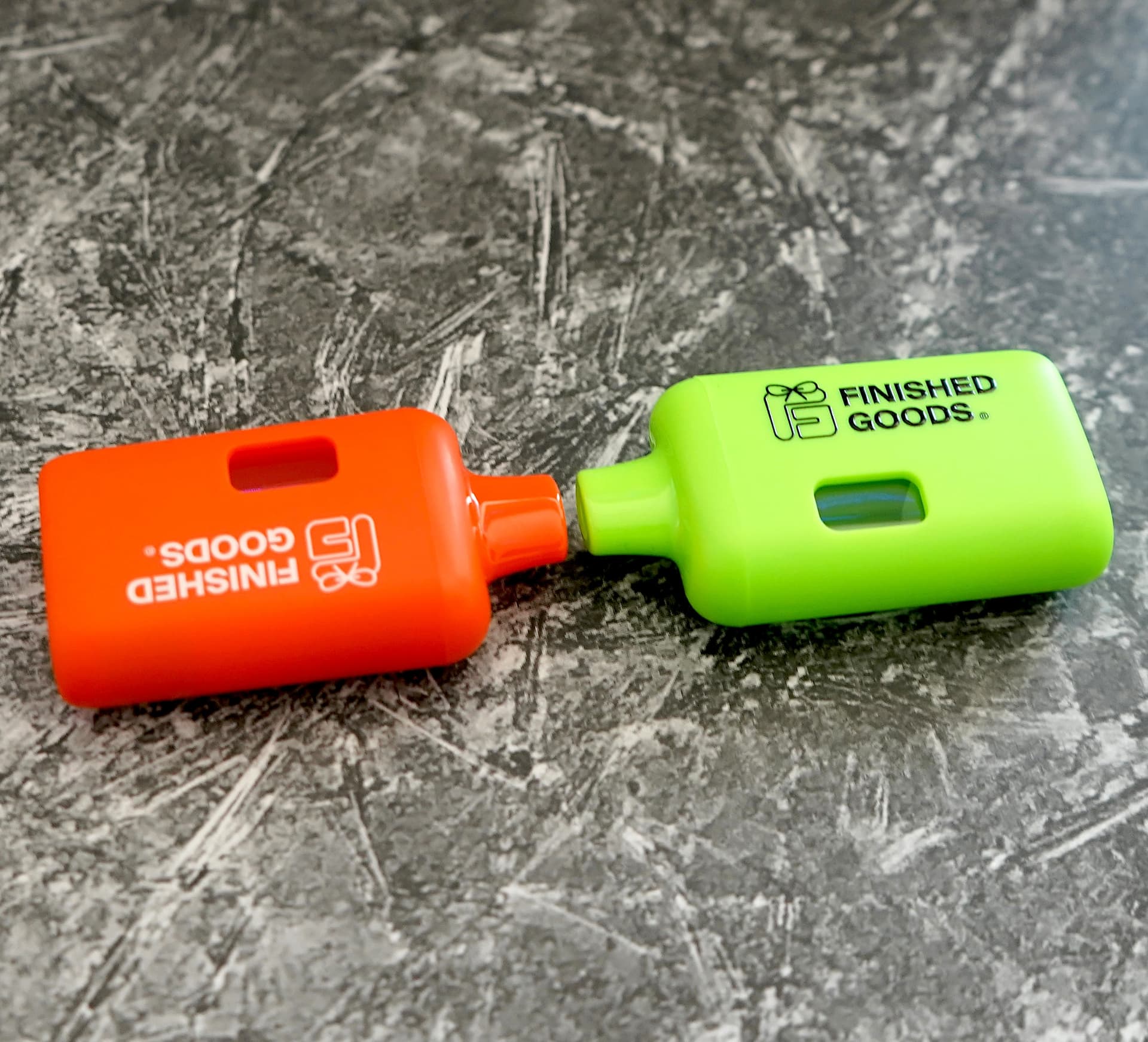
Vape Hardware Supplier Questions to Ask Before a PO
12 questions cannabis brands should ask a vape hardware supplier before signing a PO: atomizer fit, US stock, lead times, QC, testing, and payment terms.

A vape hardware supplier should answer every question in this guide against the exact configuration being quoted. Attach the written answers, drawing revision, signed samples, quality evidence, delivery terms, remedies, and change-control requirements to the purchase order. The cannabis hardware buyer hub connects these questions to a complete approval workflow and keeps later reorders tied to the configuration the brand actually tested.
Before signing a vape hardware PO, a licensed cannabis brand should get documented answers in ten areas: atomizer specs matched to your oil, actual (not quoted) lead times, verifiable US stock, SKU-specific CR certification, third-party heavy metals testing, MOQ and price-break structure, QC standards and defect history, cart-battery compatibility, customer references, and account management authority. This guide walks through each question and what a good answer looks like. Finished Goods publishes this from the manufacturer's side of the table: we QC test every unit before it ships and hold a 0.02% failure rate, so we know exactly which questions expose a weak supplier. For the full sourcing picture, start with our cannabis vape hardware manufacturer guide.
The five questions that matter most. If you only have time to ask a handful before the PO, ask these:
- What atomizer is inside this cartridge, and what oil is it tuned for? A supplier who can't name the ceramic grade, coil resistance, and oil viscosity range is selling generic catalog hardware they didn't engineer.
- What was your actual lead time on your last three comparable orders, not just your quote? Quoted lead times are negotiating positions; delivered ones are the track record.
- Is this hardware CR-certified to 16 CFR § 1700.20, and can you send the third-party lab report for this exact SKU? A certificate summary is not a test report, and a factory-level cert may not cover your configuration.
- What is your AQL standard and your documented defect rate over the last six months? This is the vape hardware quality control question that separates a measured supplier from a sales answer of "effectively zero."
- Can I talk to two or three of your current US brand customers? Then actually call them and ask whether lead times and defect rates held in production.
The rest of this guide expands each of these, plus five more on US stock, heavy metals, pricing tiers, compatibility, and account authority.
The cannabis vape hardware market is one of the most opaque corners of the entire industry. Brand operators are placing orders that often exceed six figures with overseas factories they've never visited, on the basis of sample units and a sales rep's quotes, into a category where a single bad production run can stall a launch by six months and put a real dent in a brand's annual P&L. The hardware decision is high-stakes, low-visibility, and almost everyone learns the hard way which questions actually matter.
This is the buyer's guide we wish every brand had before they cut their first hardware PO. A great supplier will share data, a mediocre supplier will share marketing, and a poor supplier will share excuses. The supplier you sign with today defines your product, your margins, and your launch timeline for the next twelve months.
What atomizer is inside this cartridge, and what oil is it tuned for?
Ask the supplier to name the specific atomizer in the cartridge and the oil viscosity range it was engineered for; a supplier who can't answer in those terms is either selling generic catalog hardware they didn't engineer or haven't tested the atomizer against representative cannabis oils. This is the most consistently underasked question in hardware sourcing.
The honest answer should include specifics:
- The type of ceramic (porosity grade)
- The coil resistance (typically 1.0Ω-1.6Ω for modern carts)
- The aperture size
- The oil viscosity range it performs best with
The follow-up: "Can I send a 5g sample of my actual oil to your testing lab, and can you run it through the proposed atomizer and report back on consumption rate, leak rate at 72 hours of inversion, flavor profile across 200 puffs, and end-of-tank performance?" Good suppliers will do this routinely. Mediocre suppliers will charge a fee. Bad suppliers will tell you it isn't necessary.
If your product line includes multiple oil types (distillate flagship, live resin specialty, rosin premium), ask whether the same atomizer is being recommended for all three. If yes, that's a red flag: no single atomizer performs equally well across that viscosity range. You should be getting different atomizer specs for different oil products, even if the visible hardware body looks identical.
What is your actual lead time, not just your quoted one?
Quoted lead times in cannabis hardware are negotiating positions, not predictions, so ask for the supplier's actual lead time on their last three comparable orders alongside the quote. Suppliers with disciplined operations can answer this. Suppliers who can't are telling you something: either their production is variable, or they don't track their own performance.
Ask two specific things:
What's your quoted lead time on this order? The supplier will tell you. Write it down.
What was your actual lead time on the last three orders of similar configuration? This is the question that separates real partners from sales-driven reps.
For reference, current healthy lead times look roughly like:
- Standard catalog hardware, no customization: 4-6 weeks
- Custom-printed/branded hardware on existing molds: 6-10 weeks
- Custom-tooled hardware (new mold, new geometry): 14-20 weeks
- Any hardware with a regulatory testing requirement (CR cert, lead/heavy metals): add 2-4 weeks
If you're being quoted dramatically faster than this, and especially if you're being quoted 3-week lead times on custom work, assume the quote is for a queue position, not actual production. The pad in the quoted timeline is going to come out of your timeline.
Do you have US stock, and what does "in stock" actually mean?
Real US stock means finished or near-finished units of your specific SKU sitting in a physical US warehouse, and the only way to know is to ask where the stock is, in what configuration, and what the reorder cycle looks like. "Do you have stock in the US?" is the right opening question; the follow-ups are more important:
Where is the stock physically? A warehouse in Los Angeles, Chicago, or New Jersey is a real US position. A "fulfillment partner in the US" might mean inventory still has to clear customs before it ships to you.
How much stock, in what configuration? Stock of generic catalog hardware doesn't help you if your product needs printed branding. Ask specifically: "Do you have US stock of *this specific SKU* in the configuration I'm ordering?" The honest answer is usually "we have unprinted bodies in US stock; printing happens here on a 1-2 week turnaround." That's fine, but it's different from "fully finished SKUs ready to ship."
What's the reorder lead time on US stock? When US stock runs out, you're back on overseas lead times. Suppliers with a real US position will tell you their reorder cycle. Suppliers without one will be evasive.
US stock matters because international freight on cannabis hardware has been volatile for the better part of five years. The supplier with US stock can ship to you in 3-5 days; the supplier without it is at the mercy of ocean freight schedules, customs, and the periodic shipping disruptions that have become normal.
Is this hardware CR-certified, and can you send the lab report?
The right answer is a third-party lab report, as a PDF, covering the exact SKU and configuration you're ordering under 16 CFR § 1700.20; anything less than that is not CR certification. Child-resistant certification is the single most consequential compliance variable on a cannabis vape product, and it's also the one most consistently fudged in supplier conversations.
Ask: "Is this hardware CR-certified to 16 CFR § 1700.20, and can you send me the third-party lab report?"
The report (typically from a US-based or EU-based test house, not a Chinese in-house test) should include:
- The specific SKU tested
- The date of testing
- The methodology used (typically Senior Adult Use Effectiveness + Child Resistance Effectiveness)
- The pass/fail results
- The lab's accreditation information
The wrong answers, in roughly increasing order of concern:
- "We can send you a certificate." (A certificate isn't a test report. Get the report.)
- "Yes, we're CR-certified at the factory level." (Factory-level certs cover the mechanism but might not cover your specific SKU. Get SKU-specific documentation.)
- "Our supplier is certified." (You're not buying from the supplier's supplier. Get the test report for what you're actually buying.)
- "We can certify after you place the order." (No. Cert before PO.)
Also relevant: if you're modifying the hardware in any meaningful way (different size, different finish, different closure mechanism), that may invalidate the certification. Ask explicitly: "Does the cert I'm being shown cover the exact configuration I'm ordering?"
What heavy metals testing has been done on this hardware?
At minimum, the hardware should have third-party lab reports covering lead, cadmium, mercury, and arsenic, tested both unfilled and filled with a reference oil and aged. Cannabis vape hardware testing for heavy metals, particularly lead, has become non-negotiable. California, Massachusetts, and several other states test cannabis vape products at the retail level and reject products that exceed established thresholds. The hardware itself, particularly older designs with leaded brass components or low-quality solder, can be a meaningful contributor to total heavy metal exposure.
Ask: "What heavy metals testing has been done on this hardware, by whom, and can you send me the lab report?"
The aged-and-filled test matters because heavy metal migration from hardware into oil happens over time, not just on day one. Good suppliers test this routinely and have reports ready. Mediocre suppliers will offer to test on request. Bad suppliers will tell you it's not necessary because "the hardware is food-grade." Food-grade is a marketing term, not a testing certification. For a deeper look at which materials fail and how the lab tests work, see our guide to heavy metals in vape cartridges.
For California specifically, ask about Prop 65 compliance and whether the hardware has been tested against the specific lead thresholds (currently 0.5 µg/g for inhalable products in CA Bureau of Cannabis Control testing). For Massachusetts, ask about CCC heavy metal limits. The thresholds differ by state, and a supplier who knows the differences is a more sophisticated supplier.
What is your MOQ, and where are the price breaks?
The MOQ is just the entry point to a supplier's pricing structure; the real conversation is the price breaks and lead-time changes at 10K, 25K, 50K, and 100K units. Most suppliers quote an MOQ and stop there. Push further:
- What's your absolute MOQ?
- What are the price breaks at 10K, 25K, 50K, 100K units?
- Are there any volume tiers where lead time changes, better or worse?
- What's the upcharge structure for printed/branded customization at each tier?
The reason this matters: cannabis vape products scale fast when they work. A SKU launches at 10K units of monthly demand and is at 80K by month nine. If your hardware supplier's pricing doesn't have clear, predictable break points, you're going to renegotiate every time you grow, and you're going to discover that some suppliers' pricing flattens above 50K (meaning no further savings as you scale) or, worse, gets more expensive because the supplier prioritizes other customers. Unit price is also only part of the picture; for the landed-cost math including defects, freight, and returns, see the true math of vape hardware costs.
What is your QC process and AQL standard?
A serious supplier can name their AQL standard, describe inspection at three stages of production, and quote their actual defect rate from the last six months. "What's your QC process?" gets you a sales answer; these questions get you data:
- What's your AQL (Acceptable Quality Limit) standard? A serious supplier runs a zero-acceptance plan on critical defects and a tight AQL (1.5 or 2.5) on major defects. A loose AQL like 4.0 on critical defects is a red flag.
- Who inspects, where, and at what stage? Inline (during production), end-of-line (after each unit is finished), and pre-shipment (final inspection) are the three QC stages. Best suppliers do all three. Cheapest do none.
- What's your defect rate over the last six months? A real number, in a real range (typically 0.5%-3% for cannabis hardware), is the right answer. "Effectively zero" is not.
- What happens when there's a defect run? Who pays, and how fast can you remake? Get this in writing.
If you want to see what end-of-line testing looks like when it's automated rather than sampled, read our breakdown of the automated vape testing machine Finished Goods runs before any unit leaves the facility.
Vape hardware quality control benchmarks: what "good" actually looks like
Vape hardware quality control only means something when it's attached to numbers. Ask the supplier to put their standards next to these benchmarks; the gap between a top-tier supplier and a broker shows up immediately.
- AQL: zero acceptance on critical defects. Critical defects (short circuit, leak, a failed CR mechanism) make a unit unsafe or unsellable, so the right standard is a zero-acceptance sampling plan (c = 0), not a defect percentage you agree to pass. AQL 2.5 is common for major defects (visible-but-cosmetic, mild draw inconsistency) and 4.0 for minor ones. A supplier who quotes a loose AQL like 4.0 on critical defects is telling you they will ship unsafe units.
- Production defect rate: 0.5%-3% typical, under 0.5% best-in-class. This is the real-world rate across a finished lot, not the AQL sample. Anything reported as "effectively zero" without per-unit testing is marketing. Finished Goods holds a 0.02% failure rate by machine-testing every unit rather than sampling.
- Leak rate at 72 hours of inversion: under 1%. The inversion test catches the seal and o-ring failures that a dry bench check misses.
- Dead-on-arrival / short-circuit rate: under 0.3%. These are the failures that reach the consumer's hand and become a brand-reputation problem, not just a warehouse write-off.
- Draw/airflow variance: within a stated tolerance across the lot. Inconsistent draw is the most common "the sample was great, production wasn't" complaint. Ask what their airflow tolerance is and how they measure it.
The test protocols a real supplier runs
"We test everything" is a claim, not a protocol. A supplier with real vape hardware quality control can walk you through what happens to a unit at each stage:
- Incoming material inspection. Ceramic porosity grade, metal and alloy composition (the heavy-metals story starts here), and o-ring/seal material verified against spec before assembly.
- Inline checks during production. Sampling at the line to catch a drifting process before it produces a whole bad lot.
- End-of-line functional test. The unit is powered and checked: coil resistance in range, it fires, airflow within tolerance, no short. Best-in-class suppliers do this on 100% of units, not a sample.
- 72-hour inversion leak test. Filled with a reference oil, inverted, and checked for weep at the mouthpiece and the base.
- Heavy metals migration test. Lead, cadmium, mercury, and arsenic, tested both unfilled and filled-and-aged, because migration from hardware into oil happens over time, not just on day one.
- Mechanical tests. Threading torque, pull-force on the mouthpiece, and drop testing on the packaged unit.
- Pre-shipment AQL sampling. A final inspection against the agreed AQL before the lot ships.
If a supplier can only describe the first and last of these, they are sampling quality in, not building it in.
What to put in the quality agreement (the QC SLA)
The questions above only protect you if the answers are contractual. A vape hardware quality agreement (a QC SLA) should specify, in writing:
- The AQL standard and defect categories the lot will be inspected against.
- A defect-rate reporting cadence so you see per-lot quality data, not just a shipment.
- The RMA window and who pays freight on a confirmed defect run. On a real defect lot, the supplier eats rework and freight; if that isn't in writing, you'll be arguing about it mid-crisis.
- A remake turnaround SLA so a rejected lot doesn't silently reset your launch timeline.
- Containment and root-cause obligations on a failed lot: quarantine the suspect inventory, then report what went wrong and what changed.
- Your right to a third-party inspection at the factory before the lot ships, at your option.
A supplier who will sign a QC SLA with these terms is telling you their defect numbers are real. A supplier who resists is telling you the opposite.
How do I verify cart and battery compatibility before the PO?
Get samples of the proposed hardware, pair them with your actual battery or cart, and assemble the combination yourself before you sign anything. This is the single most important test before a PO, especially if you're sourcing the cart and battery from different vendors. Check:
- Does the cart sit flush against the battery, or proud?
- Does the threading engage smoothly, with appropriate torque, without wobble?
- Does the cart fire at the voltages you intend to recommend to consumers?
- Are there any cosmetic mismatches, slight color variance, finish difference, alignment issues at the seam?
This is the test that catches the problems that don't show up until production-scale assembly. Do it before the PO, not after.
Can I talk to your current brand customers?
Yes, and a supplier who hesitates to provide references is telling you something. Ask for two or three current US-based brand customers, of comparable scale, who you can contact. Then actually contact them. Ask:
- How has lead time tracked against quotes?
- How have defect rates been in production?
- What happens when there's a problem?
- Would you order from them again?
References who say "we're switching" or "they were fine for our first run but got slower" are telling you something else.
Who is my point of contact, and what authority do they have?
The right setup is a named account manager with the authority to make decisions: adjust lead times, approve QC remakes, escalate to engineering. This question is the most underrated on the list. The wrong setup is a sales rep who has to "check with the factory" on every question, which means you're playing telephone through someone whose incentives are to close orders, not to manage your account.
For high-volume relationships, the right setup is a US-based account team backed by overseas production. The fully overseas account is workable but slower; the fully US-based account team without a real production tie is hollow.
What should you have in hand before signing the PO?
Ten documents and confirmations, one for each question above. Before you sign a vape hardware PO, you should have:
- Atomizer specs matched to your specific oil
- A written lead time you trust based on the supplier's history, not their quote
- A real US stock position you can verify
- The actual CR certification report for your specific SKU
- Third-party heavy metals test reports
- Clear pricing tiers and volume break points
- An AQL standard, defect history, and remake policy
- Verified hardware compatibility with your battery or cart pairing
- Reference customers you've actually talked to
- A named account manager with decision authority
If a supplier can deliver clean answers on all ten, you're in a strong position. If they can deliver on six or seven, proceed with caution and tighter contractual protections. If they can deliver on fewer than five, keep looking: the cannabis hardware market has enough real partners that you don't have to compromise on this.
The hardware you put your brand on is the hardware that defines your product in the consumer's hand. Spec the supplier as carefully as you spec the device.
FAQ
How do I vet a cannabis vape hardware manufacturer?
Ask for data instead of marketing: atomizer specs tuned to your oil viscosity, actual lead times on their last three comparable orders, SKU-specific CR certification to 16 CFR § 1700.20, third-party heavy metals reports, and a stated AQL standard with a real defect-rate history. A cannabis vape hardware manufacturer that can produce all of that in writing before you sign is in the top tier of the market. Then verify independently: contact two or three of their current US-based brand customers and assemble sample hardware with your own battery or cart before the PO.
What questions should I ask about custom branded vape hardware?
Ask three things beyond the standard checklist: whether the CR certification covers your customized configuration (changes to size, finish, or closure can invalidate the cert), what the lead time is for custom work (6-10 weeks on existing molds, 14-20 weeks for new tooling), and what the customization upcharge looks like at each volume tier. Custom branded vape hardware fails buyers most often on the certification gap, so get SKU-specific documentation for the exact configuration you're ordering.
What is a normal defect rate for cart hardware?
A typical defect rate for cannabis cart hardware runs 0.5%-3%, and a supplier quoting "effectively zero" without per-unit QC testing is giving you a sales answer, not a measurement. Finished Goods holds a 0.02% failure rate by machine-testing every unit before it ships rather than sampling.
Do vape hardware suppliers really keep stock in the US?
Some do, but "US stock" ranges from finished SKUs in a Los Angeles warehouse to unprinted bodies that still need a 1-2 week printing turnaround to a "fulfillment partner" whose inventory hasn't cleared customs yet. Ask where the stock physically sits, whether it's your specific SKU in your configuration, and what the reorder cycle is when that stock runs out. Real US stock ships in 3-5 days.
Should CR certification come before or after the purchase order?
Before, always. A supplier who offers to certify after you place the order is asking you to carry the compliance risk of their hardware. Require the third-party lab report (not a certificate summary) for the exact SKU and configuration you're buying before any money moves.
What does good vape hardware quality control look like?
Good vape hardware quality control is measurable: zero-acceptance sampling on critical defects (short circuit, leak, a failed CR mechanism), an AQL around 2.5 on major defects, a documented production defect rate in the 0.5%-3% range (under 0.5% for the best suppliers), a leak rate under 1% at 72 hours of inversion, and a dead-on-arrival rate under 0.3%. It runs across defined test protocols (incoming material checks, end-of-line functional testing on every unit, a 72-hour inversion leak test, and heavy metals migration testing) and it is backed by a written quality agreement covering defect reporting, RMA terms, and remake turnaround. A supplier who answers "effectively zero" without per-unit testing is describing marketing, not quality control. Finished Goods holds a 0.02% failure rate by machine-testing every unit before it ships.