Finished Goods: Building Better Cannabis Hardware Through Engineering, Customer Experience, and Relentless Iteration
Meet Finished Goods and the engineering, oil-matched atomizers, testing, service, supply strategy, and customer feedback behind its cannabis hardware.
The Company Behind the Brands
Most cannabis consumers recognize the logo on the vape package. Very few know the company that engineered the hardware inside.
That’s exactly where Finished Goods has positioned itself.
Rather than building a consumer-facing cannabis brand, Finished Goods focuses entirely on the businesses behind those brands developing wholesale vape hardware, packaging, and technology used by operators throughout North America.
Today, the company supplies products across 36 legal states and provinces and has shipped more than 100 million products in less than four years.
It’s a scale that didn’t happen through flashy marketing.
It happened through obsessive product development, customer service, and solving one of cannabis’ biggest quality problems.
A Conversation That Started at High Supply
The interview began shortly after both companies attended the High Supply trade show.
Luke described the event as one of the better industry experiences he’s attended, not simply because of attendance, but because of the quality of both exhibitors and buyers.
More importantly, the event reinforced something Finished Goods has relied on since day one:
Relationships still matter.
While digital marketing continues evolving, cannabis remains an industry built heavily through in-person connections, referrals, and trust. Trade shows continue serving as one of the most effective places to build those relationships.
From Tech to Cannabis
Before Finished Goods existed, Luke wasn’t designing vape hardware.
He came from the technology industry in San Francisco.
Wanting to return to cannabis, he partnered with Kyle, who had recently moved to Los Angeles to enter the legal market.
The two initially worked as brokers around 2018, selling whatever cannabis products they could, including packaging and 510-thread vape cartridges.
Over time, patterns emerged.
Packaging continued growing.
Hardware continued growing.
Eventually, they realized there was an opportunity to build something much larger.
Finished Goods officially launched in July 2022, bringing their existing customer relationships with them and focusing entirely on wholesale cannabis hardware and packaging.
Why Most Vape Problems Aren’t Actually “Bad Hardware”
One of the most interesting discussions centered around clogged vape cartridges.
Consumers often assume a clogged vape means they purchased a defective cartridge.
Manufacturers often blame “bad batches.”
Luke believes both explanations are usually incomplete.
Instead, Finished Goods discovered that many hardware failures come from a mismatch between:
- oil viscosity
- ceramic atomizer composition
- airflow
- operating temperature
Different cannabis extracts behave dramatically differently inside identical hardware.
For example:
- Distillate with high terpene percentages flows much thinner.
- Low-terpene distillate behaves much thicker.
- Live resin introduces additional variables.
- Rosin presents an entirely different challenge due to its fats, lipids, and natural compounds.
Using one universal cartridge for every extract creates inconsistent consumer experiences.
Some oils clog.
Others leak.
Some produce burnt flavors.
Others never reach optimal vaporization.
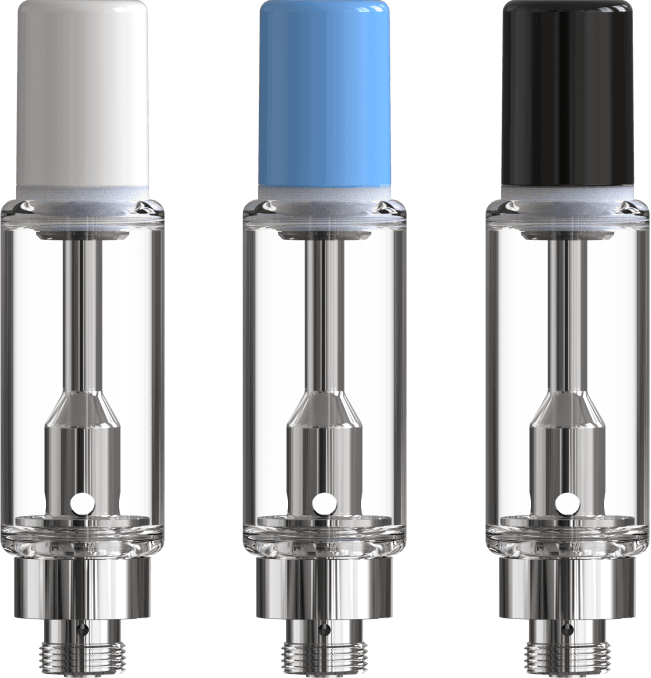
Finished Goods instead engineered multiple atomizer configurations specifically matched to different oil profiles.
Five Atomizers Instead of One
Rather than advertising one “perfect” cartridge, Finished Goods developed five separate atomizer platforms.
Each uses different ceramic compounds optimized for different extract characteristics.
Instead of asking:
“What’s your best vape?”
Luke believes brands should instead ask:
“What’s your best vape for our oil?”
That distinction fundamentally changes hardware selection.
A live resin brand shouldn’t necessarily use the same internal hardware as a distillate brand.
Likewise, solventless rosin requires a completely different approach than high-terpene distillate.
Finished Goods customizes hardware around:
- oil viscosity
- extract type
- airflow
- operating temperature
- customer preferences
The result is a significantly more reliable vaping experience.
Why Rosin Is So Difficult to Vape
Rosin has become one of the fastest-growing premium categories in cannabis.
Ironically, the same characteristics that make rosin desirable also make it difficult to vaporize consistently.
Unlike distillate, which removes most plant material during extraction, rosin retains many naturally occurring compounds.
Those fats, lipids, and additional materials create richer flavor and a fuller-spectrum experience.
However, they also accelerate atomizer degradation.
Over time those compounds clog ceramic pores, reduce efficiency, and eventually produce the burnt taste many consumers recognize.
This explains why many solventless vape products historically remained limited to half-gram formats.
Finished Goods has spent years engineering hardware specifically to extend performance for solventless extracts while maintaining flavor throughout the cartridge’s lifespan.
Building a Better Testing Process
Engineering hardware requires more than theory.
It requires testing. Lots of it.
Initially, Finished Goods relied on extensive real-world feedback from customers, partners, employees, and friends.
Eventually they built a dedicated automated vape testing machine capable of repeatedly drawing from cartridges throughout nearly their entire usable life.
The purpose isn’t simply determining whether a vape works when full.
It’s determining whether it still performs well when almost empty.
According to Luke, customers frequently return products after consuming nearly the entire cartridge if the final portion develops poor flavor or functionality.
That makes end-of-life performance just as important as the first hit.
Customer Service as a Competitive Advantage
When Finished Goods launched independently, they weren’t the largest supplier.
They didn’t have institutional funding.
They didn’t have enormous financial reserves.
What they did have was customer trust.
Most of their brokerage customers followed them into the new business because they trusted Luke and Kyle rather than the brokerage itself.
That philosophy continues today.
Instead of viewing hardware as a commodity, Finished Goods treats support, responsiveness, and problem-solving as part of the product.
Many customers have remained with the company for nearly eight years, dating back to the founders’ brokerage days.
Entrepreneurship Isn’t Glamorous
When asked about the biggest challenge of building the company, Luke didn’t identify a single obstacle.
His answer was simpler.
Everything is an obstacle.
Running a business means solving new problems every day.
While many people aspire to “be the boss,” entrepreneurship often involves constant pressure, uncertainty, and responsibility.
For Luke, the motivation comes from working with customers across North America, continually improving products, and building something meaningful inside an industry he genuinely enjoys.
Cannabis Vapes Continue Growing
Market trends continue favoring vaporization.
Luke noted that vape sales have become one of cannabis’ largest categories, even surpassing flower in certain markets.
Convenience plays a significant role.
Consumers increasingly value discreet, portable products that fit modern lifestyles.
As higher-end extract categories like live resin and rosin continue expanding, hardware quality becomes increasingly important.
Consumers paying premium prices expect premium experiences.
That places additional pressure on manufacturers to eliminate clogging, leaking, inconsistent airflow, and burnt flavors.
The Next Generation Pod Platform
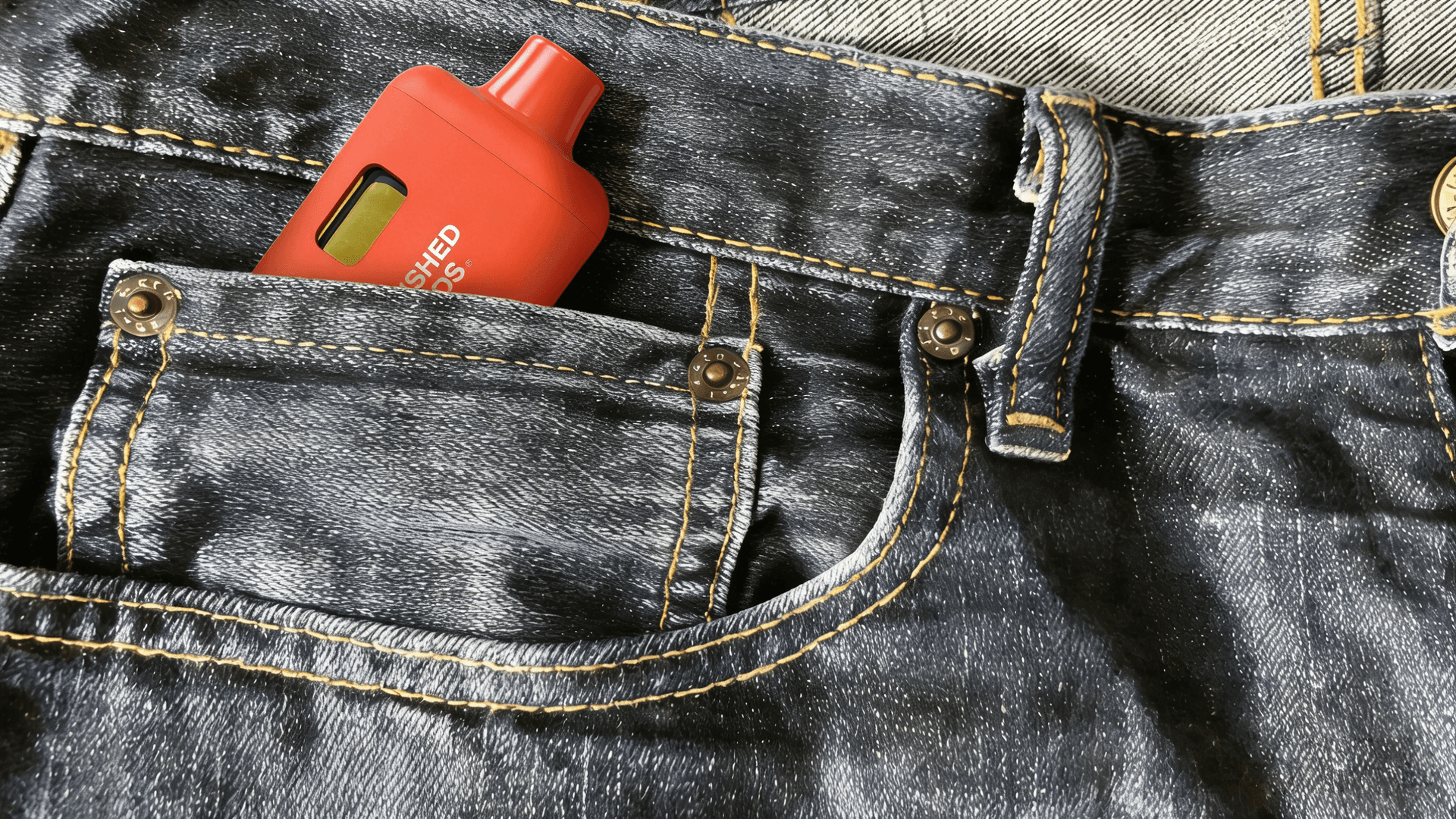
One of the most exciting parts of the conversation involved Finished Goods’ modular Pod System.
Unlike traditional pod designs, the new platform separates the mouthpiece from the replaceable pod.
That seemingly small change creates significant engineering advantages.
The system allows:
- interchangeable atomizers
- multiple oil compatibility options
- customizable airflow
- one- and two-gram configurations
- improved ergonomics
- stronger magnetic retention
- simplified branding for cannabis operators
Rather than forcing brands into one hardware configuration, Finished Goods designed a flexible platform capable of adapting to numerous extract types while maintaining the same overall device architecture.
Airflow Matters More Than Most Consumers Realize
Another area of innovation involves adjustable airflow.
Finished Goods borrowed concepts widely accepted in nicotine devices and adapted them for cannabis.
Consumer preferences differ by region.
Some markets prefer tighter draws.
Others enjoy more open airflow.
Instead of manufacturing separate devices for every customer, Finished Goods incorporated adjustable airflow directly into the hardware, giving consumers greater control without changing voltage or temperature.
It’s another example of engineering focused less on novelty and more on improving everyday usability.
Growing Without Traditional Marketing
Perhaps surprisingly, Finished Goods spent very little on marketing during its first several years.
Growth came primarily from:
- referrals
- existing relationships
- customer retention
- cannabis trade shows
Only recently has the company begun investing more heavily in digital marketing initiatives.
For Luke, face-to-face interaction still outperforms cold emails and unsolicited phone calls.
Well-curated industry events remain one of the fastest ways to establish credibility and begin meaningful business relationships.
Finished Goods Operating Record
The practical test of Finished Goods is whether the approved hardware, oil match, service plan, and supply program can be repeated after the first successful sample. Keep the signed device or cartridge revision, oil and fill conditions, artwork, quality evidence, delivery commitment, and change-control terms together with the purchase order.
After launch, connect customer feedback and returns with the lot and approved configuration. Finished Goods can then distinguish a hardware issue from an oil, filling, storage, battery, or use-condition issue and update the test or specification that actually controls the problem. The cannabis hardware buyer hub documents the broader qualification workflow.
That operating loop, approve, reproduce, measure, investigate, and improve, is how Finished Goods turns engineering and customer experience into a repeatable supplier relationship rather than a one-time product claim.
Final Thoughts
Finished Goods represents a different kind of cannabis company.
Rather than competing for retail shelf space, the company focuses on enabling hundreds of brands behind the scenes.
Its philosophy is rooted in engineering, customer experience, and continuous refinement.
As cannabis extracts continue evolving, and consumers become less forgiving of inconsistent hardware, the importance of reliable vape technology will only increase.
For Finished Goods, success isn’t measured by having its logo on dispensary shelves.
It’s measured by creating hardware that consumers never have to think about because it simply works.