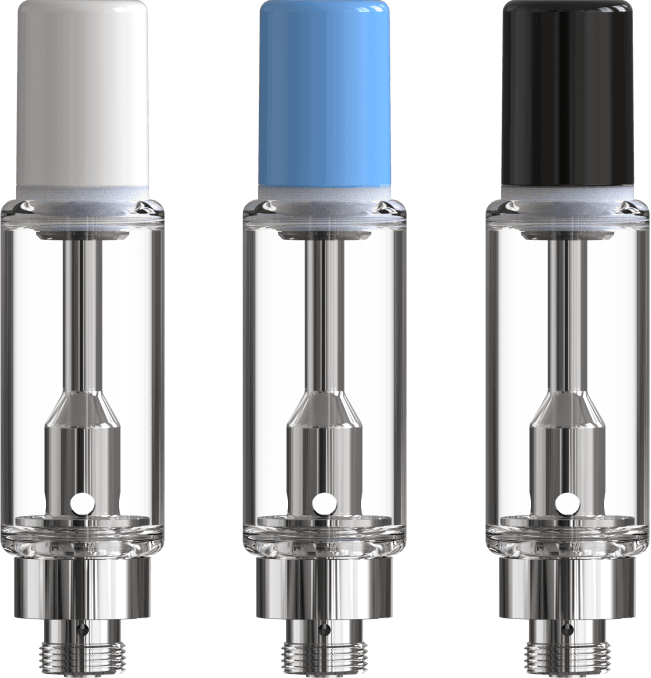
Cannabis Vape Hardware RFQ Template: What to Send Suppliers and What to Demand Back
Use a vape hardware RFQ template covering product specs, oil fit, batteries, MOQ, lead time, quality, compliance, branding, and supplier remedies in writing.
A vape hardware RFQ template lets licensed brands compare suppliers against the same product, commercial, quality, compliance, and branding requirements.
If you are sourcing cannabis vape hardware and want comparable quotes back from three or four suppliers, your RFQ needs 12 specific line items covering product spec, commercial terms, quality SLAs, compliance documentation, and custom branding. Send anything less and you will get back price sheets that are impossible to compare, plus a lot of follow-up emails. This post walks through every line, explains why it matters, and shows what a complete supplier response looks like. There is a downloadable template at the bottom.
TL;DR: the 12 line items
A usable vape hardware RFQ covers:
Use the cannabis vape hardware manufacturer guide to qualify the supplier behind the quote.
Product format and capacity (0.5ml, 1.0ml, 2.0ml, disposable vs. 510 cart, pod system)
Oil viscosity range the hardware is validated for
Heating element type and intake aperture
Airflow configuration (adjustable, fixed, intake diameter)
Battery spec for disposables and AIOs (mAh, preheat, voltage settings)
MOQ per SKU and per PO
Tiered unit pricing at defined volume breaks
Lead time for stock units and for custom orders
Payment terms, incoterms, and tariff treatment
QC procedure, failure-rate cap, and RMA policy
Compliance documentation (heavy metals, CR certification, prop 65 where relevant)
Custom branding scope, artwork process, and per-SKU minimums
If a supplier cannot answer all 12 in one document, you are going to spend the next three weeks chasing them.
Product spec block
This is where most RFQs are too vague. "Send me a quote on 1ml carts" is not a spec. A supplier who takes that seriously will guess, and you will end up comparing quotes on different products.
Capacity and format
State the format explicitly: 510 cartridge, all-in-one disposable, pod-based system, or rechargeable disposable. For carts and disposables, name the fill volume in ml. For pod systems, name the pod capacity and whether pods are proprietary or open.
Oil compatibility
Provide the viscosity range of the oil you actually run, in centipoise if you have the number, or by description if you do not (live resin, distillate, distillate with 10 to 15 percent terpenes, rosin, etc.). Hardware that wicks distillate cleanly can starve on a heavy live resin, and hardware built for rosin can flood on thin distillate. Ask the supplier to state the viscosity range their hardware is validated against, not just "works with all oils."
Heating element and intake
Ask for the element type (ceramic, quartz-in-ceramic, mesh, etc.), the intake aperture size in mm, and the resistance in ohms. These three numbers determine how the hardware actually performs with your oil. A supplier who cannot state them is reselling something they did not engineer.
Airflow
Fixed or adjustable. If adjustable, how many positions or is it continuous. Intake hole diameter. This drives draw resistance, which drives consumer perception more than almost any other spec.
Battery (for disposables and AIOs)
mAh rating, charge port (USB-C is now standard, anything else is a red flag on new programs), preheat function, voltage adjustment if any, and cycle life.
Commercial block
MOQ
Ask for MOQ per SKU and per PO separately. A 10,000 unit PO MOQ split across five SKUs is very different from 10,000 units per SKU. Also ask for MOQ on custom printed units versus blank stock, because custom almost always carries a higher floor.
Tiered pricing
Request pricing at defined volume breaks. A useful set is 5k, 10k, 25k, 50k, and 100k units. Pricing that only appears at one volume tells you nothing about how the supplier will scale with you.
Lead time
Separate stock lead time from custom lead time. Stock should be days, custom is usually weeks. Ask for the lead time clock start (PO signed, deposit received, art approved) because these vary.
Payment and incoterms
Deposit percentage, balance trigger, incoterms (DDP, FOB, EXW), and who eats tariff changes if rates move between PO and delivery. This last point matters. Ask directly: if tariffs change between order and shipment, who pays the delta.
Quality block
This is the block most buyers skip and most regret skipping.
QC procedure
Ask what percentage of units are functionally tested at the factory, what the test covers (draw, resistance, leak, cosmetic), and whether you get a QC report per lot.
Failure-rate cap
What is the contractual failure-rate cap, and what happens when it is exceeded. A supplier willing to write a number here (typical caps sit between 1 and 3 percent depending on format) is a different animal from one who says "we stand behind our product."
Sample approval
Ask for pre-production samples filled with your oil, not empty units. Empty hardware tells you the mold looks right. Filled hardware tells you if it actually works with your formulation. Get the sample policy in writing: how many units, how long, who pays freight.
RMA policy
What is the process for returning failed units, what is the window, and does the supplier ship replacements or credit the account.
Compliance block
Heavy metals
Request current third-party heavy metals test results (lead, cadmium, arsenic, mercury, nickel, chromium, antimony) on the specific hardware you are quoting, not a generic factory certificate from two years ago. Test results should be dated within the last 12 months and tied to the SKU.
Child-resistance
If you sell into a state that requires CR packaging or CR hardware, ask for the certification document and the testing standard (16 CFR 1700.20 for US CPSC). "CR compliant" without a document is marketing.
Tariff and country of origin
Ask for HTS classification, country of origin, and current tariff rate. Ask how the supplier handles Section 301 exposure. If you buy DDP, this should be baked into the unit price, but you still want to see the math.
State-specific
California buyers need Prop 65 language. New York and a handful of other states have specific hardware disclosure rules. Ask the supplier what state programs they have shipped into and whether they have had product rejected at any state lab.
Custom branding block
Scope
Name the surfaces you want printed or engraved: mouthpiece, battery body, cartridge sleeve, box, insert. Different surfaces have different methods (pad print, laser, silk screen, UV print, hot stamp) and different tolerances.
Artwork
Ask for the art template, accepted file formats, color system (Pantone match or CMYK), and how many art rounds are included before rework fees start.
Packaging
Primary packaging (individual box or blister), secondary (master carton), and any inserts. If you need retail-ready packaging with barcodes, state the barcode standard.
Per-SKU MOQ on custom
Custom print almost always has a higher MOQ than blank. Ask for the specific number, and ask what happens if you want to split a print run across multiple strains or flavors with the same base hardware. Some suppliers will let you split, some will not.
What a complete supplier response looks like
Here is how to read the quotes when they come back.
Weak vs. Complete Supplier Responses
- Product specification: Weak: “1 mL ceramic cart.” Complete: format, capacity, element type, intake aperture, resistance, and finish.
- Oil compatibility: Weak: “Works with any oil.” Complete: tested viscosity range, terpene ceiling, and recommended temperature.
- MOQ: Weak: “MOQ is 10K.” Complete: MOQ by SKU, MOQ by decoration, pilot MOQ, and price breaks.
- Lead time: Weak: “6–8 weeks.” Complete: sample time, production time, freight assumption, and the event that starts the clock.
- Quality: Weak: “We inspect everything.” Complete: named tests, sample size, AQL, traceability, and remedies.
- Customization: Weak: “We do custom.” Complete: print method by surface, art template, color system, included art rounds, and per-SKU MOQ.
If a supplier's response fills the right column across all six rows, you have someone worth a sample order. If they fill the left column, you have someone who will surprise you later.
Vape Hardware RFQ Template: Final Comparison Gate
A vape hardware RFQ template creates value only when every supplier answers the same questions against the same product brief. Do not compare one complete quotation with another supplier’s headline unit price; mark missing information and require a written response before scoring the offer.
Before closing the RFQ, confirm that each response identifies:
- the exact component, drawing, and revision quoted;
- oil, capacity, atomizer, intake, airflow, battery, and charging assumptions;
- sample configuration and approval process;
- quantity by SKU, decoration, packaging, and price breaks;
- current lead-time dependencies and delivery terms;
- lot-level QC, traceability, and documentation deliverables;
- warranty, replacement, credit, and investigation terms; and
- material, tooling, firmware, factory, or process changes that require notice.
Normalize every answer into the same scorecard. Keep exceptions visible instead of rewriting them as if suppliers offered identical programs. The commercial winner should be selected on the approved configuration and total program risk, not on a price attached to incomplete specifications.
Attach the completed template, supplier clarifications, signed sample record, artwork proof, and final quotation to the purchase order. The same package should be available to receiving and quality teams when the lot arrives. That turns the RFQ into an auditable sourcing record rather than a one-time email exercise.
Downloadable RFQ template
We put the 12 line items into a fillable RFQ document you can send to any hardware supplier, including us. It is a Word file with prompts under each field so your buyer or ops lead can fill it in one sitting.
A note on how we respond to RFQs at Finished Goods: we answer every field in the template, in the template, on the first pass. Spec, tiered pricing, lead time, QC SLA, current COAs, tariff treatment, and custom branding scope. If you send us an RFQ using the template above, you will get a quote back that maps line for line. That makes it easier to compare us against whoever else is bidding, which is the point.
Send the same document to three suppliers. Whoever answers it completely is the shortlist. Whoever asks you to "hop on a call" to discuss pricing is not.