2G 510 Cartridges: Slim vs Wide Buyer Guide for Cannabis Brands
Compare 2G 510 cartridges in Slim and Wide formats. See how tank material, oil matching, battery fit, filling, and full-life testing shape the right choice.
2G 510 Cartridges: Slim vs Wide Buyer Sourcing Guide
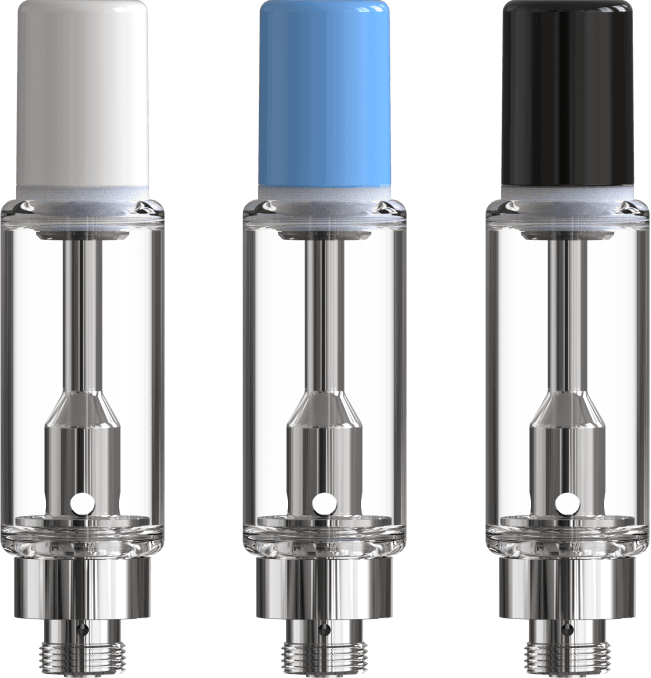
2G 510 cartridges extend a familiar threaded cartridge into a two-gram program. Finished Goods offers 2G Slim and 2G Wide formats, each built around stainless-steel hardware and PrecisionFlow™ ceramic atomizer options. The format can improve oil-per-unit economics, but it also asks the cartridge to maintain flavor, wicking, seals, airflow, and battery compatibility for twice the common one-gram fill.
This guide compares the verified Slim and Wide product facts and explains what a licensed brand must test before approving either format. It does not invent dimensions that are not published; dimensional drawings and physical samples should control the final choice.
Verified 2G Platform Facts
The current Finished Goods 510 catalog identifies:
- 2G fill capacity;
- 510-thread connection;
- 316L stainless-steel hardware;
- PrecisionFlow™ ceramic atomizer options;
- 2G Slim with a borosilicate-glass tank;
- 2G Wide with a borosilicate glass tank in a wider body;
- pre-racked 50- or 100-unit cartridge and mouthpiece trays;
- compatibility with filling systems;
- multiple atomizer configurations for different oil behaviors;
- fully customized production listed at approximately six weeks, with four-week delivery available on demand.
Review the current 510 Thread Cartridges catalog and request drawings for both formats before choosing.
Slim Versus Wide: What the Names Do and Do Not Tell You
“Slim” and “Wide” describe relative form factors, not a complete dimensional specification. The brand needs supplier drawings for:
- maximum body diameter;
- tank diameter;
- overall height with the selected mouthpiece;
- thread and center-pin dimensions;
- fill-port access;
- tray pitch;
- package-insert cavity;
- battery recess clearance.
Both cartridges use a borosilicate glass tank with a 316L stainless steel center post, so the choice comes down to diameter, battery fit, and shelf presence rather than material. Confirm materials on the quoted SKU and in the production documentation.
Choose the Format Around the Whole System
A brand should compare Slim and Wide against four connected systems.
1. Battery Fit
Threading alone does not guarantee physical clearance. A wider cartridge may overhang or fail to seat in a recessed battery. A taller slim format may change balance, retail-pack dimensions, or tip-over behavior.
2. Filling Equipment
Tank geometry affects rack pitch, needle access, headspace, and stability during filling and capping. Test both formats on the intended line.
3. Oil and Atomizer
The reservoir shape does not replace oil matching. Select the PrecisionFlow atomizer from actual viscosity and formulation behavior.
4. Retail Packaging
The insert, carton, label, and case pack must fit the final cartridge and mouthpiece. Do not approve the package before the hardware drawing is locked.
Why Two Grams Requires Full-Life Testing
A two-gram fill lengthens the operating life. Problems that do not appear in early samples can emerge after repeated heat cycles or long storage.
Test:
- initial saturation;
- first draw after the documented rest period;
- recovery after overnight storage;
- vapor and flavor through the middle of the fill;
- residue and darkening late in the fill;
- clogging after repeated cooling cycles;
- leakage upright, inverted, and after heat exposure;
- thread and contact stability;
- battery performance through the complete oil volume;
- final usable oil and residue left in the tank.
An approval that stops at 0.5G consumed does not validate a 2G cartridge.
Atomizer Selection
Finished Goods lists PrecisionFlow Lite, Plus, Max, Max+, and Rosin families across its large-format 510 products. Each represents a different approach to oil movement and heat.
Send production-representative oil with:
- extract type;
- viscosity at fill and room temperature;
- terpene concentration;
- fill-temperature target;
- storage conditions;
- expected battery settings;
- desired draw and vapor profile.
Use the PrecisionFlow™ overview to understand the matching framework. The purchase order should name the approved atomizer and prevent unapproved substitution.
Slim Versus Wide: Same Glass, Different Footprint
The tank material can affect appearance, weight, handling, package fit, and the documentation the brand requests.
For the glass Slim, inspect clarity, glass consistency, chip or crack risk, joint quality, and how the finished unit is protected in trays and retail packaging.
For the Wide, inspect glass consistency, clarity, cosmetic marks, print or label behavior, and how the wider body sits on your target batteries.
Neither material should be selected by appearance alone. Test the finished cartridge with the oil, filling process, battery, packaging, and distribution conditions.
Battery Compatibility
Test each candidate cartridge with the intended 510 batteries. Record:
- thread engagement;
- center-pin contact;
- diameter clearance;
- airflow through the connection;
- cartridge stability;
- voltage and power behavior;
- flavor and vapor at supported settings;
- cutoff and protection behavior;
- physical balance in normal use.
If the cartridge is sold without a paired battery, define supported voltage guidance and clearly communicate any fit restrictions created by body diameter.
The 510 battery guide provides a broader battery-selection framework.
Filling and Tray Integration
Finished Goods lists pre-racked 50- or 100-unit cartridge and mouthpiece trays and compatibility with filling systems.
Before the pilot, provide:
- filling-machine make and model;
- needle gauge and tip;
- rack pitch;
- target fill weight and tolerance;
- oil temperature;
- expected throughput;
- capping method and force;
- maximum fill-to-cap time;
- cooling and saturation procedure.
Run Slim and Wide candidates under the same documented conditions. Compare device stability, fill-port access, fill accuracy, headspace, airpath cleanliness, cap alignment, press force, and tray handling.
Use the 510 filling instructions as a baseline, then approve a SKU-specific SOP.
Mouthpiece and Closure Approval
Finished Goods product materials show multiple mouthpiece choices across the large-format cartridge range. The selected mouthpiece changes overall height, consumer feel, capping, decoration, and package fit.
Confirm:
- shape and material;
- closure method;
- insertion depth;
- required press force;
- resistance to loosening;
- final overall height;
- color and finish;
- tray and package compatibility.
Test the production-intent mouthpiece during every filled approval run.
Decoration and Packaging
The longer use life of a 2G cartridge also extends handling exposure. Review printed, coated, or colored components for abrasion, oil resistance, and color stability.
The retail package should protect the cartridge, keep it oriented, communicate battery guidance, and provide enough room for required warnings and product information. Confirm that the insert does not place side pressure on the tank or mouthpiece.
Case packs should be tested for count accuracy, cartridge orientation, and protection during distribution.
Commercial Comparison
Compare landed programs, not only cartridge price. Include:
- sample and pilot cost;
- production MOQ;
- atomizer and mouthpiece configuration;
- decoration;
- trays;
- retail packaging;
- inspection;
- freight;
- excess inventory risk;
- oil value exposed if a unit fails;
- reorder timing.
A two-gram failure can waste more oil than a one-gram failure, so reliability has a larger economic effect.
For a wider format decision, compare 0.5g vs 1g vs 2g fill size economics using current quotes and measured yield.
Sample Approval Matrix
Run Slim and Wide through the same matrix:
- Battery clearance: record the Slim result and the Wide result.
- Filling-line fit: record the Slim result and the Wide result.
- Fill accuracy: record the Slim result and the Wide result.
- Cap force: record the Slim result and the Wide result.
- First draw: record the Slim result and the Wide result.
- Mid-fill flavor: record the Slim result and the Wide result.
- End-of-fill behavior: record the Slim result and the Wide result.
- Heat and inversion leak test: record the Slim result and the Wide result.
- Package fit: record the Slim result and the Wide result.
- Landed cost: record the Slim result and the Wide result.
The result should identify which format fits the brand’s oil, battery, line, package, and economics, not which one looks better in isolation.
Change Control
Lock the approved tank material, dimensions, stainless-steel components, atomizer, seals, heating element, mouthpiece, tray, and decoration. Require written notice and new filled-sample approval before substitutions.
Keep empty and filled retention samples from the approved lot. Use them to compare reorders and investigate field issues.
2G RFQ Checklist
1. Provide dimensional drawings for Slim and Wide. 2. Confirm tank and contact materials for each SKU. 3. Identify the recommended atomizer for the submitted oil. 4. State the approved mouthpiece and closure method. 5. Confirm battery diameter and airflow compatibility. 6. Show how the 50- or 100-unit tray fits the filling line. 7. Define full-life testing through two grams. 8. Quote sample, pilot, production, decoration, packaging, and freight separately. 9. Identify controlled components and substitution rules. 10. Define remedies for leak, clog, contact, or material variance.
2G Cartridge FAQ
Is Wide always better for thick oil?
No. Body width does not determine atomizer suitability. Oil behavior, atomizer selection, airflow, voltage, and the complete filled test determine compatibility.
Can a two-gram cartridge use the same battery as a one-gram cart?
Possibly, but it must be tested. Confirm thread contact, diameter clearance, airflow, voltage, physical balance, and battery performance through the longer use life.
Why request drawings before packaging?
The words Slim and Wide do not define exact height, diameter, mouthpiece, or recess clearance. A production drawing prevents the retail insert and battery program from being built around assumed dimensions.
Does a 2G sample need to be consumed completely?
Yes. Full-life testing is necessary because residue, clogging, flavor change, and battery mismatch can appear late in the fill.
2G 510 Cartridges Decision Summary
2G 510 cartridges make sense when the brand can validate two grams of oil, the intended battery, the production line, and the retail package as one system. The larger fill increases the value exposed to every leak, clog, or electrical mismatch, so testing should be more rigorous than an appearance review.
Compare Slim and Wide 2G 510 cartridges with supplier drawings and physical samples. Slim and Wide do not provide enough dimensional information for battery recesses, filling racks, or package inserts. Both use borosilicate glass tanks.
Run 2G 510 cartridges through the complete fill. Record flavor, vapor, residue, leakage, draw recovery, battery behavior, and remaining oil at the end of the test. Use identical conditions when comparing formats.
The reorder specification for 2G 510 cartridges should lock dimensions, tank material, stainless-steel parts, atomizer, seals, heating element, mouthpiece, tray, and decoration. Any substitution that can change performance requires written notice and a new filled review.
The right 2G large format 510 cartridge is the one that survives the complete program: two grams of the actual oil, the intended battery, the production filling line, the selected mouthpiece, the retail package, and the reorder specification. Slim and Wide are starting choices; testing determines the final answer.