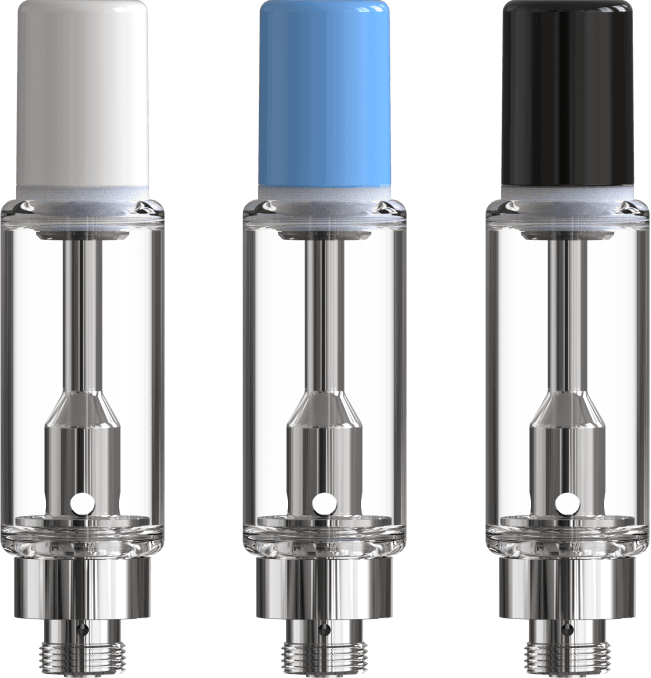
Cannabis Distillate Viscosity Chart: How Oil Thickness Dictates Vape Hardware Choice
Cannabis distillate viscosity guide: how oil thickness determines your cart atomizer and wick choice for licensed brands. Includes terpene cut ratios.
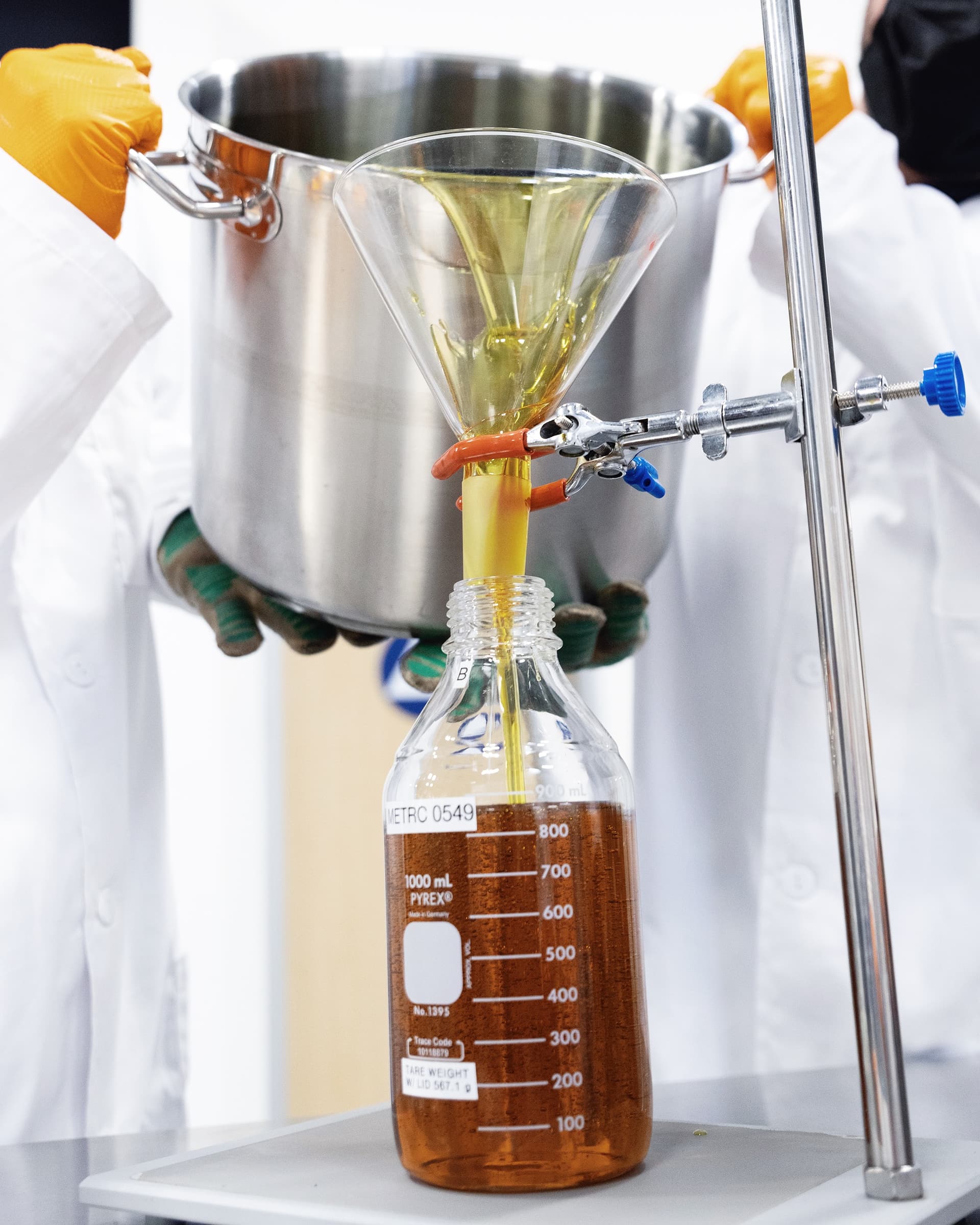
Oil formulation vape hardware is the critical variable every licensed cannabis brand misses. Cannabis distillate viscosity is the deciding factor. Distillate compatibility comes down to one thing: matching your oil's viscosity to hardware that can actually vaporize it. The single biggest source of vape product failures isn't oil quality, isn't hardware quality, and isn't packaging. It's the mismatch between distillate compatibility and the vape hardware that's supposed to vaporize it. Brands ship beautifully formulated oils through cartridges that weren't designed for that viscosity range, and consumers experience the result as clogs, dry hits, weak vapor, or burned product, even though the components in isolation are fine.
This distillate compatibility chart and reference guide explains how oil viscosity actually behaves, the viscosity ranges typical for different oil types, and how to match cannabis distillate viscosity to vape hardware specs so brands ship product that performs in real-world conditions.
Why Distillate Compatibility Drives Vape Performance
Vape hardware is engineered around a target viscosity range. The wick or porous element that draws oil into the heating coil has a defined capillary draw rate. The intake holes that feed oil to the wick have a defined geometry. The atomizer's heating profile is tuned for an expected oil flow rate.
When distillate compatibility falls inside the hardware's design window, oil flows to the coil at the right rate, vaporizes cleanly, and delivers consistent vapor draw after draw. When viscosity is outside that window, too thick or too thin, the system breaks down predictably:
- Too thick: Oil can't reach the coil fast enough; the wick dries out, the coil overheats, and consumers get burned, harsh, or weak hits.
- Too thin: Oil floods past the coil, leaks through intake holes, pools in the mouthpiece, and clogs the airpath. Consumers get gurgling, leakage, and short product life.
Cannabis Distillate Compatibility Chart by Oil Type
Different cannabis oil types have characteristic distillate compatibility ranges driven by cannabinoid profile, terpene content, and any added cutting or thinning agents.
- Pure THC distillate (no terpenes): Extremely thick, typically 50,000–200,000 cP at room temperature. Requires hardware with large intake holes and aggressive heating profiles.
- Distillate with reintroduced terpenes (5–15%): Moderate, typically 5,000–30,000 cP at room temperature. Standard 510-thread cartridges with 1.4mm–2.0mm intake holes work well.
- Live resin and live rosin: Variable depending on terpene content and crystallization, typically 2,000–25,000 cP. Requires hardware tuned for terpene-rich oils with appropriate intake geometry.
- CO2 oil: Typically thicker than ethanol-extracted distillate, 30,000–100,000 cP depending on processing. Needs higher-flow hardware.
- Cut/thinned formulations: Lower, 1,000–5,000 cP. Requires hardware with smaller intake holes to prevent flooding and leakage.
These distillate compatibility ranges are reference points, not absolute specifications, every oil formulation should be measured directly rather than assumed from oil type.
How to Measure Cannabis Distillate Compatibility
Cannabis distillate viscosity is typically measured with one of the following instruments:
- Cone-and-plate viscometer: The lab standard for cannabis oil viscosity. Provides precise viscosity at controlled temperature and shear rate. Capital cost is typically $5,000–$25,000.
- Brookfield rotational viscometer: Common alternative; less expensive than cone-and-plate but suitable for many cannabis applications. Provides viscosity at fixed shear rates.
- Falling-ball or capillary viscometers: Lower-cost alternatives, less precise for cannabis applications. Sometimes used for QC rather than initial formulation work.
- Third-party lab testing: ISO 17025-accredited labs offer distillate compatibility testing as part of standard oil panels, useful when in-house instrumentation isn't available.
For matching hardware to oil, the most useful distillate compatibility measurements are: viscosity at room temperature (storage), viscosity at body temperature (consumer use), and viscosity at vaporization temperature (operating condition).
Matching Vape Hardware to Cannabis Distillate Compatibility
Once distillate compatibility is measured, hardware selection follows specific patterns. Hardware specs that matter for viscosity matching include intake hole diameter, intake hole count, wick porosity and material, coil resistance, and battery voltage.
- Thick oils (50,000+ cP): Use cartridges with large intake holes (2.0mm+), high-porosity ceramic wicks, and pair with batteries that support preheat or higher voltage operation.
- Mid-range oils (10,000–30,000 cP): Standard 510-thread cartridges with 1.4mm–2.0mm intake holes and ceramic wicks perform well across the most common distillate compatibility range.
- Terpene-rich oils: Confirm the cartridge is rated for terpene compatibility, some plastic and silicone components degrade with high-terpene oils. Match intake geometry to viscosity at body temperature, not room temperature, since terpenes thin meaningfully when warmed.
- Thin/cut oils (under 5,000 cP): Use cartridges with smaller intake holes (1.0mm–1.4mm) and tighter wick porosity to prevent flooding.
Common Cannabis Distillate Compatibility Mistakes
The most common distillate compatibility errors brands make:
- Switching oil formulations without re-validating hardware performance. Even small terpene profile changes shift viscosity meaningfully.
- Measuring viscosity at room temperature only. Real-world performance depends on viscosity at body and operating temperatures.
- Trusting supplier claims without measuring. Cannabis oil viscosity varies meaningfully batch-to-batch even from the same processor.
- Ignoring crystallization risk. High-cannabinoid oils can crystallize in storage and shift effective viscosity dramatically.
- Forgetting cold-chain effects. Oils shipped through cold distribution can crystallize or partially separate, changing viscosity at the point of consumer use.
How this viscosity chart differs from clog and failure-rate articles
This viscosity chart should answer one specific question: how oil thickness changes hardware selection before a cartridge, disposable, atomizer, or battery setting is approved. A clog article should explain what went wrong after performance fails. A failure-rate benchmark should compare real-world defect patterns across hardware types. This page belongs earlier in the decision process, when the brand is still matching oil behavior to the device.
That distinction matters for licensed cannabis brands because viscosity is not only a lab number. It affects intake size, ceramic saturation, heat curve, fill temperature, storage behavior, draw resistance, and whether the consumer experiences weak vapor, burnt flavor, flooding, or clogs. If the oil is not understood before hardware selection, later troubleshooting becomes more expensive.
Viscosity decision checklist for brand buyers
- Confirm whether the oil is distillate, live resin, rosin, high-terpene blend, or another formulation.
- Document how the oil moves at room temperature and at fill temperature.
- Ask which intake size and atomizer material the supplier recommends for that viscosity.
- Test the oil in the actual cartridge or AIO format before approving production.
- Match voltage and airflow only after oil flow is stable.
- Retest if terpene content, cannabinoid ratio, or production process changes.
The goal is not to make every oil behave the same. The goal is to choose hardware that respects how the oil already behaves.
Bottom line
Cannabis distillate viscosity isn't an oil property, it's a hardware-matching specification. The brands that ship vapes consistently across batches, seasons, and supply chain conditions are the ones treating viscosity as a measured input to hardware selection rather than an afterthought. Build distillate compatibility into your QC panel, validate hardware against measured viscosity, and revalidate every time the formulation changes. The result is a vape product that performs the way it was designed to, and a brand that doesn't lose consumers to clogs, dry hits, and leaks that have nothing to do with the quality of the oil itself.
Temperature Effects on Cannabis Distillate Viscosity
Temperature has a dramatic effect on distillate compatibility. Most cannabis oils show roughly an order of magnitude drop in viscosity from room temperature (~20°C) to body temperature (~37°C), and another order of magnitude drop from body temperature to vaporization temperature (200–230°C). That means a "thick" oil at room temperature may flow easily at operating temperature, and a "thin" oil at room temperature may flood badly at body temperature in a warm pocket.
For accurate hardware matching, measure cannabis distillate viscosity across the full operating range and design hardware compatibility decisions around the body-temperature value. Brands that specify cartridges based only on room-temperature data routinely ship product that performs differently in summer versus winter, in pockets versus glove boxes, and in dispensary fridges versus shelves.
How Cannabis Distillate Compatibility Affects Shelf Life
Cannabis distillate viscosity isn't static, oils change over shelf life. Terpene loss thickens oil; oxidation thickens oil; crystallization (especially in high-CBD or high-THCA formats) shifts effective viscosity dramatically. Cartridges that performed well at fill date can underperform six months later because cannabis distillate viscosity drifted outside the hardware's design window.
Build cannabis distillate viscosity into your stability program. Measure at fill, at 30 days, at 90 days, and at the end of expected shelf life. If viscosity drifts more than ~25% across that window, your hardware specification needs to account for the upper viscosity end of that range, not just the fill-time value, to keep performance consistent through the product's life on shelf.
How to Thin Distillate for Cartridges: Terpene Cut Ratios and Step-by-Step Procedure
Thinning cannabis distillate for cartridges requires matching your solvent to the oil type and target viscosity, not just adding the lowest-cost diluent. The two main approaches are terpene-based thinning (preferred for cannabis vape) and medium-chain triglyceride (MCT) cutting (lower-cost, used in some compliance markets). PG and VG are not appropriate for cannabis vape oil.
Terpene cut ratios by oil type: Full-spectrum distillate (8,000–15,000 cP range) typically requires 8–12% terpene addition to reach cartridge-compatible viscosity. Live resin or sauce (2,000–5,000 cP) may need only 4–7% terpene cut. High-potency isolate-based distillate (20,000+ cP at room temp) may require 12–18% terpene cut, or pre-warming to 40–50°C during fill to avoid hardware stress. Always target your specific hardware's intake geometry, not a generic viscosity target.
Step-by-step procedure for thinning distillate for cartridges: (1) Measure baseline viscosity at 25°C using a rotary viscometer or falling-ball viscometer, do not estimate by eye. (2) Warm distillate to 40°C to reduce viscosity enough to mix evenly. (3) Add terpenes at the low end of your target ratio (start 5%) and blend with low shear for 3–5 minutes. (4) Cool to 25°C and re-measure viscosity. (5) Add terpenes in 1% increments until you hit hardware manufacturer's recommended viscosity window. (6) Run a test fill at production temperature and inspect for oil seep, leak, or air bubble entrainment. (7) Document the final terpene % and temperature used, this is your formulation record for compliance and repeatability.
FAQs About Cannabis Distillate Compatibility
What viscosity is "ideal" for vape cartridges? There's no universal ideal cannabis distillate viscosity, the right value depends on the cartridge. Most modern 510 cartridges are designed for the 8,000–25,000 cP range at room temperature, which corresponds to typical distillate-with-terpenes formulations.
Do thinning agents like PG/VG belong in cannabis vape oil? They lower cannabis distillate viscosity but introduce health and quality concerns and are restricted or banned in some legal markets. Most premium cannabis brands now formulate without traditional cutting agents and instead select hardware engineered for higher native viscosity.
How often should I measure cannabis distillate viscosity? Every batch, ideally at multiple temperatures, and at multiple time points across shelf life. Treating cannabis distillate viscosity as a one-time formulation property is one of the fastest ways to ship inconsistent vape product.
Cannabis Distillate Viscosity and Hardware Validation
Strong cannabis distillate viscosity programs end at validation, not measurement. Once an oil and a cartridge are matched on paper, run consumer-realistic stress tests: temperature cycling between 5°C and 40°C, vertical and inverted storage, accelerated aging, and consumer draw simulation across a full 1g cartridge life. Cartridges that perform identically out of the box can diverge dramatically under realistic abuse. The cannabis distillate viscosity ranges that survive that abuse are the ones to ship; the ranges that don't are signals to either reformulate the oil or reselect the hardware.
The brands shipping the most consistent vape product in 2026 treat cannabis distillate viscosity, intake hole geometry, wick porosity, and battery profile as a single integrated specification, not four independent line items. Match those four parameters, validate under realistic stress, and you'll ship vape product that performs the way the formulation deserves.
Voltage and Temperature Settings by Extract Type
Cannabis distillate viscosity should guide hardware selection first, then voltage should be tuned to the oil after the cartridge has passed fill and leak testing. A thicker oil may need a wider intake aperture, but that does not automatically mean it should be run hotter. Licensed brands should validate voltage with the actual oil, cartridge, and battery combination instead of relying on a generic consumer setting.
Distillate: usually stable and predictable after standard terpene blending. Start at 2.8V to 3.4V and confirm vapor output without scorching flavor or darkening oil near the intake ports.
Live resin: more terpene-sensitive and more likely to thin under heat. Start at 2.4V to 3.0V to protect flavor, then increase only if vapor output is weak or inconsistent.
Rosin and solventless oil: often thicker and more variable from batch to batch. Start at 2.2V to 2.8V and watch for dry hits, incomplete wicking, and residue buildup after repeated cycles.
High-terpene sauce or specialty blends: can thin quickly and may flood hardware if the intake is oversized. Start at 2.2V to 2.7V and check for leakage, popping, oil darkening, and flavor drop-off after storage.
A useful QA protocol is to run each oil through three voltage points: a low flavor-preservation setting, a middle production setting, and a high-stress setting. The low setting shows whether the cartridge can wick without weak vapor. The middle setting becomes the recommended consumer voltage. The high setting is not usually the recommended setting, but it reveals whether the cartridge floods, leaks, burns, or clogs when consumers push the battery harder than expected.
For procurement teams, the key question is not only which voltage works. The key question is whether the same voltage works across the full lot, after storage, after transportation, and after repeated heating cycles. If the cartridge performs only during a fresh-fill bench test, it has not been validated for real retail use.
Related reading
- 510 cartridge manufacturer sourcing guide
- vape pen sample station
- live resin and rosin vape hardware
- vape atomizer performance guide