Cannabis Oil Type to Vape Hardware: A Reverse-Lookup Fit Guide
Match cannabis oil vape hardware to your extract type. Intake diameter, wick porosity, and coil resistance specs for distillate, live resin, rosin, and HTE.

Cannabis Oil Type to Vape Hardware: A Reverse-Lookup Fit Guide
If you know what you extract, you can spec the hardware in about two minutes. This guide flips the usual viscosity chart on its head: pick your oil type, get an intake diameter, wick porosity, and coil resistance range that will actually run it without clogging, leaking, or burning terpenes. It is built for buyers who already know the oil they are filling and want to walk into a PO conversation with a spec, not a maybe.
A note before the table: viscosity is not just a function of oil type. Cut ratio, terpene loading, temperature at fill, and storage all shift the number. Use this as a starting point, then confirm with a sample run against your actual batch.
For atomizer-level tuning, compare the oil-matched atomizer platform and the distillate viscosity chart against the actual oil before production.
Direct answer: oil type to hardware spec
Oil type Typical viscosity behavior Intake diameter Wick porosity Coil resistance Best architecture
Distillate (uncut) Medium to thick when cool, thin when warm 1.6 to 2.0 mm Medium 1.2 to 1.6 ohm 510 cartridge, ceramic coil
Distillate with 5 to 10% Medium 1.4 to 1.8 mm Medium 1.2 to 1.6 ohm 510 cartridge, ceramic coil
Live resin (HC solvent) Medium to thick, variable 1.8 to 2.2 mm Medium to coarse 1.0 to 1.4 ohm 510 cartridge or AIO
Cured resin Medium 1.6 to 2.0 mm Medium 1.2 to 1.6 ohm 510 cartridge
Rosin (fresh press) Thick, particulate 2.0 to 2.2 mm Coarse 0.8 to 1.2 ohm Postless AIO
Cold-cure rosin Very thick, granular 2.2 mm Coarse, high void 0.8 to 1.1 ohm Postless AIO with wide channel
HTE Thick, sticky, high terpene 2.0 to 2.4 mm Coarse 1.0 to 1.3 ohm Postless AIO or wide-intake 510
HTFSE Semi-solid at room temp 2.2 mm plus Coarse 0.9 to 1.2 ohm Postless AIO, pre-warm fill
If you want the short version: distillate and cured resin run on standard 510 ceramic. Live resin sits on the edge and depends on your terp load. Rosin, cold-cure rosin, HTE, and HTFSE want postless AIO with wide intakes.
How oil type dictates intake diameter and wick porosity
Two hardware variables do most of the work: intake hole diameter (how oil gets from the reservoir to the wick) and wick porosity (how fast the wick saturates the coil).
Thicker, more particulate oils need larger intakes so they can flow at room temperature without dry-hitting the first few pulls. They also need coarser wicks with higher void fraction, because a tight ceramic wick will starve a coil trying to pull rosin through it.
Thin, cut, or heavily terped oils have the opposite problem. Wide intakes plus fine wicks equal leaks, flooded coils, and burnt terps. You want smaller intakes and medium-porosity ceramic that pulls oil at a controlled rate.
Coil resistance is the third lever. Lower resistance means more heat at a given voltage, which you need to keep viscous oils moving. Push resistance too low on a thin distillate and you cook the terpenes.
Distillate: the baseline case
Distillate is what the 510 ceramic cartridge category was built around. If you are filling clear distillate with 0 to 10% terpenes, a standard 1.6 to 1.8 mm intake, medium porosity ceramic, and a coil in the 1.2 to 1.6 ohm range will run clean.
Procurement notes for distillate hardware:
- MOQ on stock 510 ceramic carts is generally the lowest in the category. Expect minimums around 1,000 units.
- Lead time on stock cosmetics (clear mouthpiece, standard center post) is typically 2 to 4 weeks air, longer by sea.
- Custom mouthpiece color or printed ceramic pushes lead time to six weeks.
- If you cut with MCT or PG (rare in licensed markets but happens), drop intake to 1.4 mm to avoid weeping.
Live resin and cured resin: the middle ground
HC live resin and cured resin are the trickiest category to spec because "live resin" covers a wide viscosity range. A high-terpene live resin sauce behaves nothing like a winterized live resin distillate.
Rules of thumb:
- If your live resin pours at room temp, treat it like distillate with terps. Standard 510 ceramic works.
- If it needs warming to fill and pulls back into the syringe, step up to 2.0 mm intake and coarser wick.
- Cured resin is generally more predictable than fresh-frozen live resin. Most cured resin runs on the same hardware as terped distillate.
The failure mode to watch for: buyers spec live resin cartridges based on a room-temp viscosity reading, then their batches vary by 30% batch to batch and half the units clog. Pull three viscosity samples across a production week before locking hardware.
Rosin and cold-cure rosin: why postless AIO wins
Rosin, especially cold-cure, is where standard 510 architecture starts to fail. The problem is the center post. In a traditional 510, oil has to flow down the outside of a center post and through small intake holes to reach the coil. Rosin, with its particulate content and thick body, does not want to make that journey.
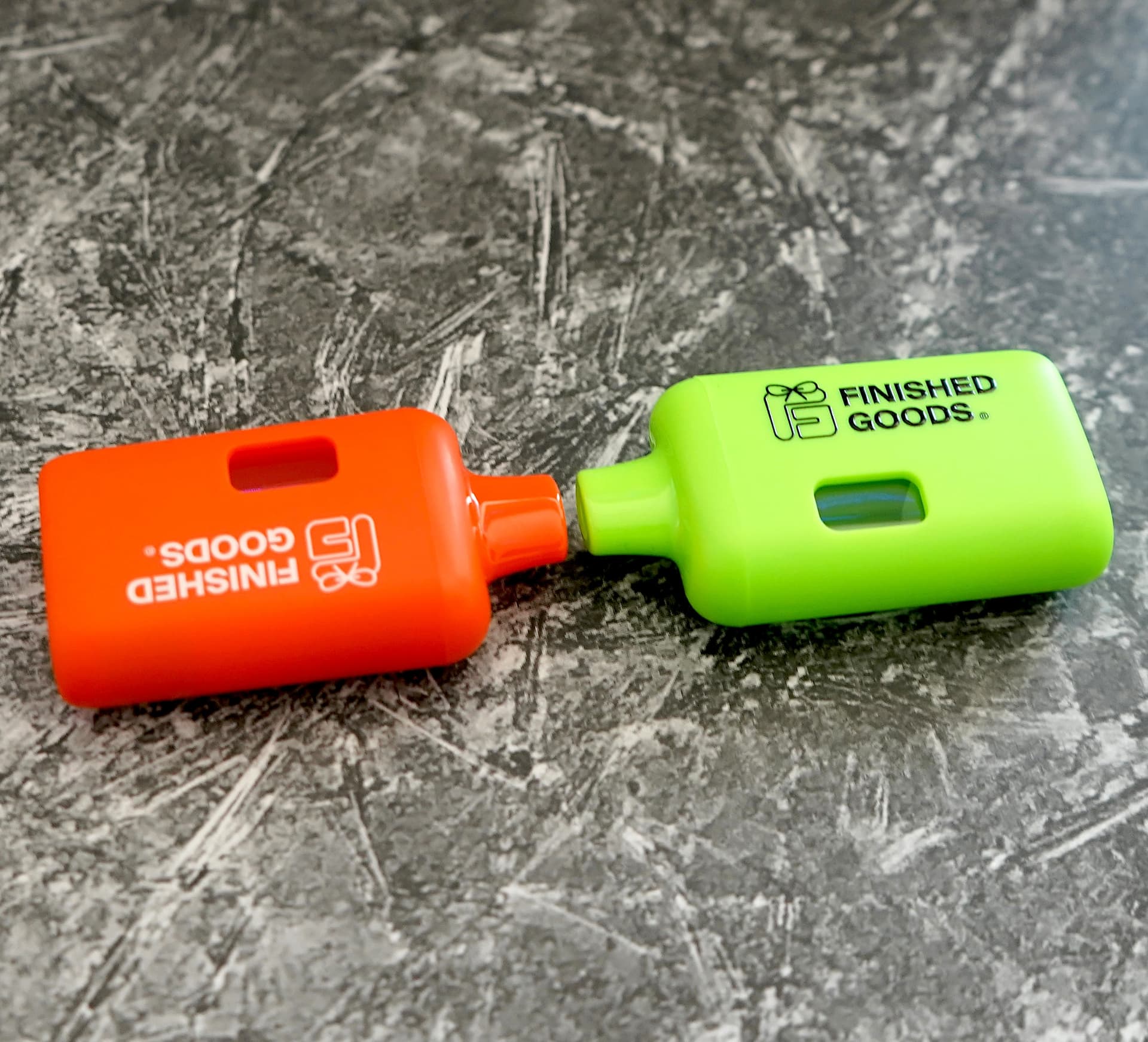
Postless AIO architecture removes the center post entirely. Oil sits directly above a wide-channel coil assembly, gravity does most of the work, and intake holes can be sized at 2.2 mm or larger without leaks (because the battery, tank, and mouthpiece are one integrated unit with tighter tolerances than a threaded 510 connection).
For cold-cure specifically, look for:
- Intake channels 2.5 mm or wider
- Coarse ceramic or ceramic-hybrid wicking
- Coil resistance in the 0.8 to 1.1 ohm range
- Pre-heat function on the device (10 to 15 seconds of low-voltage warmup before draw)
AIO also solves the cold-chain shipping problem. A 510 cart full of cold-cure rosin can separate in transit. An AIO with the oil already dialed in against the specific coil geometry is more forgiving.
HTE and HTFSE: viscosity edge cases
High Terpene Extract and High Terpene Full Spectrum Extract sit between rosin and live resin in behavior. They are usually solvent-extracted but retain enough terpene and cannabinoid diversity to behave like a solventless product at room temperature.
For HTE:
- If it pours warm and holds shape cool, postless AIO is the safer choice.
- If it stays liquid at room temp, a wide-intake 510 (2.0 to 2.2 mm) with coarse wick can work.
- Watch for terpene stratification during fill. Homogenize immediately before filling, not the day before.
HTFSE is closer to sauce. It is often semi-solid at room temperature and requires pre-warming before fill. AIO with a coarse wick and pre-heat function is the default. Do not try to force HTFSE through a standard 510 unless you have specifically qualified the hardware against a sample.
Sample workflow: spec-match before you PO
Do not skip this. The cost of a wrong hardware spec at scale (returns, complaints, brand damage) is orders of magnitude larger than a two-week sample cycle.
1. Pull three viscosity samples from your current or planned oil, across a production week. Measure at 25 C. 2. Match your oil type against the table above to get a starting spec. 3. Request samples in that spec plus one step wider intake and one step narrower. Three variants total. 4. Fill each variant from the same batch. Age filled samples for 7 days at 20 to 25 C. 5. Test: first-pull dry hit, draw resistance, visible clogging at the intake, taste on pulls 1, 20, and 100. 6. Lock the spec that runs cleanest across all three viscosity samples, not just one.
If you are switching oil types (say, adding a rosin SKU to a distillate line), do not assume your current hardware vendor's rosin option will match your current hardware vendor's distillate quality. Sample independently.
FAQ
Which vape hardware for live resin? For most HC live resin with 10 to 15% terpene loading, a 510 ceramic cartridge with 1.8 to 2.0 mm intake, medium to coarse wick, and 1.0 to 1.4 ohm coil will run. If your live resin is thicker (sauce-forward, high terpene), move to postless AIO.
Can I run rosin in a standard 510 cartridge? Sometimes, if the rosin is fresh-pressed and warm-filled. Cold-cure rosin in a 510 is a warranty and returns problem waiting to happen. Postless AIO is the right architecture for rosin at commercial scale.
What intake diameter do I need for HTE? Start at 2.0 to 2.4 mm. If your HTE holds shape at room temperature, go wider and consider AIO. Confirm with a filled sample aged 7 days.
Does terpene loading change the hardware spec? Yes. Every 5% of terpenes added to distillate drops effective viscosity and can push you toward a smaller intake to prevent weeping. Spec against the final formulation, not the base oil.
How much does MOQ change between distillate hardware and rosin AIO? Stock distillate 510 ceramic carries the lowest MOQs in the category. Postless AIO for rosin, especially with any custom cosmetics, generally runs higher MOQs and longer lead times. Plan seven weeks for custom AIO production, with four-week rush available, plus freight.
What if my oil sits between two categories in the table? Sample both specs. Do not guess. The cost of a wrong call at production scale is always higher than the cost of a two-week sample cycle.
If you want a spec sheet built against your specific oil, send a viscosity reading and a 5 gram sample. We will match hardware against your actual batch behavior, not a category average.