What a Pop-Top Tube Is (and Why It Won)
Pop-top tube sizes (70mm–120mm), child-resistant certification, MOQ, and bulk sourcing for licensed cannabis brands. Get supplier specs before your first PO.
What a Pop-Top Tube Is (and Why It Won)
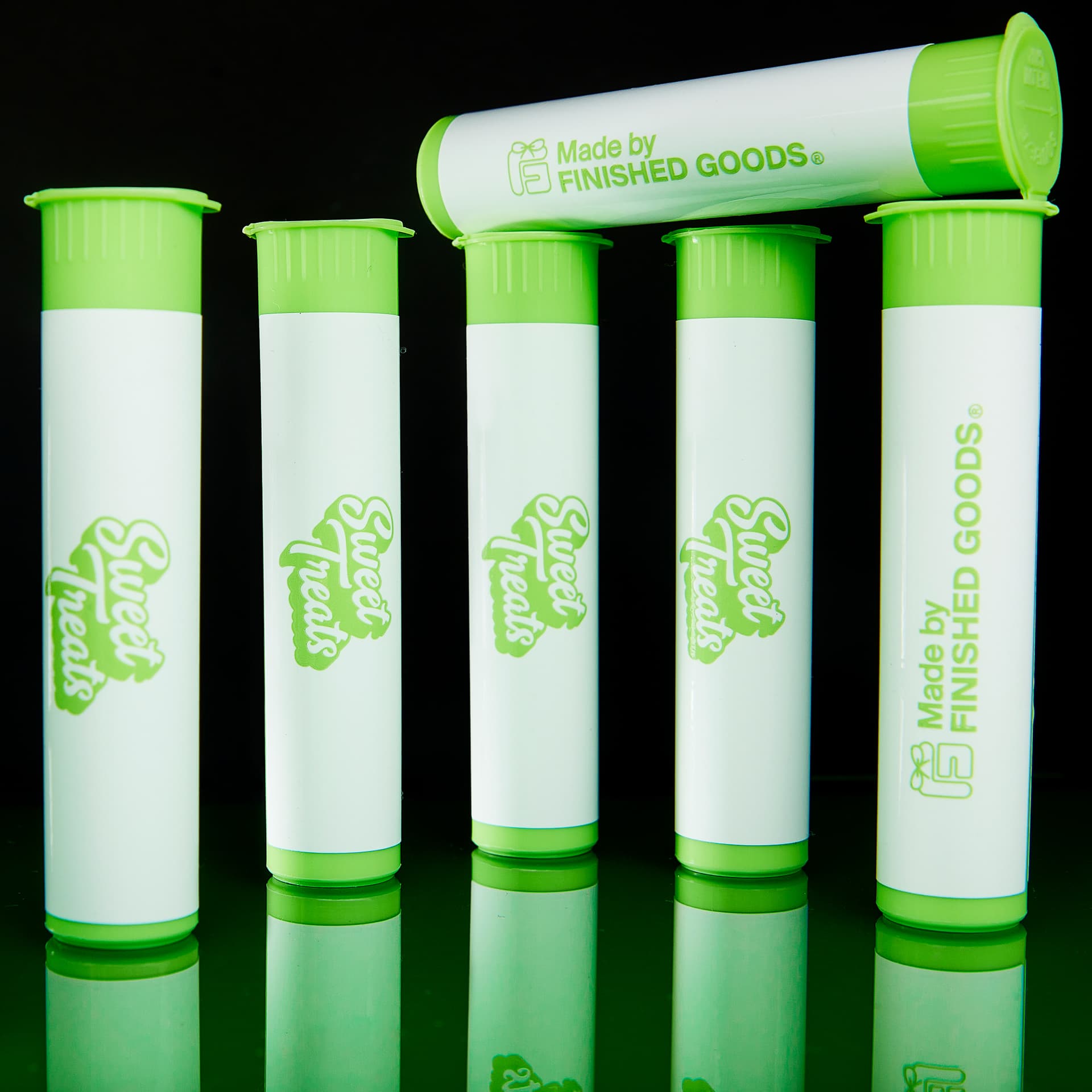
A child-resistant pop-top tube is the most common pre-roll packaging format in the US cannabis market. Available in sizes from 70mm (single pre-roll) to 120mm (multi-pack), pop-top tubes carry CPSC certification under the Poison Prevention Packaging Act, are approved in all adult-use states, and typically source at MOQs of 1,000 to 5,000 units in stock sizes. Finished Goods stocks certified pop-top tubes in multiple sizes with direct-print and label options available at B2B MOQs for licensed cannabis brands.
A pop-top tube is a single-piece or two-piece cylindrical container with an integrated lid designed to open under squeeze pressure. The user pinches the lid (typically along two molded indents), and the cap pops open. Release the pressure, and the lid closes with a click that seals the contents.
The format has dominated cannabis pre-roll packaging for one reason: it threads a needle that few other formats can. A pop-top tube is child-resistant when certified, easy enough for adults to operate, cheap to manufacture at scale, light to ship, and protective enough to keep a pre-roll intact in a pocket or purse. Glass jars are heavier and breakable. Mylar bags don't protect rigid product. Slide boxes work, but they're expensive and slow on a fill line.
The pop-top tube does the job. That's why it became standard.
How Pop-Top Tubes Work: The Child-Resistant Mechanism
A certified child-resistant pop-top tube uses one of two mechanisms:
Squeeze-to-open. Two molded ribs on the side of the cap must be pinched simultaneously to release the lid. The pressure required is calibrated to be difficult for young children but manageable for adult users with normal hand strength.
Push-and-twist or align-to-open. A small number of pop-top variants use a secondary alignment step, the cap must be rotated or pressed at a specific angle before the squeeze releases. These are less common but offer a higher tier of certification.
Both designs are tested against the U.S. Consumer Product Safety Commission's protocol under the Poison Prevention Packaging Act (16 CFR § 1700.20). Certification requires the tube to resist opening by at least 80% of children under five in a controlled test, while remaining accessible to at least 90% of adults aged 50-70.
If your supplier can't produce certification documentation on request, the tubes aren't child-resistant. They're just tubes.
Standard Sizes and Capacity
Pop-top tubes are sized by interior length and diameter, with capacity typically measured by the size of pre-roll or product they're designed to hold. Standard sizes in the cannabis industry include:
- 70mm, fits a half-gram pre-roll or a single small joint
- 78mm, fits a standard one-gram pre-roll, the most common size
- 85mm, fits a one-gram king-size pre-roll
- 98mm, fits a king-size or oversized pre-roll
- 109mm to 120mm, fits a 1.5g or 2g pre-roll, infused product, or blunts
Diameter ranges generally fall between 14mm and 22mm interior. Wider tubes (often 18mm-22mm) accommodate infused pre-rolls, dipped products, or items with a larger paper format. When sourcing, always confirm the interior dimensions, not the exterior. Wall thickness varies between suppliers, and a tube advertised as "1g standard" might not actually fit your production paper.
Materials: Plastic, Glass, and Sustainable Alternatives
The vast majority of pop-top tubes are produced in polypropylene (PP) plastic. PP is the workhorse: cheap, durable, FDA-compliant for food contact, and easy to mold in any color or opacity. It's also recyclable in most municipal streams, though the realistic recycling rate for small cylindrical containers is low.
For brands seeking alternatives they can explore the following options:
Glass pop-top tubes offer a premium aesthetic and full UV protection when tinted. They're heavier, more expensive, and breakable in transit, but they signal quality at the shelf level. Glass pop-tops are most common in the premium and craft segments.
PCR (post-consumer recycled) plastic uses recycled PP at varying inclusion rates (typically 30-50%). PCR tubes have a slightly different aesthetic, usually a faint gray or beige cast, but perform identically to virgin PP. Inclusion rates above 50% can affect mold consistency and child-resistant certification, so verify with your supplier.
Hemp-based and bioplastic tubes exist but remain niche. PLA (polylactic acid) bioplastic tubes can hold child-resistant certification, but they're more expensive, less impact-resistant, and require specific composting conditions that aren't widely available.
For most brands operating at scale, virgin or PCR polypropylene remains the operational default.
Child-Resistant Certification: What to Verify
Not every pop-top tube on the market is certified. Many uncertified tubes use the same mold geometry and look identical, but haven't been tested. Regulations vary by state, but in every legal cannabis market, single-unit child-resistant packaging is required for products sold to consumers.
When evaluating a supplier, you can ask for:
- CPSC test certification (or the equivalent in your operating jurisdiction)
- The specific tube SKU tested, certification is granted on a per-SKU basis, not generally to a supplier
- The test lab and date of certification, certifications can expire or be revoked
- Compliance documentation for the markets you sell in, Health Canada, EU regulations, and individual U.S. state requirements may differ
A reputable pop-top tube supplier provides this documentation as a standard part of their sales process. If you're being told certification "exists" but can't be produced in writing, walk.
Customization Options for Brand Operators
Pop-top tubes are highly customizable, though the level of customization depends on your order volume and design expectations.
Color. Standard color options include clear, frosted, black, white, and a range of opaque colors. Custom Pantone color matching is available at most suppliers, typically requiring a minimum order quantity in the range of 10,000 to 50,000 units.
Opacity. Fully opaque tubes block light entirely, which extends product shelf life by limiting UV exposure to cannabinoids and terpenes. Translucent tubes show the product but offer partial UV protection. Clear tubes provide no UV protection and should only be used for short-shelf-life or quickly-moving SKUs.
Printing and branding. Direct silkscreen printing, heat-transfer labels, pressure-sensitive labels, and shrink sleeves are all viable for pop-top tubes. Silkscreen is cost-effective at high volume but limited in color count. Shrink sleeves offer 360-degree photo-quality branding but add a step to your fill process.
Lid customization. Color-matched lids, contrast lids, and custom tactile indents are common. Some suppliers offer custom-molded lid shapes for brand differentiation, though these typically require a tooling investment.
Operational Considerations: MOQ, Lead Time, Case Packs
Sourcing pop-top tubes at scale isn't just about unit price. The variables that affect total landed cost and operational fit include:
MOQ. Standard stock tubes are typically available at 1,000 to 5,000 unit minimums. Custom-color or custom-printed tubes usually require 10,000 to 50,000 unit minimums per SKU. Custom tooling (entirely new molds) starts at 100,000+ units to amortize the tooling investment.
Lead time. Stock tubes ship within 1-2 weeks from most suppliers. Custom color or printing adds 3-6 weeks. Custom tooling adds 8-12 weeks for mold creation plus production.
Case pack and pallet configuration. Operational efficiency on a fill line depends on how the tubes arrive. Bulk-bagged tubes are cheaper but require manual orientation. Pre-oriented tubes in trays or sleeves cost more per unit but reduce labor on the line. For high-volume operations, case-pack configuration can affect labor cost more than per-unit pricing.
Reorderability. Confirm your supplier holds tooling and components in inventory for re-order, especially for custom SKUs. Some manufacturers warehouse tooling indefinitely; others scrap it after 12-18 months of inactivity.
What to Look for in a Pop-Top Tube Supplier
The pop-top tube market is crowded. Most suppliers are trading houses sourcing from a small number of overseas manufacturers. A smaller number are actual manufacturers or have direct, exclusive relationships with factories.
When evaluating suppliers, you should ask:
Do you manufacture these tubes or source them?
Can you provide certification documentation on the specific SKU we'd be ordering?
What's your standard MOQ, and what's negotiable?
What's your lead time from PO to dock, including ocean freight if applicable?
What's your defect rate, and what's your replacement policy?
Can you hold inventory for blanket POs?
Do you maintain tooling for custom SKUs, and for how long?
The right packaging supplier answers all of these without hedging. The wrong one will tell you their tubes are "the best on the market" and route every specific question to a sales rep who never quite responds.
Sourcing Pop-Top Tubes at Scale
Pop-top tubes are a commodity in name but not in practice. The difference between a well-sourced tube and a poorly-sourced one shows up in fill-line throughput, customer complaint rates, certification audits, and the operational drag of constantly switching suppliers because the last batch was off-spec.
Finished Goods manufactures an array of child-resistant pop-top tubes in standard sizes from 70mm to 120mm, in stock colors and custom Pantone matching, with full certification documentation and reorderable tooling for custom SKUs. If you're sourcing for scale and want to see specs, samples, or quotes, get in touch at finishedgoods.com.
Pop-Top Tube Buyer Checklist
Before ordering a pop-top tube, licensed brands should confirm the pre-roll length, diameter, unit count, child-resistant certification path, label panel, case-pack quantity, and retail display requirements. A 70mm tube may work for single short pre-rolls, while longer infused pre-rolls or multi-packs may need 98mm, 109mm, or 120mm formats.
Brands should also decide whether the pop-top tube will use a pressure-sensitive label, direct print, shrink band, or secondary carton. The lowest-cost tube is not always the best packaging choice if the label area is too small, the color does not fit the brand system, or the format slows fulfillment.
FAQ: Pop-Top Tubes for Cannabis Brands
What is a pop-top tube used for?
A pop-top tube is most often used for single pre-rolls, infused pre-rolls, small multi-packs, and other cannabis products that need child-resistant packaging in a compact format.
Are pop-top tubes child resistant?
Pop-top tubes can be child resistant when the exact tube format has the right certification and is used as intended. Brands should request documentation for the specific tube size and closure design before production.
What size pop-top tube should a cannabis brand choose?
The right pop-top tube size depends on pre-roll length, diameter, filter length, oil infusion, unit count, label requirements, and case-pack needs. Brands should test filled samples before locking packaging.