Mylar Bag Sizes for Cannabis: Choosing the Right Pouch for Flower, Concentrates, and Vapes
Choosing mylar bag sizes for cannabis? Guide to standard sizes, gussets, and pouch dimensions for flower, concentrates, edibles, and vape products in 2026.
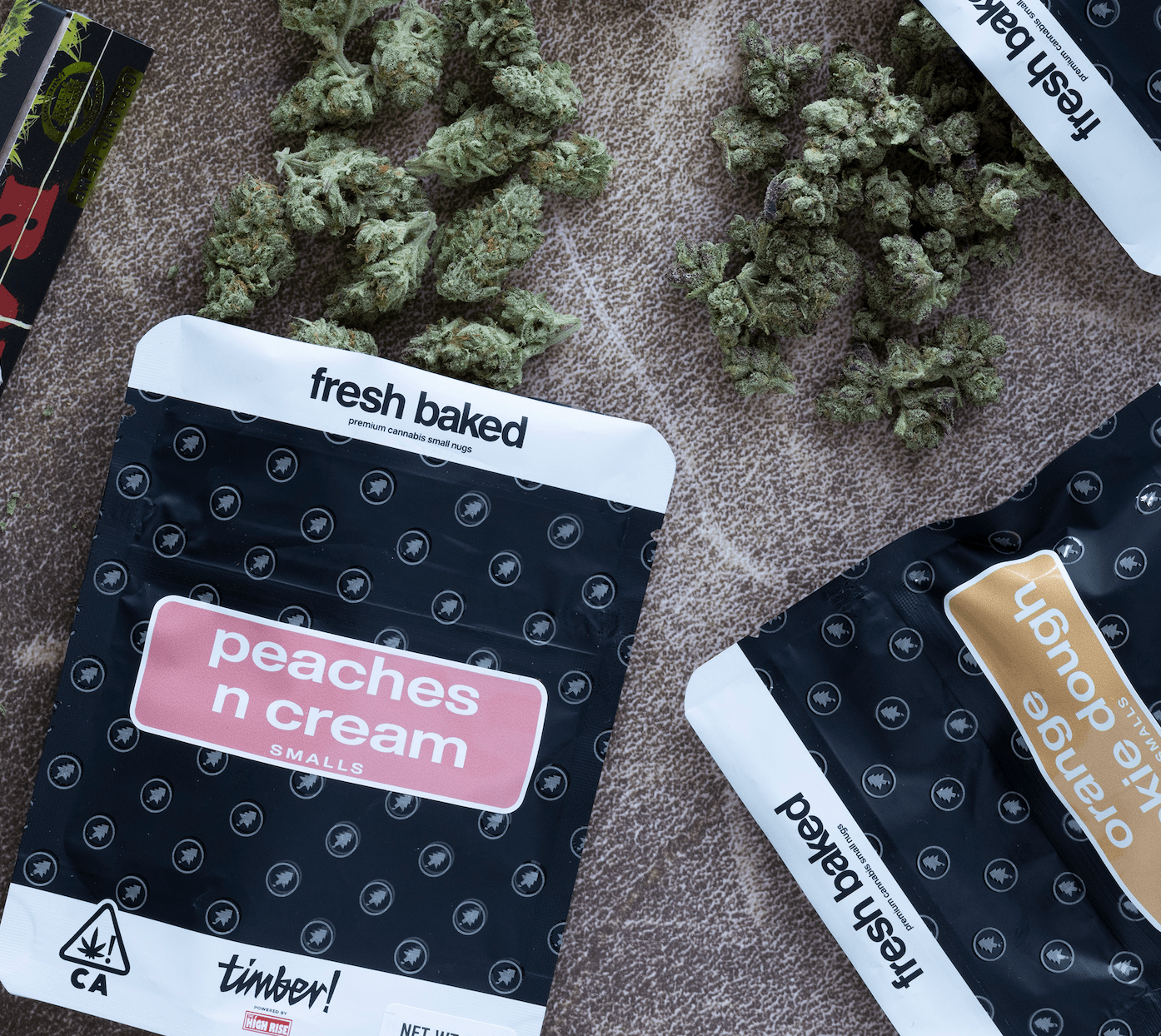
Choose a Mylar bag size from the actual product, fill quantity, pouch construction, closure, required label area, pack-out, distribution conditions, and target-market requirements. Confirm the dimensions and usable internal volume with the supplier drawing and a filled sample. Request the current material specification, barrier data, exact-package test evidence, minimum order, and commercial quote for the proposed construction. Do not treat the word “Mylar” or a child-resistant closure style as proof that the exact finished pouch meets every product or market requirement.
This guide covers the standard mylar bag sizes for cannabis used across product categories, the gusset configurations that affect product presentation, and how to match pouch specs to your specific product format.
After choosing dimensions and construction, compare child-resistant mylar bags for the production-ready format and vendor requirements.
What "Mylar" Actually Means
Strictly speaking, "Mylar" is a registered trademark of DuPont referring to BoPET (biaxially-oriented polyethylene terephthalate) film. In practice, the cannabis industry uses "mylar" to mean any multilayer barrier pouch, typically constructed from a printable outer layer (usually PET or BoPET), a barrier layer (often metalized PET, foil, or EVOH), and a heat-sealable inner layer (usually polyethylene).
The construction matters because it determines barrier performance, print quality, and shelf life. When ordering, be specific about film construction (e.g., 4-layer printed PET, aluminum foil barrier, polyethylene seal layer) rather than just "mylar."
Standard Mylar Bag Sizes for Cannabis Flower
Cannabis flower pouches are sized by the gram weight they're intended to hold, which correlates loosely with bag dimensions.
1 gram (single-flower). Typical bag size: 3"x4.5" or 3.5"x5". Construction: standup pouch or flat pouch. Common gusset: minimal or none. Use case: budtender single-pull, low-priced disposable pre-bagged flower.
3.5 gram (eighth). Typical bag size: 4"x6" to 4.5"x6.5". Construction: standup pouch with bottom gusset, or flat pouch. Common gusset: 1.5"-2" bottom gusset for shelf presentation. Use case: most common cannabis flower SKU; standard adult-use packaging.
7 gram (quarter). Typical bag size: 5"x7" to 5.5"x7.5". Construction: standup pouch with bottom gusset typical. Common gusset: 2"-2.5" bottom gusset. Use case: mid-tier flower volume, often premium positioning.
14 gram (half-ounce). Typical bag size: 6"x8" to 6.5"x9". Construction: standup pouch, larger gusset for capacity. Use case: bulk flower SKUs, value-oriented products.
28 gram (ounce). Typical bag size: 7"x10" to 8"x11". Construction: standup pouch with full gusset. Use case: bulk pricing tier, often flower direct-to-consumer.
Mylar Bag Sizes for Cannabis Concentrates
Concentrate pouches typically wrap an inner glass or silicone container.
Single-gram concentrate. Typical bag size: 3"x4" or 3.5"x4.5". Construction: flat pouch wrapping glass or silicone concentrate jar. High barrier requirements, concentrates degrade faster than flower.
Multi-gram concentrate. Typical bag size: 4"x5" or 4"x6". Construction: flat or low-gusset. Outer protection for concentrate jars.
For concentrates specifically, the pouch is rarely the primary contact packaging, the concentrate sits in a glass or silicone jar, and the mylar pouch serves as outer light- and tamper-protection.
Mylar Bag Sizes for Vape Cartridge and AIO Packaging
Vape products typically don't ship in mylar pouches as primary packaging, they ship in printed boxes or slide cases. However, mylar pouches are commonly used in specific contexts.
Single-cartridge pouches. Typical bag size: 4"x7" or 4.5"x7.5" (accommodates standard 1g cart length). Construction: flat pouch with optional bottom gusset. Often used for direct-to-consumer or budtender single-unit packaging.
Multi-cartridge pouches. Typical bag size: 6"x8" or 7"x9". Construction: flat or low-gusset, sized to multi-pack quantity. Used for variety packs and gift sets.
Disposable AIO pouches. Typical bag size: 4"x6" to 5"x7" depending on AIO dimensions. Construction: flat pouch, child-resistant where required.
Mylar Bag Sizes for Edibles Packaging
Edibles use mylar across product types.
Gummies and chews. Typical bag size: 4"x6" to 5"x7" depending on serving count. Construction: standup with bottom gusset for shelf display. Resealable CR zip standard for multi-serving products. Opaque film often required by state.
Chocolates. Typical bag size: 4"x6" to 5"x8" depending on bar size. Construction: standup or flat pouch. CR mechanism per state requirements.
Beverages and powders. Specialized formats, typically not standard mylar bag sizes.
Closure Mechanisms in Mylar Bag Sizes for Cannabis
Standard zip top. Resealable but typically not CR-compliant on its own. Used where state regulations don't require CR.
Press-to-close zip with CR mechanism. Resealable with specific opening sequence required. CR-certified configurations available. Standard for adult-use cannabis flower in most states.
Tamper-evident heat seal + zip. Combination of breakable initial seal and resealable zip below. Indicates first-open status. CR-certified configurations available.
Slide closure. Slide-actuated CR mechanism. Premium feel; higher cost. CR-certified for cannabis applications.
When ordering, be specific about the closure type and request CR certification documentation matching your state requirements.
Print Considerations for Mylar Pouches
Print on mylar pouches is typically done through gravure, flexographic, or digital printing methods. Each affects what designs are achievable.
Gravure printing delivers the highest quality and sharpest detail. Best for premium brands with sophisticated graphics. Higher setup cost; better economics at high volume. Standard for top-tier cannabis flower brands.
Flexographic printing offers good quality at moderate cost. Standard for mid-tier cannabis brands. Can struggle with very fine detail or photographic imagery.
Digital printing has the lowest setup cost. Best for short runs and limited editions. Print quality is below gravure but improving rapidly. Useful for brand testing and small-batch products.
Spot processes like foil stamping, embossing, and soft-touch coatings deliver premium feel but add cost. Limited application area (some processes don't work over barrier layers).
Common Mylar Sourcing Mistakes
Sizing for an empty pouch. A 6"x9" flat pouch doesn't hold what you think it holds once filled. Always test fit your specific product in a sample of the actual mylar bag sizes for cannabis you plan to run.
Ignoring barrier requirements. A pouch that prints beautifully but has poor oxygen barrier will accelerate product degradation. Validate film construction, not just appearance.
Underspeccing closure mechanisms. Many brands use cheap zippers and end up with CR compliance gaps. Spec the closure mechanism explicitly.
Treating mylar as commodity. Print quality, finish, and substrate matters significantly for premium positioning. Cheap pouches read cheap regardless of brand.
Skipping sample testing. Order pouches, fill with actual product, store for 30-90 days, evaluate. Many barrier and seal issues only show up under storage conditions.
How Finished Goods Approaches Mylar Bag Sizes for Cannabis
Finished Goods works with cannabis brands across product categories on custom mylar packaging, including standup pouches with full gusseting, CR-certified closures, premium print methods (gravure, flex, and digital), and barrier constructions matched to specific product protection requirements. We support low MOQs on custom mylar configurations and provide compliance documentation matched to your target states.
The Bottom Line on Mylar Bag Sizes for Cannabis
Mylar bag sizes for cannabis aren't one-size-fits-all. Match the pouch to your product, your state, your printing budget, and your shelf positioning, and treat the spec sheet as carefully as you treat the artwork. The brands that win consistent shelf presence pick mylar bag sizes for cannabis that protect their product, frame their brand, and pass compliance every single time.
How to Audit Mylar Bag Sizes for Cannabis Before Launch
Before placing a production order, run your selected mylar bag sizes for cannabis through a four-step audit that catches the issues most teams miss until product is already on the dispensary shelf. Step one is a fill-and-seal test that confirms the pouch geometry actually accommodates your specific product weight and shape without bulging at the seal lines or leaving excessive air at the top of the pouch. Step two is a 30-day shelf life simulation in storage conditions that match your distribution path, including temperature swings, humidity exposure, and the kind of light environment your product will see at retail. Step three is a CR validation review where you confirm the closure mechanism on your specific mylar configuration matches the certification documentation your supplier has provided, ideally with lot-level traceability that links the run you're about to order to the test panel that established the certification. Step four is a print proof review on the actual substrate, not on white paper, because color, opacity, and finish all read differently on metalized film than they do on a glossy proof.
Final Notes on Mylar Bag Sizes for Cannabis
The brands that consistently win shelf presence in cannabis treat mylar bag sizes for cannabis as a portfolio decision, not a one-off procurement task. They standardize on a small set of formats across their SKUs to drive volume pricing with their primary supplier, while reserving custom sizes for hero products where differentiated packaging contributes to the premium price point. They also track returns and dispensary feedback against pouch performance, because consumer reaction to packaging quality shows up in repeat purchase data faster than most operators expect. Pick your mylar bag sizes for cannabis with that long-term lens and your packaging spend turns into a brand asset instead of a recurring procurement headache.