Cannabis Packaging MOQ, Unit Cost, and Lead Time: Compare Quotes by Format
Compare cannabis packaging MOQ quotes by format: first-run commitment, unit cost, lead time, and compliance evidence for pouches, tubes, boxes, and jars.
A cannabis packaging MOQ is useful only when it is tied to a specific package, print method, order quantity, and delivery scope. A lower unit price can still produce a larger first-order commitment once setup, sampling, freight, and quality requirements are included. Ask suppliers to quote the same configuration before comparing their numbers.
Compare the formats on the same basis
Start with the product, market, target fill, packaging role, and expected run size. Then define the format well enough that two suppliers are pricing the same item. This table is an RFQ map, not a list of Finished Goods prices or minimums.
| Format | Specify before requesting a quote | Separate line items to compare |
|---|---|---|
| Child-resistant Mylar pouch | Finished size, gusset, film, closure, fill, seal method, artwork, and market-specific evidence needed. | Stock versus custom material or print, tooling or plates if any, proof, test documents, and packed case quantity. |
| Pop-top tube | Product dimensions, tube size, cap and color, label or direct print, and packing method. | Stock versus custom color or print, sample approval, decoration setup, and case pack. |
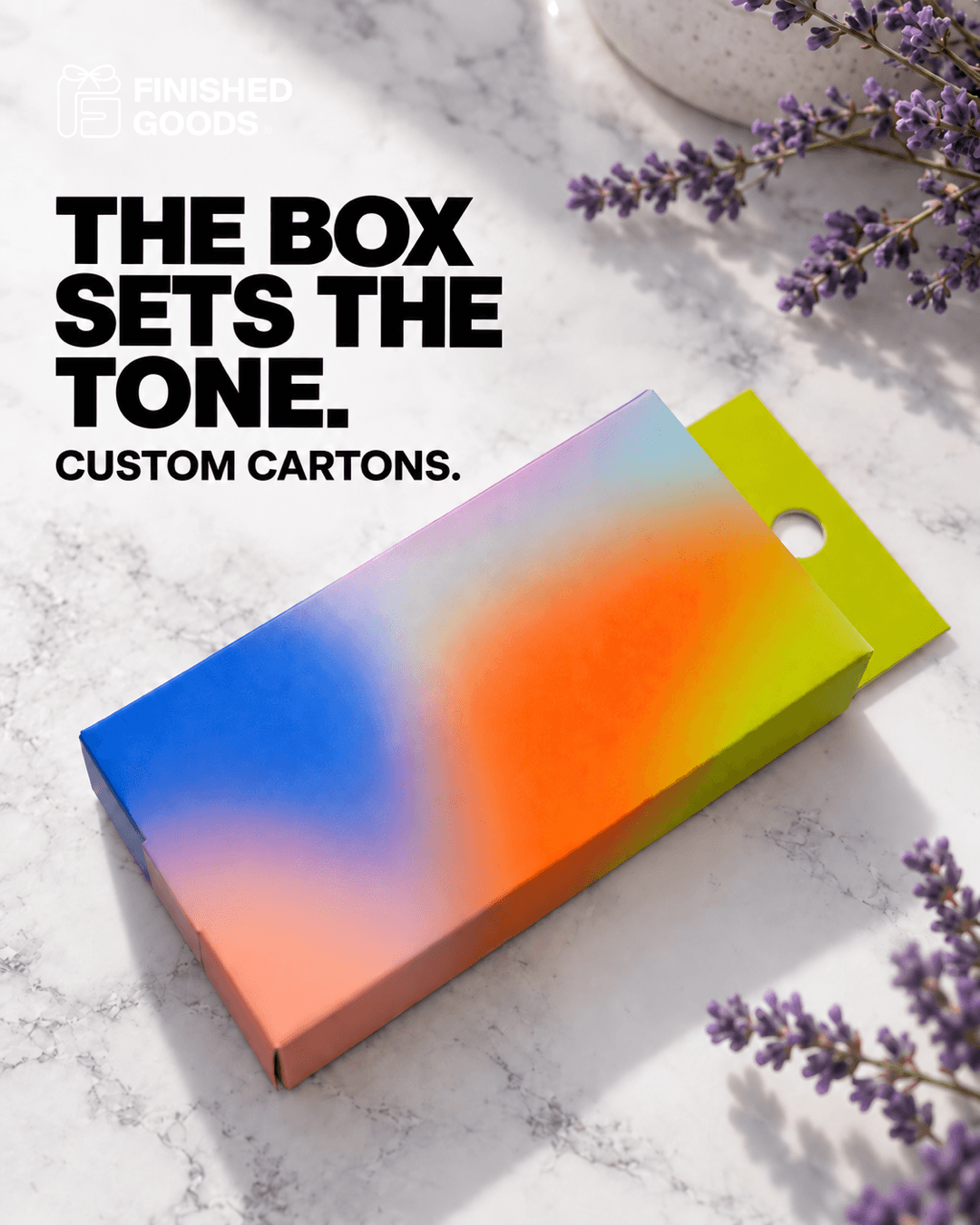
| Paper box or slide box | Product and inner-pack fit, board, structure, closure, dieline, finish, and assembly state. | Structural sample, artwork proof, print setup, assembly, inserts, and flat versus assembled freight. |
| Glass jar | Product fill, jar and lid dimensions, liner or seal, label area, and ship protection. | Jar, closure, liner, decoration, case pack, breakage allowance, and freight. |
The questions differ by format, but the comparison method is the same: record what is included, what is excluded, and what changes when the artwork, closure, or quantity changes. For pouch dimensions, request the supplier's controlled drawing and confirm usable space with a filled production sample.
Do not compare MOQ without the total first-run commitment
Request the quoted minimum in *finished, usable units*, then ask whether it applies per size, artwork, color, SKU, or shipment. A supplier may quote a minimum for a shared material run while the actual order requires separate quantities for each printed variant. Ask how overage, underage, rejected units, and partial releases are handled.
Calculate a first-run estimate using the supplier's actual quote: finished units multiplied by the quoted unit price, plus one-time setup, samples, testing or documentation, packing, freight, duties where applicable, and any other line item that the buyer must fund. Keep one-time charges separate from repeat-run charges. To compare first-run economics, divide the full first-order commitment by the expected number of accepted, usable units; show that figure alongside the repeat-run unit price. The calculation is a purchasing worksheet, not a published Finished Goods price claim.
Compare lead time as a sequence, not one promise
Ask for separate dates or durations for structure approval, artwork proof, production sample, any required test-evidence review, production release, packing, and delivery. State the event that starts each clock. “After artwork approval” and “after deposit” are different start points, and the total schedule also depends on the buyer's response time and shipping plan.
For a launch, work backward from the date the packer needs approved packaging in hand. Add receiving inspection and a buffer for a rejected proof or sample. Ask what changes if the order uses an existing stock format rather than a custom structure, finish, or print run. The answer should be a versioned quote and schedule for the actual configuration.
Include compliance and line fit in the specification
Packaging requirements depend on the product and selling market. If the package is described as child-resistant, request the applicable test or certification evidence for the exact configuration and have the responsible compliance reviewer determine whether it fits the intended use. California's current cannabis packaging rules are one example of requirements that vary with product and package use; they are not a universal rule for every state. See California DCC regulations, §§ 15413, 17411 and 17412.
Send a filled production sample through the intended workflow before approving a purchase order. Check fit, filling, sealing, artwork location, opening and reclosure as applicable, case-pack handling, and the quality criteria the receiving team will use. A compliant-looking drawing does not prove that the packaged product will run or ship as planned.
Send one RFQ sheet to every supplier
Use one line per finished SKU. Record the package drawing and revision, product and market, material and closure, print files, quantity breaks, quoted minimum, finished-unit price, one-time charges, sample and proof steps, evidence requested, case pack, delivery terms, quote validity, and named change-control contact. Ask suppliers to mark any assumption or exception directly on the sheet.
If a quote is incomplete, request the missing line item before ranking it. A reliable comparison shows the cash needed for the first order, the repeat-order economics, the date usable units can reach the packer, and the evidence required to release the configuration. The comparison gives procurement a decision it can defend and operations a specification it can execute.