1-Gram Disposable Vape: B2B Buyer Guide for Licensed Cannabis Brands
A buyer framework for 1g disposable vape hardware: validate oil fit, battery use life, filling, child-resistant packaging, quotes, and market requirements.
If you are sourcing a 1g disposable vape wholesale for a licensed cannabis brand, start with three decisions: match the coil and intake design to your oil, choose draw activation or a button based on your customer and your oil's viscosity, and lock in child-resistant packaging and branding before you set volumes. A 1g all-in-one (AIO) can be a core volume SKU in a brand's lineup. Its specifications deserve filled-unit validation and approval controls before production.
This guide walks through how procurement teams should spec 1g AIO vape hardware, where 1g fits against 2g, 3g, 4g, and 5g formats, and what to ask a supplier before you commit.
Who This Guide Is For
This is written for the people who own hardware decisions at licensed operators:
- Brand owners building or refreshing a disposable line
- Processors and extraction labs filling hardware in-house or for white-label clients
- MSO purchasing teams standardizing one 1g device across multiple state markets
- Operations leads who live with the consequences of clogs, leaks, and returns
If you already run larger disposables, compare the 1g role with your actual retailer, customer, margin, and return data. Do not assume one size has the same economics or buyer profile in every market.
1g vs 2g, 3g, 4g, and 5g: When 1g Is the Right SKU
A 1g disposable may serve as a trial or core SKU. Use current retailer sell-through, shelf pricing, customer feedback, and destination-market rules to determine its role for your brand.
A larger format can change the intended use life, device requirements, retail economics, and market eligibility. Validate those differences with filled-unit tests and current retailer data before assigning a buyer role.
| Factor | 1g | 2g | 3g to 5g |
|---|---|---|---|
| Buyer role | Validate trial or core role with retailer data | Validate repeat-buyer role with retailer data | Validate larger-format demand with retailer data |
| Price and margin | Quote exact unit and shelf economics | Quote exact unit and shelf economics | Quote exact unit and shelf economics |
| Use-life test | Test full fill and battery behavior | Test full fill and battery behavior | Test full fill and battery behavior |
| Inventory turn | Measure by SKU and retailer | Measure by SKU and retailer | Measure by SKU and retailer |
| Market rules | Check destination requirements | Check destination requirements | Check destination requirements |
When to lead with 1g:
- You are launching a new brand or a new oil type and need trial volume
- Your retail partners report that disposables move mostly at the lower price tier
- You operate in a market where larger devices face regulatory or retail limits
- You want one SKU that can carry multiple strains without tying up cash in large-format inventory
When 1g should not be your only disposable:
- Your repeat-purchase data shows customers buying multiple 1g units at once
- Competing brands on your retail shelves are winning value shoppers with larger formats
- Your oil is premium and the per-unit price ceiling at 1g squeezes your pricing
Choose the launch mix from your retailer data, validated hardware, market rules, and cash plan; add a larger SKU only when its role is supported.
Oil Compatibility: Distillate, Live Resin, and Rosin in 1g Hardware
Oil-hardware mismatch is one failure mode to evaluate; return causes require lot-level investigation rather than a category-wide ranking. Before you request samples, tell your supplier exactly what you plan to fill, including viscosity behavior at room temperature, terpene content, and whether you add anything after extraction.
Distillate
For each distillate formulation, measure flow and filled-unit behavior with the proposed atomizer, airflow, and activation mode rather than assuming a standard ceramic configuration will fit. The main risks are formulations with high added terpene content, which thin the oil and raise leak risk, and added ingredients, whose permissibility must be checked for each destination market. Have the responsible compliance owner review the exact formulation before approval.
Live Resin
Live-resin flow can vary by formulation and lot. Measure the submitted oil and compare supplier-documented atomizer and intake configurations in filled-unit tests across relevant lots. If your live resin tends to crystallize, discuss how the device will handle that over shelf life.
Rosin
Rosin behavior varies by formulation, processing, storage, and temperature. Compare documented atomizer, aperture, activation, and optional preheat configurations with the exact oil; record sensory and hardware outcomes before choosing a build.
What to Ask About Materials and Testing
- What named material specifications and applicable test documents cover the coil, tank, mouthpiece, and other wetted parts in this exact build?
- Does the supplier provide heavy metals test results on the hardware, and against which state's limits?
- Can they support your own lab's testing of filled units before you approve a production run?
- What filling method is the device designed for (top fill, bottom fill, hot fill) and what capping equipment does it require?
Have the quality team review hardware-material and finished-product test evidence against the applicable market requirements. A test failure requires investigation before its source or remedy is assigned.
Draw-Activated vs Button, Airflow, and Battery Sizing at 1g
Activation
Draw-activated devices fire when the user inhales. Compare draw activation with the target user experience and the exact filled-oil performance; do not infer suitability from the 1g format or oil label alone.
Button-activated devices give the user control over when the coil fires. A button may enable features such as preheat or adjustable output, depending on the device. Validate any benefit and user-interface tradeoff for the selected configuration.
Some devices combine both: draw activation for everyday use with a button for preheat. Evaluate a hybrid option against the target user, oil, and battery test plan before selecting it.
Airflow
Airflow shapes the draw feel and also affects clogging. A restricted draw can feel more like a traditional cartridge, while a looser draw suits users who want a lighter hit. Ask suppliers:
- Where the air path runs relative to the oil reservoir
- How the design prevents oil from migrating into the air path or sensor
- Whether airflow is fixed or adjustable
Test draw feel with your target customer in mind, not just your extraction team.
Battery Sizing
At 1g, the goal is simple: the battery should outlast the oil. A device that dies with oil still in the tank creates complaints and returns. Ask for the battery capacity, the expected number of draws per charge, whether the device is rechargeable, and what charging port it uses. Rechargeability permits another charging cycle, but it does not prove the device will complete the intended fill or meet the planned use life.
Also ask about the device's voltage or temperature profile. The heating curve needs to vaporize your oil fully without scorching terpenes or burning the coil dry near the end of the fill.
Custom and White-Label Options
If 1g is a core SKU in your program, its branding may appear across many units. Approve decoration and packaging on physical samples before production.
Common Customization Paths
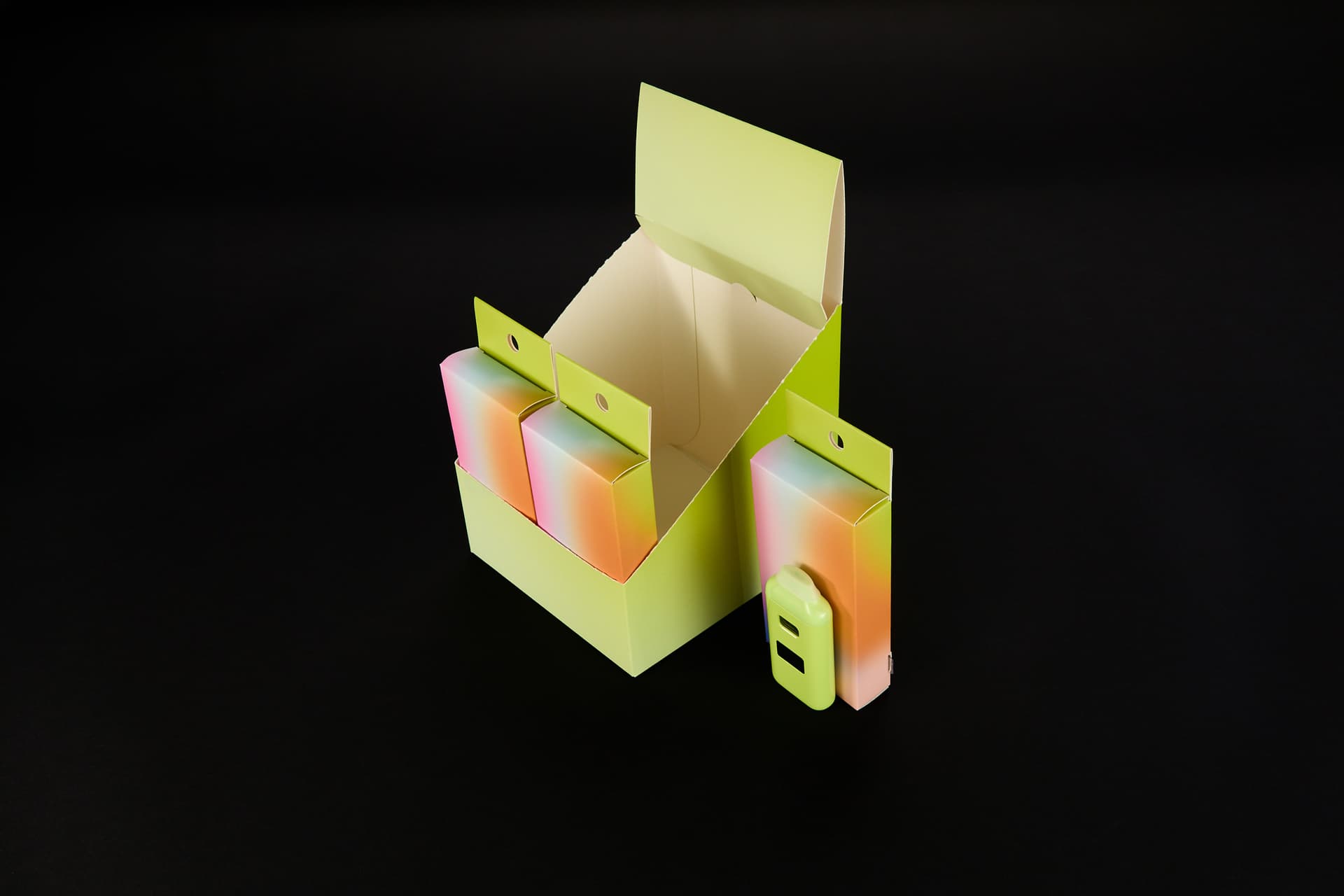
- Stock device, custom packaging: Compare current stock, packaging approval, and quoted schedule. You brand the box and inserts and keep the hardware standard.
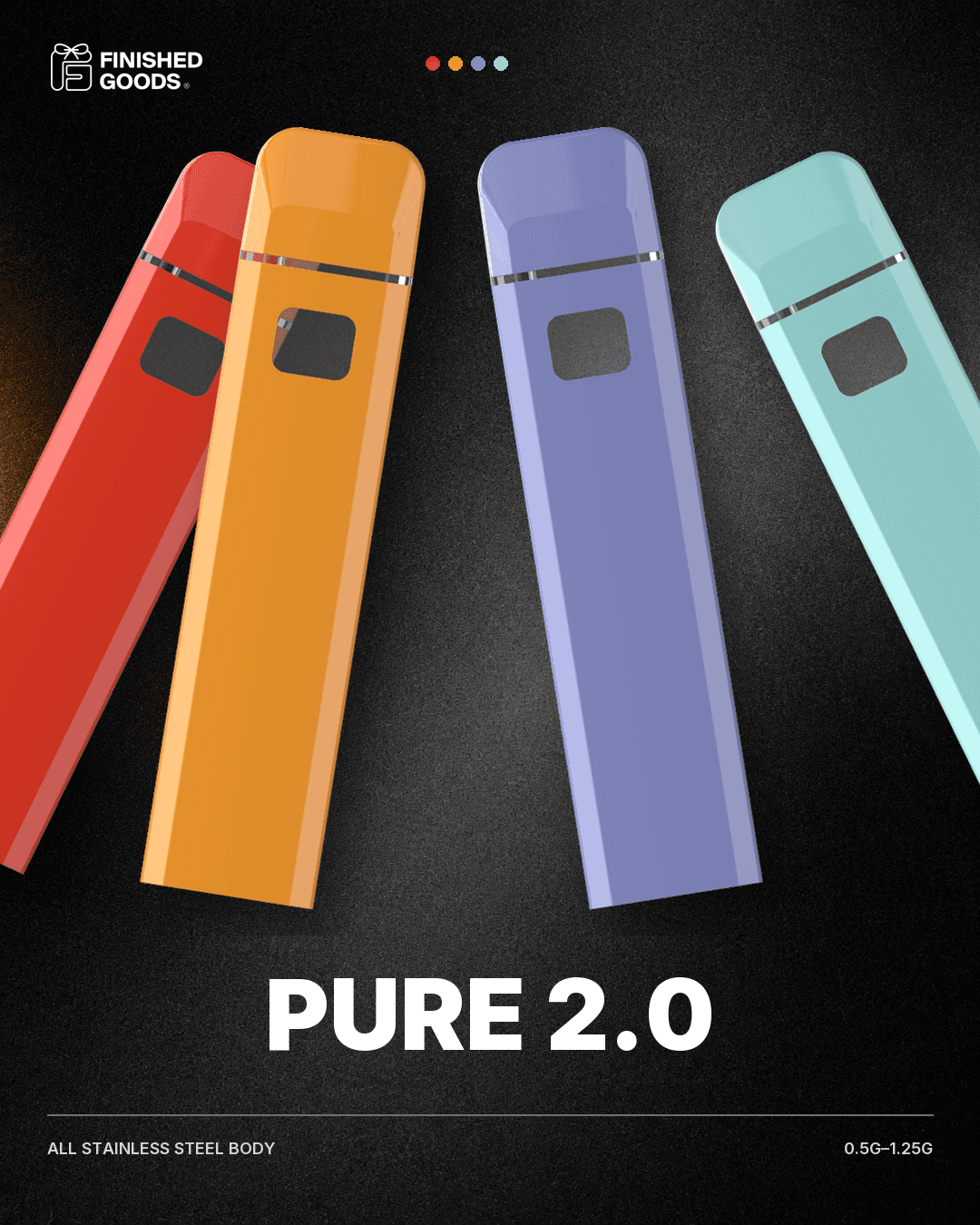
- Color and finish: Custom body colors, mouthpiece colors, and surface finishes on an existing device.
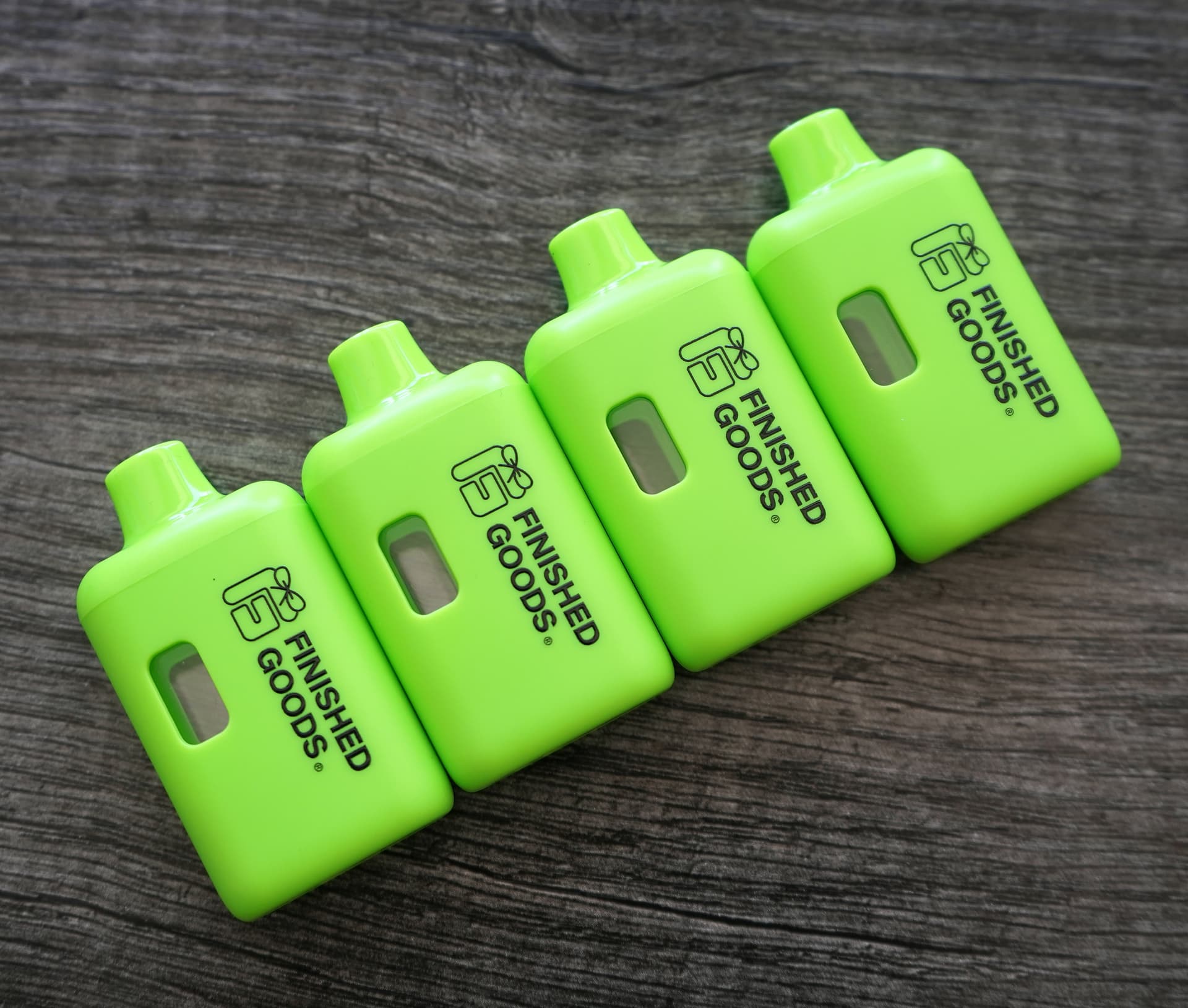
- Logo application: Pad printing, silk screening, laser etching, or similar methods, depending on the device surface.
- Fully custom design: Confirm whether new housing or tooling is required and price the actual approval schedule and commitment.
Minimums and timing vary by device, supplier, decoration, and inventory. Ask your supplier to map out exactly which options are available on a given device before you design around it.
White-Label for Processors
If you fill for multiple brands, standardizing on one 1g device with brand-specific colors and packaging simplifies your filling line, capping equipment, and QA process. Confirm the supplier can keep each client's branding consistent across reorders.
Child-Resistant Packaging
Packaging requirements vary by market and product configuration. Before selecting a device or pack, have the responsible compliance team review the proposed finished package, labeling, and child-resistance evidence for every destination market.
When evaluating CR options for a 1g disposable:
- Request child-resistance test documentation tied to the exact finished package and have the compliance owner confirm applicable requirements
- Confirm the packaging meets the specific rules in every state you sell in, not just one
- Check that your label layout fits the required warnings, universal symbols, and batch information
- Plan packaging and hardware together, so the device fits the insert and the box closes cleanly
Start package-evidence and artwork review early enough to fit the approved sampling and launch plan.
MOQ, Sampling, and Lead-Time Planning
Minimums and lead times depend on the exact device, inventory, decoration, packaging, approval plan, and supplier. Request dated quotes for stock and custom options with the same specifications before comparing them.
How to Plan
1. Request samples early. Fill them with your actual production oil, not a lab sample. 2. Run real-world tests. Store filled units in different orientations and temperatures, test draw consistency from first hit to last, and check for leaks over time. 3. Lock specs in writing. Coil type, aperture size, activation mode, colors, and packaging should all be documented before the production order. 4. Build in buffer. Account for production, transit, and any customs time, plus your own filling and compliance testing. 5. Plan reorders before you run low. Use observed SKU-level sell-through and replenishment lead time to set the reorder point.
Supplier Evaluation Checklist
Use this list when comparing suppliers for 1g AIO vape hardware:
- Tested the device with your own oil, across more than one batch
- Received material specifications for coil, tank, and mouthpiece
- Received heavy metals test documentation relevant to your states
- Confirmed battery capacity outlasts a full 1g fill with headroom
- Confirmed filling method and capping equipment compatibility
- Documented activation mode, airflow, and voltage or temperature profile
- Documented child-resistance review for the exact package and destination markets
- Got a written quote covering MOQ, lead time, and customization scope
- Clarified the defect and replacement policy for failed units
- Confirmed consistency between sample units and production units
- Identified a single point of contact for reorders and issues
Supplier scope varies. Ask each candidate to document the exact device, oil-fit test plan, packaging, quality responsibilities, customization, quotes, change control, and remedy terms before comparing models.
FAQ
What is the MOQ for a 1g disposable vape?
It depends on the device and how much you customize. Compare dated minimums for the exact stock and custom configurations. Ask for a written quote tied to your exact spec.
Can I use the same 1g hardware for distillate and live resin?
Sometimes. Fluid live resin often works in the same hardware as distillate, but thicker or more variable batches may need different coil or aperture configurations. Test each oil type in the device before committing.
Is rosin a good fit for 1g disposables?
It may work with a validated configuration. Test the exact rosin across relevant lots and storage conditions; evaluate preheat or button activation only if the device and quality plan support it.
Should a 1g disposable be rechargeable?
Rechargeability can permit the user to restore charge, but it does not guarantee full-fill use life. Test the selected battery, charge behavior, output, and complete fill under representative conditions.
Do I need child-resistant packaging, or a child-resistant device?
That depends on your state. Some states accept CR packaging around a standard device; others have stricter rules. Confirm the requirements in every market you sell in.
How do I decide between 1g and a larger format?
Use retailer demand, margin, full-fill device tests, and destination-market rules to decide whether 1g or a larger format has a supported role in the lineup.
Can Finished Goods help with custom 1g disposables?
Yes. Finished Goods works with licensed brands and processors on hardware selection, customization, and child-resistant packaging for 1g and larger disposables. Contact the team with your oil type, target markets, and branding goals to start sampling.