Child-Resistant Exit Bags for Dispensaries
Review child-resistant exit bags for dispensaries: product versus exit packaging, certification scope, usable size, closure, artwork, and supplier documentation.
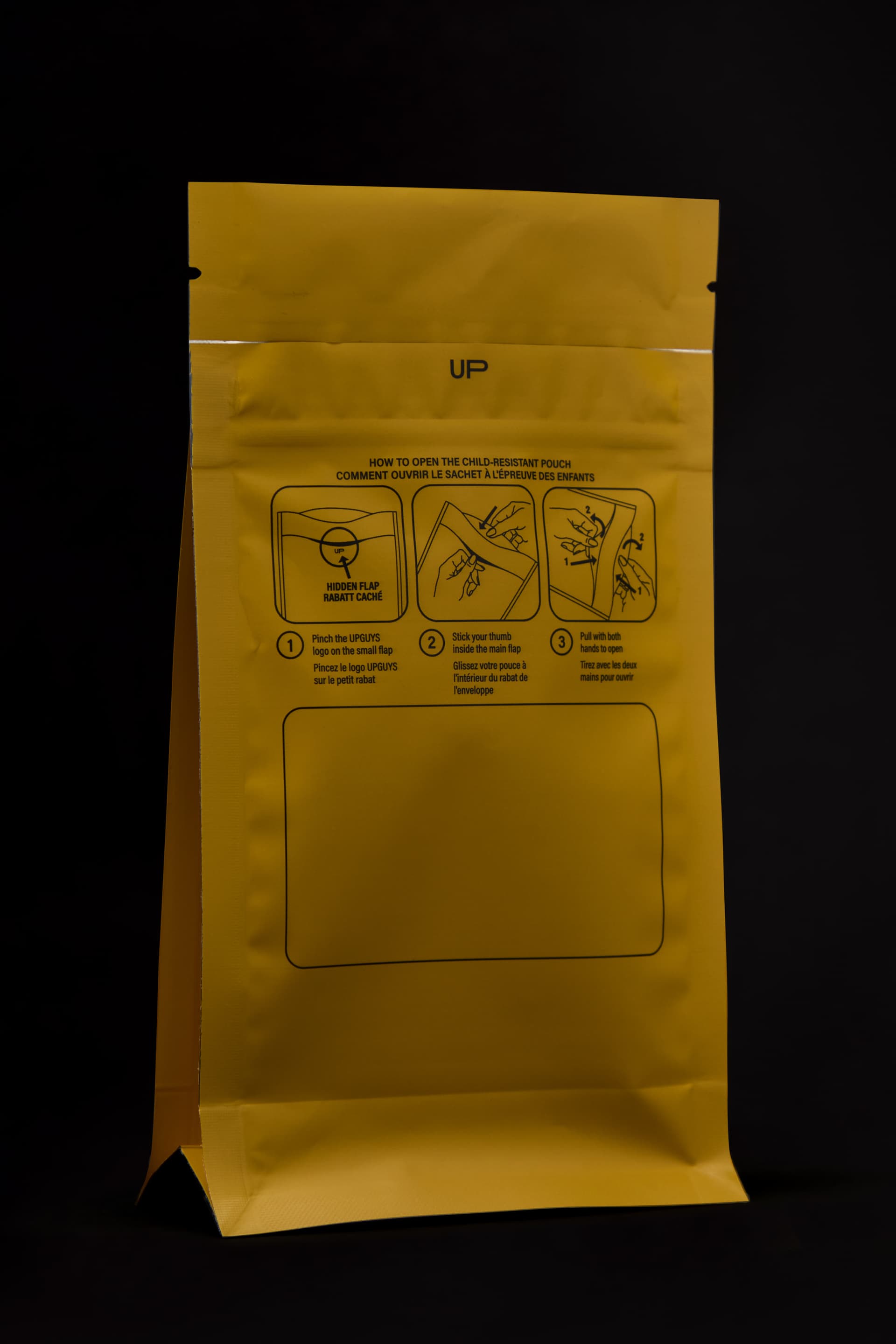
Choosing a child-resistant exit bag starts with the retail transaction and the market's rules. Identify which package contains the cannabis product, which package carries the purchase out of the dispensary, and what each layer is required to do. A bag's name, zipper, or opaque finish does not establish that the complete packaging arrangement meets the applicable requirements.
This buyer framework separates the legal decision from the physical bag specification. Review it with the licensee's compliance adviser before approving artwork or ordering a production run. Availability, dimensions, decoration, minimums, and certification must be confirmed for the exact supplier configuration.
Separate product packaging from exit packaging
California illustrates why this distinction matters. DCC's regulations resource, effective October 1, 2026, describes compliant product packaging and an opaque exit package separately in section 15413. Section 17412 addresses child resistance and distinguishes requirements by product type and use. The DCC page identifies itself as an unofficial resource and links to the official California Code of Regulations.
Do not turn that example into a rule for every state or assume that an outer bag cures a noncompliant primary package. Ask the responsible reviewer to map current state and local requirements to the exact product, transaction, and packaging layers. Record the rule, effective date, applicable exception if any, and release decision.
Define what the child-resistant claim covers
Request the documentation behind the supplier's claim. Identify the bag model, size, material, closure, instructions, tested configuration, test method, report date, and responsible certifier. Confirm whether the report covers the proposed build and whether any change needs additional review.
The CPSC's special-packaging FAQ explains the testing protocols under 16 CFR 1700.20 and states that CPSC does not pre-approve, certify, or endorse a specific package. Its guidance also discusses evaluating changes in material, manufacturing, contents, and closure combinations. Do not use a “CPSC approved” marketing label as a substitute for the applicable evidence.
Have the compliance reviewer decide which documentation and certification are required for the actual cannabis packaging arrangement. An empty-bag supplier's report is evidence to review; it does not by itself establish every responsibility of the licensee or finished-product manufacturer.
Check fit with the actual shopping basket
Measure usable internal width, height, gusset, and clearance around the closure. Test the actual cartons, jars, cartridges, and other packaged products that the dispensary intends to place inside. External bag dimensions alone do not tell the team whether a purchase can be packed without obstructing the closing mechanism.
Review the expected load, seam condition, handling, and closure operation using a defined acceptance plan. If the configuration is reclosable, examine the supplied opening and resecuring instructions. A staff member being able to close a sample does not replace the evidence supporting a child-resistant claim.
Keep artwork clear of functional features
Ask the supplier to mark the printable area, closure, seams, opening instructions, and any mandatory notices on the current dieline. Review legibility after the bag is formed and filled. Do not approve a flat proof without checking how the final bag presents the instructions.
Confirm how printing, lamination, materials, dimensions, and closure changes affect the quoted configuration and its documentation. Retain the approved artwork revision and physical sample together. Treat an unreviewed substitution as a change requiring disposition, even if the replacement looks similar.
Request a complete commercial specification
- Exact model, size, material, closure, and approved artwork revision.
- Testing documentation and the scope of the claimed child resistance.
- Usable internal dimensions and agreed contents or load.
- Quantity, case pack, size and artwork splits, and decoration minimums.
- Sample approval, production milestones, shipping basis, and current lead time.
- Receiving checks, nonconforming-material handling, and change notification.
Request current terms rather than applying another product's MOQ or lead time. Compare offers with the same configuration and evidence requirements. A lower bag price is not a complete comparison if it excludes the closure, artwork, testing documentation, or delivered quantity that the program requires.
Connect the bag to a repeatable retail process
Document who checks incoming bags, who trains staff, and what happens when a bag is damaged, does not fit, or cannot be closed correctly. Retain supplier lot information and investigate recurring problems before reordering. Keep the approved packaging decision accessible to the people who make the sale.
Review the mylar bag range alongside the intended packaging role, then confirm available bag configurations and documentation with Finished Goods. This guide does not assert that every mylar bag is an exit bag or that any listed configuration satisfies a particular market without review.