
Vape Pen Clogging: Why Viscosity, Not User Error, Is the Cause
Vape pen clogging is a hardware issue, not a user issue. Learn why atomizer-oil viscosity mismatches cause vape pen clogging and how operators can fix it.
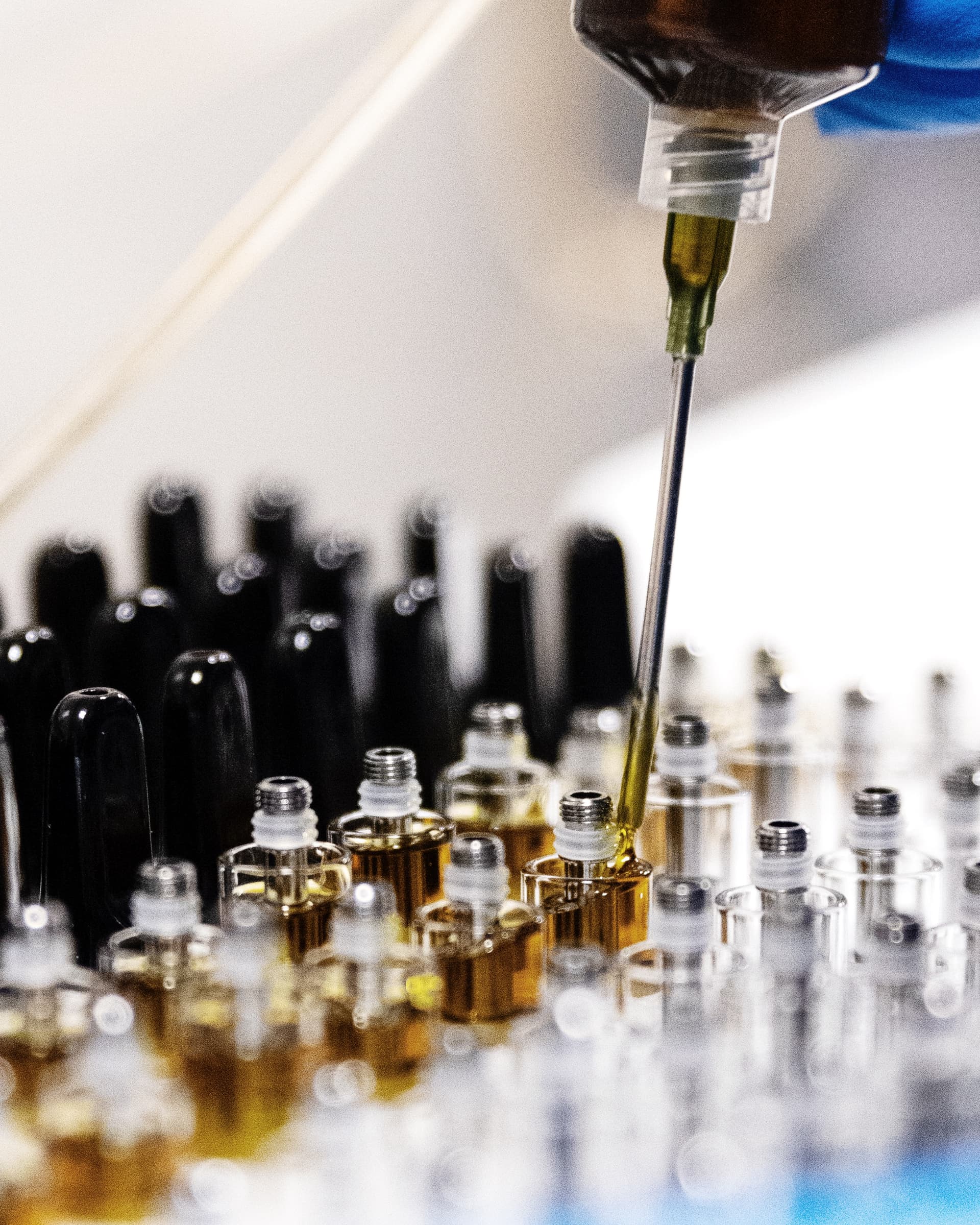
We're seeing a lot of posts lately blaming users for vape pen clogging and other cartridge issues. "Don't go snowboarding." "Don't put it in your pocket." "Keep it upright at 60 degrees." Then come the so-called fixes: "Spin it around in a sock." "Blow into the USB-C port." These aren't solutions, and they don't actually stop vape pen clogging from happening on the next pull or the pull after that. They're signs of a much bigger problem at the hardware level.
If your vape pen keeps clogging and the best advice available is to change user behavior, something went wrong at the hardware level long before the consumer ever took the product out of the package. Vape pen clogging is not caused by how someone stores a cart, how hard they pull, or whether they remembered to keep the mouthpiece pointed at the ceiling, and treating it that way is how brands lose repeat customers without ever understanding why. It's caused by a measurable, predictable mismatch between the atomizer compound and the oil it's being asked to vaporize.
The Industry Habit of Blaming the Consumer
There's a pattern in cannabis hardware that doesn't really exist in most other product categories. When a product fails out in the world, the first explanation offered is almost always that the user did something wrong, and that explanation gets repeated until it sounds like a fact.
The cart clogged because the consumer left it in a cold car overnight. The cart leaked because they stored it on its side instead of vertically. The cart produced dry hits because they pulled too hard, or not hard enough, or for too long, or not long enough.
Some of these things can affect performance on the margins, and storage instructions aren't useless on principle. Temperature and orientation matter to some degree, especially with viscous live resin formulations. But they don't explain why carts from one brand clog consistently while carts from another brand, used by the same consumers in the same conditions, don't clog at all.
If user behavior were the actual root cause of vape pen clogging, the failure rate across brands would be roughly random and roughly even. It isn't random and it isn't even. It's predictable, it correlates with hardware specifications, and it has nothing meaningful to do with what the consumer did between purchase and first pull.
What's Actually Causing the Vape Pen Clogging
The atomizer core inside a vape pen has a specific saturation rate, which is essentially a measure of how quickly the porous ceramic absorbs oil from the reservoir into the heating element. Different oils have very different viscosities, and viscosity directly determines how easily oil flows into and through that ceramic structure.
When the saturation rate of the atomizer matches the viscosity of the oil, the core saturates evenly across its surface, the oil vaporizes cleanly when the coil heats, and the consumer gets a smooth, full draw on every pull. The cart performs the way the marketing copy says it should. When there's a meaningful mismatch between the two, the cart fails, and the specific failure mode depends entirely on which direction the mismatch runs.
If the oil is too thick for the atomizer's saturation rate, the ceramic core can't pull oil fast enough to keep up with vaporization. It dries out at the heater, scorches a small layer of residue onto the wick, and chokes off the airpath one micro-clog at a time. That's the classic vape pen clogging complaint that brands dismiss as a storage problem.
If the oil is too thin for the atomizer's saturation rate, it overwhelms the ceramic in the opposite direction. Oil floods the chamber, leaks past the seals into the airpath, pools at the mouthpiece, and produces the dreaded leaky cart that brands dismiss as a temperature problem.
Neither failure mode has anything substantive to do with altitude, pocket temperature, or storage angle. Both are determined at the hardware level by the relationship between atomizer saturation rate and oil viscosity, and both are completely predictable if anyone bothers to test them before production.
Why Vape Pen Clogging Keeps Happening Across the Industry
The economics of vape hardware manufacturing push relentlessly toward standardization. Building one atomizer compound and shipping it to every customer is dramatically cheaper than engineering five compounds for five different oil types, and most overseas hardware vendors have organized their entire supply chain around that single-SKU model.
The problem is that cannabis oils aren't standard, and they aren't getting more standard over time. Distillate is thick and moves slowly through ceramic. Live resin is medium-bodied and full of terpenes that change behavior as they warm. Rosin is heavier still, often with particulate that can clog a poorly designed wick. Solventless blends sit somewhere in between. New formulation categories show up every quarter as extractors push the envelope.
One atomizer compound can't handle that range, and the physics simply don't allow it. A saturation rate that works beautifully for distillate will starve when paired with high-viscosity rosin. A saturation rate tuned for rosin will flood when paired with thin distillate. The math is unambiguous, and anyone who has run viscosity tests across the major formulation categories knows this.
But most hardware vendors ship the same generic core for all of them. When the inevitable vape pen clogging failures happen, those vendors point at the consumer rather than at the engineering, because the alternative is admitting that their single-SKU model isn't actually capable of serving the market they're selling into.
The Consumer Behavior Defense Doesn't Hold Up
Think about it from the operator's side for a moment. If you're a brand running live resin through hardware originally built for distillate, your return rate is going to climb steadily over the first sixty days of distribution, and your reorder rate from dispensaries is going to soften right behind it.
So you print storage instructions on the box, hoping that helps. You add a clog-prevention FAQ to your website. You tell budtenders to remind customers to keep the cart upright and warm. Returns slow down for a week as the message filters through, then come right back the moment the next batch hits the shelf.
The fix didn't work because the diagnosis was wrong from the beginning. The oil is flooding the atomizer because the saturation rate is too fast for that particular viscosity, and no amount of consumer education changes the ceramic compound sitting inside the cart. You can't troubleshoot your way out of a hardware mismatch with a pamphlet.
This is what separates a hardware partner from a hardware vendor. A partner looks at your specific oil, matches the atomizer compound to it based on measured viscosity, and validates the result with bench testing before you ever commit to a production run. A vendor sells you a standard cart, ships it on a container, and sends you a troubleshooting PDF when it fails.
At Finished Goods, we built five PrecisionFlow atomizer compounds because the data made it obvious that one compound couldn't serve every oil type without producing exactly the kind of vape pen clogging the industry has normalized. Each formulation category, including distillate, live resin, rosin, blends, and specialty SKUs, gets its own core with its own saturation rate. Seven years of iteration across hundreds of brands in the U.S. and Canada went into selecting the five compounds we ship today.
What Operators Should Take Away About Vape Pen Clogging
If you're dealing with recurring vape pen clogging, stop looking at what the consumer is doing and start with the hardware specs you actually purchased. The diagnostic questions are short, but you have to be willing to ask them honestly.
- Test your actual oil in the actual hardware before committing to a production run. Not a similar oil. Not last quarter's formulation. The specific batch you plan to ship, at the fill weight you plan to ship, in the cart geometry you plan to ship.
- Ask your vendor whether the atomizer compound in your cart was selected for your specific oil type. Not your oil category as a generic label. Your specific formulation. Viscosity varies meaningfully within categories, and a generic answer is a sign that no real matching happened.
- Track clog reports by SKU, not just by batch. If clogs cluster around specific oil types, the atomizer mismatch is the most likely cause. If every SKU has the same complaint rate, the issue is probably manufacturing tolerance rather than formulation matching.
- Stop shipping storage instructions as a clog solution. Storage instructions are good practice and worth including for other reasons. They are not, and have never been, a fix for a hardware mismatch.
- Audit your hardware spec sheet against your formulation roadmap. If your oil program is evolving toward live resin and rosin while your hardware spec was locked in three years ago for distillate, you're going to keep seeing vape pen clogging until the spec catches up.
What Vape Pen Clogging Costs When You Get It Wrong
The financial impact of blaming the consumer for vape pen clogging goes well beyond the visible return rate. Returns are easy to count and easy to discount, but the invisible damage is what actually moves the P&L over a year.
A consumer who buys a clogged cart and then reads the troubleshooting instructions on the box doesn't think "I should have stored this differently and now I'll buy this brand again next time." They think the brand is unreliable, they tell a friend, they pick a different cart on their next dispensary visit, and they don't come back. Repeat purchase rate is the silent metric that vape pen clogging quietly destroys.
Brands that accept the consumer-blame narrative end up spending real money on things that don't move the underlying problem. Customer service hours, replacement inventory, dispensary credits, social media management, and influencer partnerships designed to repair the brand's reputation. None of that capital touches the saturation-rate mismatch that caused the clog rate to climb in the first place.
The brands that resolve clog issues fastest are the ones that go straight to the hardware. They ask for atomizer specs, they request matched compounds, they run viscosity testing in-house, and they treat reliability as an engineering problem rather than a marketing problem. Those are the brands that keep their reorder rate flat through formulation changes instead of watching it erode every time the oil program shifts.
Reliability Isn't a Consumer Responsibility
The expectation that a consumer should modify their behavior to prevent a hardware failure is backwards on its face, and the cannabis industry is one of the only consumer categories where that expectation gets defended in writing. A cartridge should perform in a pocket, in a purse, in a cold car, and on a chairlift. If it can't, the engineering wasn't done, and the consumer is not the person who should be paying for that gap.
Vape pens keep clogging not because consumers are careless or uneducated. They keep clogging because the atomizer inside wasn't matched to the oil it was filled with, and that's a hardware decision made far upstream, long before the consumer ever sees the product on a shelf or in a delivery bag.
When a cart clogs, the blame belongs on the brand, the manufacturer, or the company that filled it. Not on the person who bought it. Operators who understand this stop writing troubleshooting guides and start auditing their atomizer specs, because that's where the clog rate actually lives. If you'd like to discuss your current hardware spec or run a viscosity match against your oil program, you can reach the Finished Goods team here.
Frequently Asked Questions About Vape Pen Clogging
### What is the most common cause of vape pen clogging?
The most common cause of vape pen clogging is a mismatch between the atomizer's saturation rate and the viscosity of the oil it's filled with. When the ceramic core can't pull oil fast enough, it dries out at the heater and produces the partial blockages users describe as a clog.
### Does storing a vape pen upright actually prevent clogging?
Storing a cart upright can help with very minor leakage in some hardware, but it does not prevent vape pen clogging caused by atomizer-oil viscosity mismatches. Storage advice is a coping strategy, not a fix.
### Why do some brands have far higher vape pen clogging rates than others?
Brands with higher clog rates are usually using a single generic atomizer compound for multiple oil types. Brands with lower clog rates have matched the atomizer compound to each specific formulation, which dramatically reduces vape pen clogging in the field.
### Can vape pen clogging be fixed after the cart is filled?
Once the cart is filled and sealed, no consumer fix reliably resolves vape pen clogging. The only durable solution is upstream, at the hardware specification stage, before oil ever touches ceramic. For a deeper look at viscosity and ceramic engineering, the general physics of viscosity is a useful starting reference.