Dry Hits, Burnt Hits, and Flooded Atomizers: They're All the Same Vape Cartridge Problem
Most brands treat dry hits, burnt hits, and flooded atomizers as three separate problems. They're not three problems. They're three symptoms of one problem: the atomizer's saturation rate doesn't match the oil's viscosity.

Most brands treat dry hits, burnt hits, and flooded atomizers as three separate problems with three separate causes. Different tickets, different troubleshooting, different conversations with the hardware vendor.
They're not three problems. They're three symptoms of one problem. And until operators see it that way, every fix they apply will be partial, temporary, or wrong.
If your vape cartridge is clogged, or burning, or flooding, the cause is almost always the same: the atomizer's saturation rate doesn't match the oil's viscosity. The only thing that changes is which direction the mismatch goes.
What a Dry Hit Actually Is
A dry hit happens when the atomizer core heats up and there isn't enough oil saturating the atomizer. The coil fires, but instead of vaporizing a full dose of oil, it partially burns whatever residue is left on the surface. The result is a harsh, acrid flavor and weak vapor.
Consumers describe it differently. "Tastes burnt." "Harsh on the throat." "Flavor dropped off a cliff after the first few hits."
The mechanism is straightforward. The oil in the reservoir is too thick for the atomizer's saturation rate. The ceramic core can't pull oil from the reservoir fast enough to keep up with consumption. Between hits, the atomizer only partially resaturates. Each subsequent hit pulls from a drier atomizer, and the experience degrades.
This is not caused by the consumer pulling too hard or too often. It's caused by a ceramic compound that's too tight for the oil's viscosity. The oil can't physically saturate the atomizer at the rate the coil consumes it.
What a Burnt Hit Actually Is
A burnt hit is the extreme version of a dry hit. Same root cause, further along the failure curve.
When the atomizer has been running dry for multiple sessions, residue from partially vaporized oil accumulates on the coil and inside the ceramic core. This residue is darker, more viscous, and harder to vaporize than fresh oil. It cooks onto the surface instead of turning to vapor.
The result is a visibly darker oil near the atomizer, a persistent burnt taste that doesn't go away between hits, and reduced vapor production. At this point, the damage to the coil is permanent for that cartridge. No amount of preheating, resting, or voltage adjustment will restore performance.
Brands sometimes see this and blame oil quality. "The distillate degraded." "There was a bad batch." More often, the oil is fine. The atomizer just couldn't saturate it properly, and heat did the rest.
What a Flooded Atomizer Actually Is
Flooding is the opposite failure mode from the same root cause.
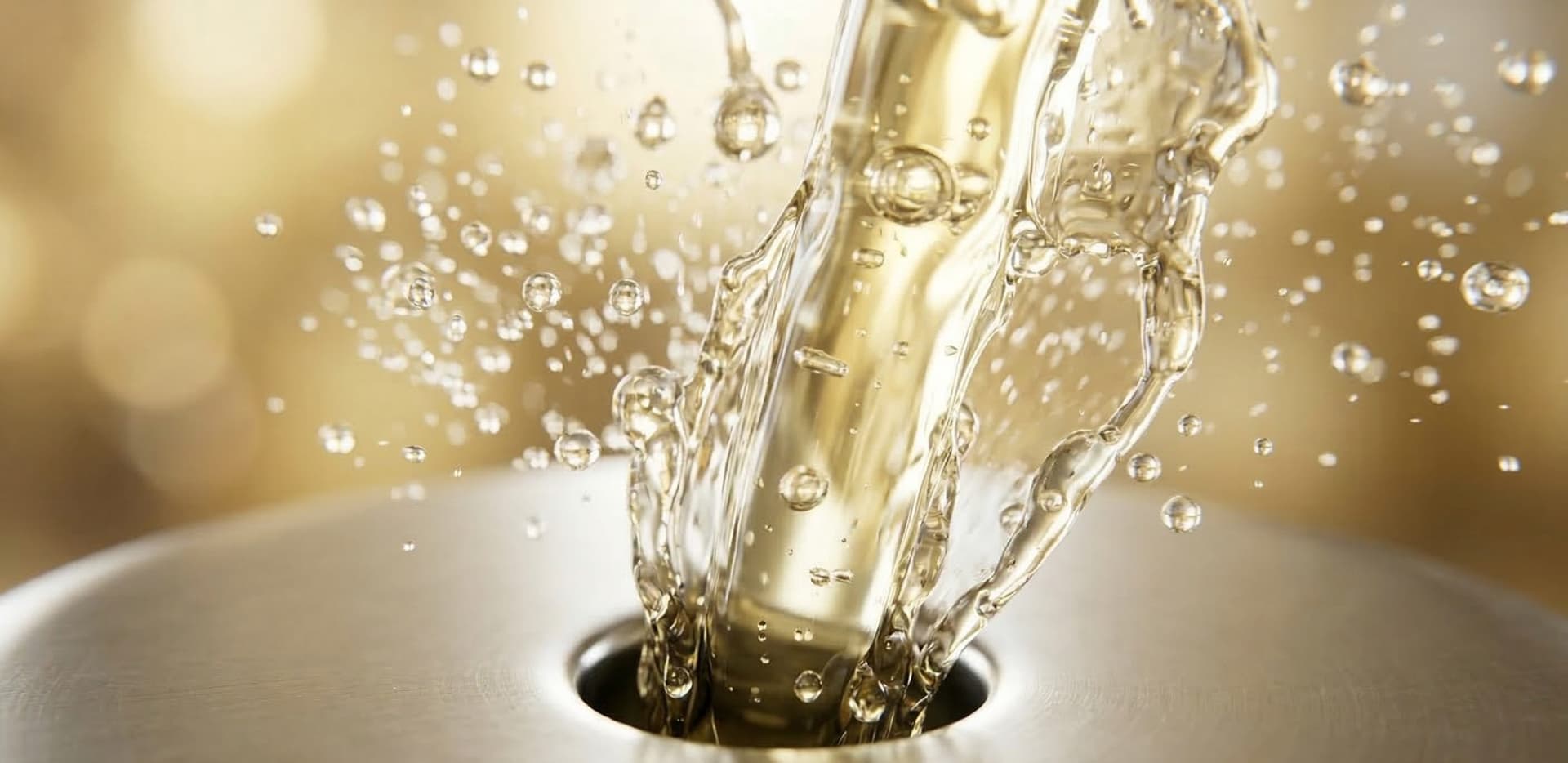
When the oil is too thin for the atomizer's saturation rate, the core absorbs oil faster than the coil vaporizes it. Excess oil accumulates in the chamber, seeps past the atomizer assembly, and migrates into the airpath.
The consumer hears gurgling when they inhale. They might get oil on their lips. Vapor production is inconsistent, sometimes dense, sometimes nothing. The cart feels "broken" even though the oil is all there.
Flooding leads to clogging because the excess oil in the airpath cools and thickens, eventually restricting airflow. The consumer experiences this as a blocked cart, but the blockage didn't start in the air channel. It started at the atomizer, where oil was flowing in faster than it was being consumed.
This is the failure mode most common with high-terpene live resin, thin blends, and formulations with low-viscosity carriers. The oil moves too easily through a core that was designed for something thicker.
One Root Cause, One Framework
The unified picture looks like this.
The atomizer core has a saturation rate, determined by its ceramic compound, material density, and internal structure. The oil has a viscosity, determined by its formulation, terpene percentage, and temperature.
When saturation rate and viscosity are aligned, oil saturates the core at the same rate the coil consumes it. The atomizer stays evenly saturated. Vapor production is consistent. No residue buildup. No flooding. No migration into the airpath.
Oil too thick for the core. Dry hits and burnt hits. The atomizer can't pull oil fast enough.
Oil too thin. Flooding and clogs. The atomizer can't regulate what's coming in.
Three symptoms, one variable: the match between atomizer and oil.
This is why brands that run multiple oil types through the same hardware see different failure patterns across SKUs. Their distillate might burn. Their live resin might flood. Both are telling them the same thing: the atomizer isn't matched.
Why This Matters for Operators
Understanding that these are one problem, not three, changes how you troubleshoot and how you evaluate hardware.
If you're treating each symptom separately, you end up chasing different solutions for each one. Voltage adjustments for burnt hits. Airflow changes for flooding. Preheat features for clogs. None of these address the shared root cause, and all of them add complexity without improving reliability.
If you see it as one problem, the path is simpler. Match the atomizer to the oil. Get the saturation rate right. The symptoms go away together because the cause goes away.
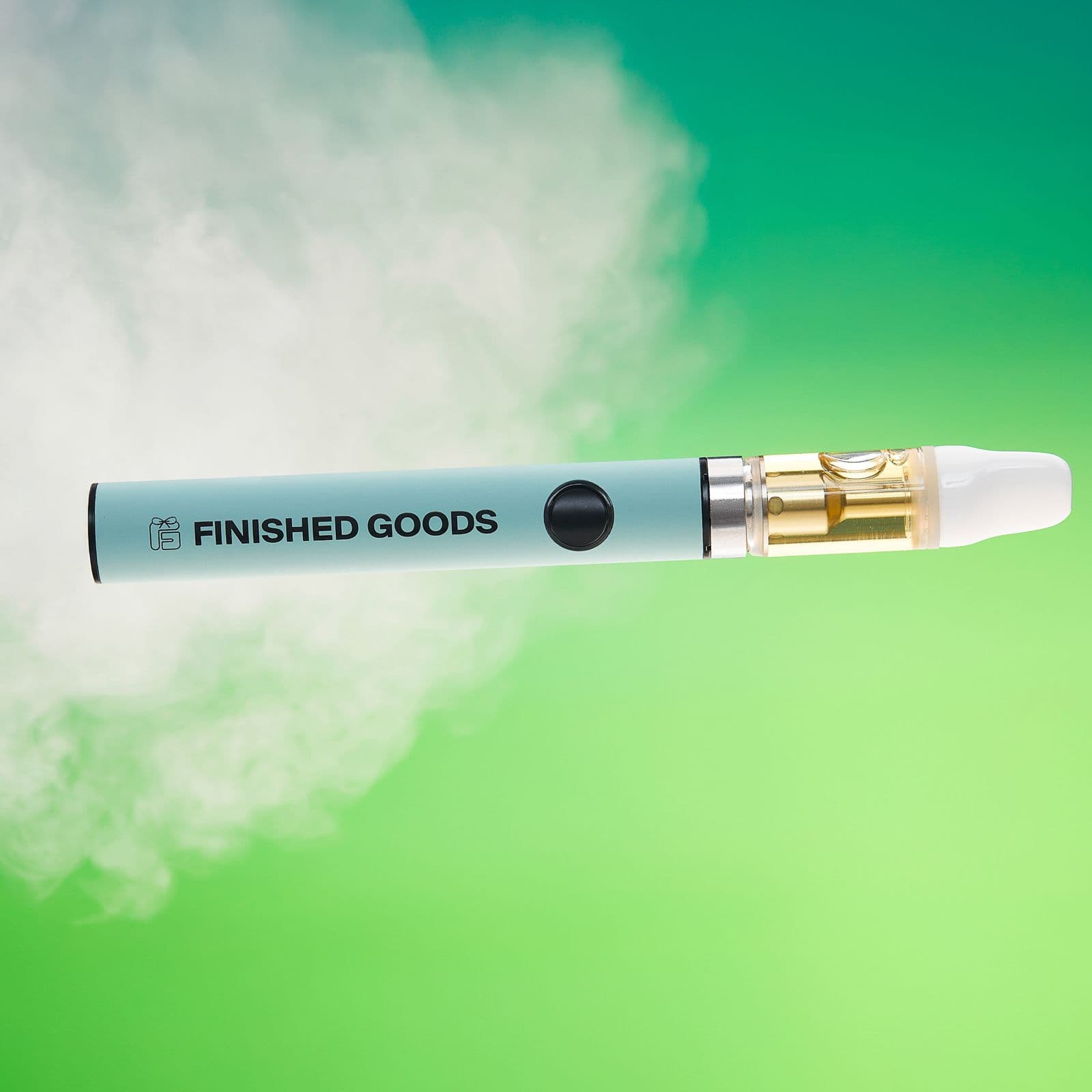
This is the logic behind Finished Goods' PrecisionFlow system. Five atomizer compounds, each with a different ceramic composition and saturation rate, each matched to a specific oil viscosity range. A ceramic cart built for distillate has a different internal structure than one built for live resin. Different products for different oils.
Operators who see it this way stop filing separate reports for dry hits, burnt hits, and flooding. One report: atomizer mismatch. One fix, at the hardware level, instead of three workarounds running indefinitely.
What to Audit
If you're seeing any combination of dry hits, burnt hits, or flooding across your product line, run this check.
Map failure mode to oil type. Which SKUs produce dry/burnt hits. Which ones flood. If the pattern splits along oil type lines, the atomizer compound is the variable.
Ask your vendor for the atomizer's target viscosity range. A vendor who designed the core for a specific oil type should be able to tell you what viscosity it's optimized for. If they can't, it's a generic core.
Check whether you're running multiple oil types on the same hardware. If your distillate and your live resin ship in the same cartridge with the same atomizer, you're guaranteed to have at least one mismatch. Probably both.
Stop treating voltage as the fix. Cranking voltage to push through a dry hit works once. It accelerates coil degradation and makes the problem worse over the life of the cart. Dropping voltage to reduce flooding just means weaker hits and a cart that takes twice as long to finish.
Same Problem, One Fix
Dry hits, burnt hits, and flooded atomizers are one engineering challenge presenting in three ways. The fix is the same in every case: an atomizer compound matched to the oil's viscosity.
Brands that understand this spend less time troubleshooting symptoms and more time shipping products that work.