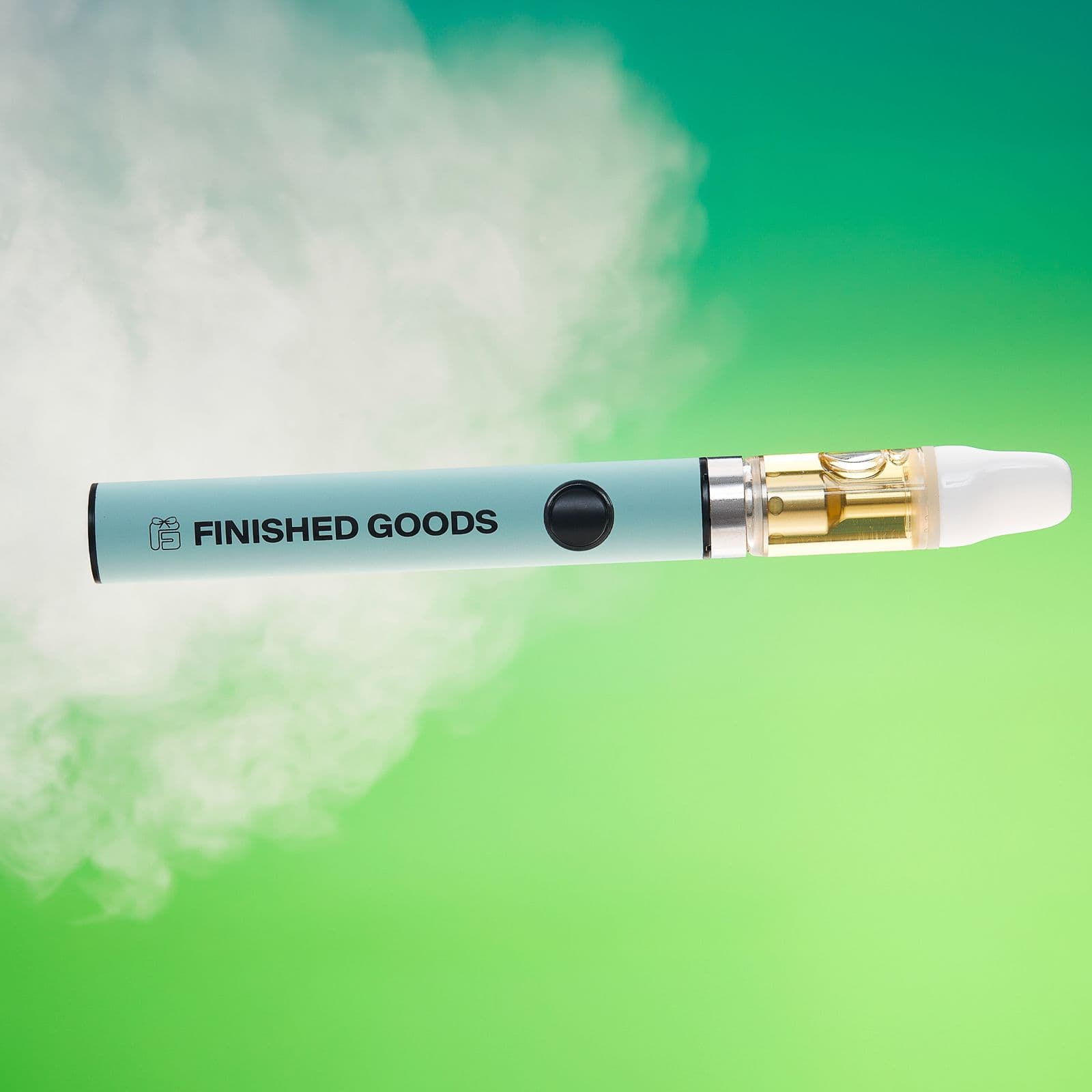
Why a Button Won't Fix Your Clog: What a Vape Cartridge Clogged With a Preheat Feature Really Means
Clogs are the number one consumer complaint for cannabis vapes. A button isn't the answer. If your hardware provider is pitching a button as an innovation or a clog solution, it's time to rethink your options.
Clogs are the number one consumer complaint for cannabis vapes. A button isn't the answer. If your hardware provider is pitching a button as an "innovation" or a "clog solution," it's time to rethink your options.
A preheat button fires the atomizer at low wattage to warm the oil near the coil. The idea is that softening the oil will clear a partial blockage and restore airflow. And it does work, for about one or two hits. Then the blockage comes back, because the button didn't fix anything. It just moved the oil around temporarily.
If you're evaluating hardware and the vendor's answer to a vape cartridge clogged is "we added a button," that tells you something important about how they think about product design.
What the Button Actually Does
When a preheat function activates, it sends a short burst of low power to the coil. This raises the temperature near the atomizer just enough to reduce the viscosity of oil that's settled or condensed in the immediate area.
For a consumer dealing with a partially blocked cart, this can restore airflow temporarily. The warmed oil flows away from the restriction point, vapor production resumes, and the hit feels normal again.
Then the oil cools. The same viscosity conditions return. The same mismatch between the atomizer's saturation rate and the oil's flow behavior reasserts itself. The clog comes back, usually within a few sessions.
Meanwhile, each preheat cycle applies heat to oil that's already been partially vaporized or degraded. Repeated low-temperature heating in the same zone creates residue buildup on the coil. Over time, the coil's performance degrades, the atomizer becomes partially fouled, and the cart's overall lifespan shortens.
The button doesn't prevent the clog. It manages the symptom at the cost of accelerating the underlying degradation.
Why Vendors Add Buttons Instead of Fixing Atomizers
Engineering multiple atomizer compounds is expensive. Each oil type requires a different ceramic compound, a different saturation rate, different tooling, and separate QC validation. That means separate SKUs, more complex inventory management, and longer development cycles.
A preheat button, by contrast, is a single circuit addition that works the same way regardless of oil type. It's cheap to implement, easy to market, and gives the vendor a response when brands report clog issues. "Use the preheat function" is a faster answer than "we need to re-engineer your atomizer."
It's a band-aid with a marketing name. The vendor chose not to solve the atomizer mismatch problem and instead shipped a workaround that puts the burden on the consumer.
When a brand asks why their carts clog and the vendor's response is a button, that's the vendor telling you the hardware was never designed to prevent clogs in the first place.
The Problem With Calling It a Feature
Some hardware companies position the preheat button as an upgrade or a differentiator. But a feature that exists to clear a clog is not a clog-prevention feature. It's an acknowledgment that the hardware clogs and the vendor's solution requires the consumer to intervene.
A button should improve the experience or give the consumer options, like adjusting temperature for flavor preference. It shouldn't be sold as a feature that fixes a design problem.
Compare this to hardware where the atomizer is matched to the oil. No button needed. No consumer intervention. The cart just works from the first hit to the last because the saturation rate was engineered for the viscosity of that specific oil type.
One approach assumes clogging is inevitable and builds around it. The other eliminates the root cause so the workaround isn't needed.
What a Button Tells You About the Vendor
If a hardware vendor is selling you on a preheat button, ask them a direct question: what is causing the clog that the button is designed to fix?
If they can answer that question with specifics, about saturation rate, oil viscosity, and atomizer behavior, and they explain why a button is the best engineering response given those constraints, that's at least an honest answer. You can evaluate it on its merits.
If they can't answer it, or if they redirect to "it's just a feature users like," the button is covering for an atomizer that wasn't designed for the oil. And that means you're shipping a product that requires user intervention to function properly.
For operators, this is a cost question. Every consumer who has to preheat their cart to clear a clog is a consumer having a suboptimal experience with your brand. Some will return the product. Some will complain to the dispensary. Most will just buy from a different brand next time.
The Alternative: Match the Atomizer to the Oil
The reason Finished Goods doesn't rely on preheat buttons as a clog solution is because the [PrecisionFlow atomizer system](https://finishedgoods.com/precisionflow) is designed to prevent the mismatch that causes clogs.
Five atomizer compounds, each tuned to a specific oil viscosity range. A distillate cart gets a core with a saturation rate built for thick, slow-moving oil. A live resin cart gets a different core, designed for thinner, terpene-rich formulations. Rosin, blends, and specialty formulations each get their own.
When the saturation rate matches the oil, the cart doesn't clog. Not because of a workaround. Because the physics are right.
No system is perfect, and we're not claiming every PrecisionFlow cart ships without a single issue. But 7+ years of engineering iteration means the cart doesn't need a button to work properly. The atomizer match is the clog solution, built into the hardware before the oil is ever filled.
What to Ask Your Hardware Vendor
If you're evaluating hardware and the pitch includes a preheat or "clog-clear" button, ask these questions.
Ask what specific clog mechanism the button addresses. A real answer involves atomizer saturation, oil viscosity, and how the oil behaves inside the core. A vague answer involves "convenience" or "user experience."
Ask whether the cart would clog without the button. If the answer is yes, the button is compensating for a design limitation.
Ask for the clog rate without user intervention. If the vendor can't tell you how the cart performs when nobody presses the button, the button is load-bearing. It's not optional.
Ask whether the atomizer compound changes based on oil type. If it doesn't, the vendor is shipping one core for every formulation and relying on the button to cover the gaps.
A Clog Solution That Needs the Consumer Is Not a Solution
Hardware that requires user intervention to function as intended has a design problem. That's true in every product category, and it's true in cannabis vapes.
A button can clear a clog in the moment. It can't prevent the next one. And over time, it makes the cart perform worse, not better.
Operators who want fewer returns and a product that performs consistently don't need a button. They need an atomizer that was built for the oil.