Why Your Vape Cart Keeps Clogging (And What Actually Fixes It)
Clogging is not a user problem. It's not an airflow problem. It's an atomizer problem. Specifically, it's a mismatch between the atomizer's saturation rate and the viscosity of the oil inside the cart.

Buy 10 vape carts from 10 different brands. Same form factor, same state, same store. At least three of them will clog before the oil is gone. If you've been asking why does my cart keep clogging, you've probably already tried the standard advice: warm it up, take a primer puff, store it upright, blow into the mouthpiece. None of that works for long, because none of it addresses the actual cause.
Clogging is not a user problem. It's not an airflow problem. It's an atomizer problem. Specifically, it's a mismatch between the atomizer's saturation rate and the viscosity of the oil inside the cart.
That's it. That's the root cause in almost every case. Everything else is a downstream symptom.
What's Actually Happening Inside a Clogged Vape Cartridge
The atomizer is the heating element at the base of the cartridge. It has a core, usually ceramic, that absorbs oil from the reservoir and vaporizes it when heated. The rate at which that core absorbs oil is called the saturation rate.
Different oils have different viscosities. Distillate is thick. Live resin is thinner. Rosin varies batch to batch. A blend with 10% terpenes flows differently than one with 5%.
When the atomizer's saturation rate doesn't match the oil's viscosity, one of two things happens.
If the oil is too thick for the core, it can't saturate fast enough. The atomizer dries out, residue builds up, and vapor has nowhere to go. That's a clog.
If the oil is too thin, it floods the chamber. Oil seeps past the atomizer, leaks into the airflow channel, and condenses. That's also a clog, just from the opposite direction.
Same symptom. Two different mechanisms. One shared cause: the hardware wasn't matched to the oil.
Why "One Size Fits All" Atomizers Fail
Most vape hardware companies use one atomizer compound across their entire product line. The same core that goes into a distillate cartridge goes into a live resin cartridge, a rosin cartridge, and everything in between.
This is the norm. It's also the problem.
A single atomizer compound can't accommodate the viscosity range between thick distillate and thin, terpene-heavy live resin. The physics don't work. A saturation rate that's tuned for one will be wrong for the other. Brands running multiple SKUs with different oil types on the same hardware are building in a failure rate before they even start filling.
The reason this persists is cost. Manufacturing one atomizer compound is cheaper and simpler than engineering several. It's a supply chain decision that gets made upstream and shows up as a product quality problem downstream.
The Fixes That Aren't Fixes
The internet is full of clog "solutions" that treat the symptom and ignore the cause.
Warming up the cart. This temporarily reduces oil viscosity so it can flow past the blockage. It doesn't prevent the blockage from forming again.
Preheat buttons. A button that fires the atomizer at low power to loosen a clog. This is the hardware vendor admitting their atomizer clogs and offering a workaround instead of fixing it. Preheating repeatedly can degrade the oil near the coil and create more residue over time.
Blowing into the mouthpiece. This clears condensed oil from the airpath. It works for about two hits. Then the oil condenses again because the underlying mismatch hasn't changed.
Storing upright at room temperature. Good practice in general, but it won't prevent a clog caused by a viscosity mismatch at the atomizer level. Storage orientation affects oil distribution, not saturation rate.
Adjusting voltage. Higher voltage can sometimes push through a partial clog by generating more heat. But it also scorches the oil closest to the coil, creating burnt flavor and more residue buildup. You're trading one failure mode for another.
Putting the cart in a sock and spinning it. Yes, this is real advice on the internet. The idea is that centrifugal force will redistribute the oil and clear the blockage. Even if it temporarily moves oil around, it does nothing about the saturation mismatch that caused the clog. The oil settles back. The mismatch remains.
Every one of these assumes the hardware is fine and the user did something wrong. That assumption is backwards.
Why Your Cart Keeps Clogging: The Reframe
What brands think is the problem: the consumer stored the cart wrong, hit it too hard, left it in a cold car, or used the wrong voltage.
What the problem actually is: the atomizer was never matched to the oil. The saturation rate is wrong for that viscosity. The hardware was designed for cost efficiency, not oil compatibility.
The industry keeps getting this wrong because it's easier to blame usage than to re-engineer atomizer compounds for different oil types. Hardware vendors don't want to maintain five SKUs when they can ship one. So they ship one, and the brand absorbs the failure rate.
Brands that run distillate, live resin, and rosin on the same hardware aren't choosing a trade-off. They're choosing a clog rate. They just don't know the number yet.
And when the returns start coming in, the brand eats the cost. Not the hardware vendor. The consumer doesn't call the atomizer manufacturer. They call the brand on the label. Or worse, they don't call anyone. They just don't buy again.
What to Do About It: Practical Operator Takeaways
If you're evaluating hardware or troubleshooting clogs, here's what actually matters.
Ask your hardware vendor what atomizer compound they use for each oil type. If the answer is one compound for everything, that's your problem. A vendor who engineered for your oil should be able to tell you the specific compound and why it matches your formulation's viscosity.
Match atomizer to oil before anything else. Airflow, voltage, mouthpiece design, battery specs: none of these matter if the atomizer doesn't match the oil. Get the saturation rate right first. Everything else is tuning.
Don't optimize for aesthetics or price before reliability. The cheapest cartridge with the best-looking packaging still generates returns if it clogs. Returns cost more than the margin you saved on hardware.
Test small batches with your actual oil before committing to a full run. Not a sample oil. Not a different formulation. Your oil, in your fill volume, at your fill temperature. Run it through the exact hardware you plan to ship.
Audit your filling process. Even matched hardware can clog if the oil is filled too hot (above 125F), capped too late (more than 2 minutes after filling), or stored incorrectly post-fill. These are the variables you control on your side.
The Engineering Answer
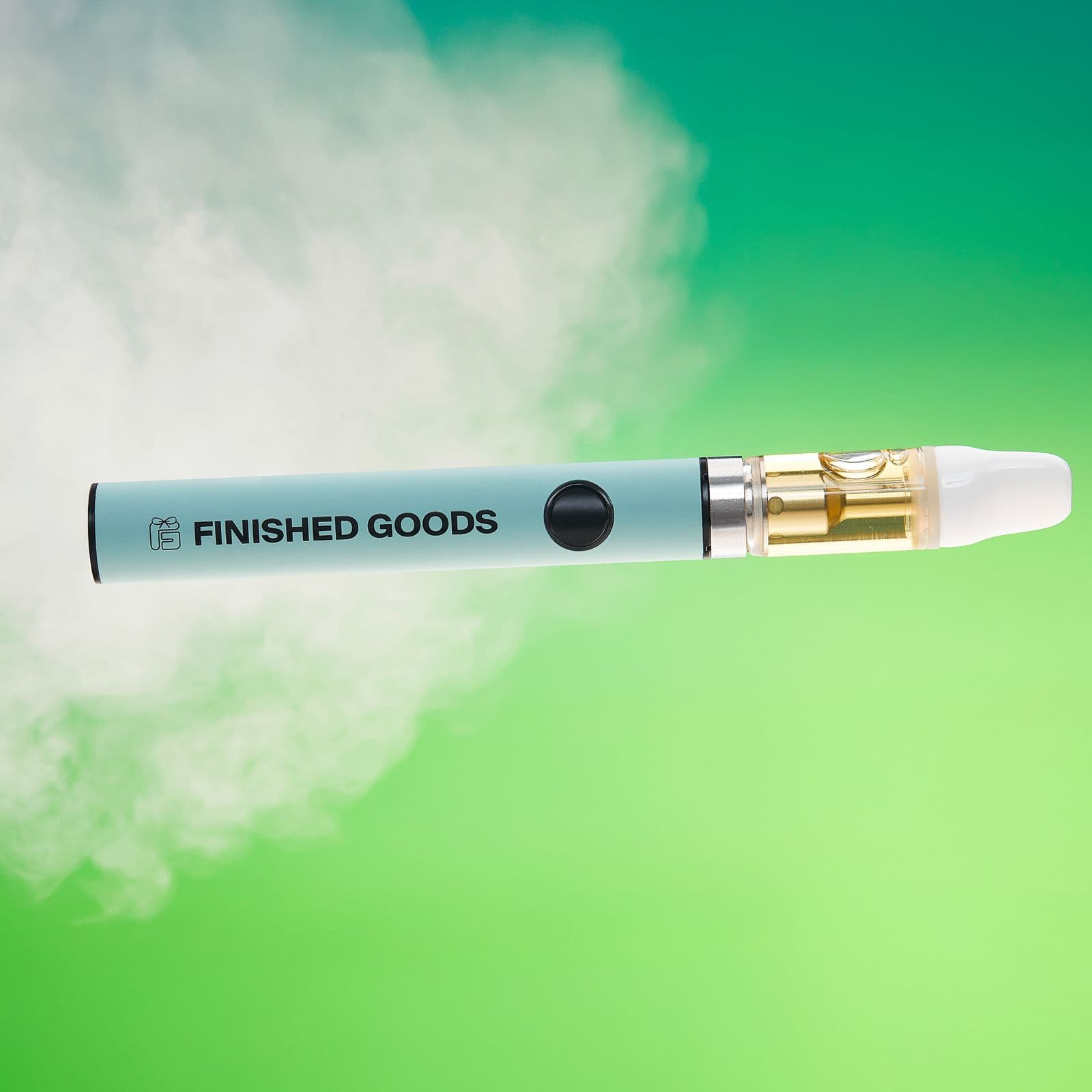
At Finished Goods, we developed five PrecisionFlow atomizer compounds. Each one is tuned to a specific viscosity range: distillate, live resin, rosin, blends, and specialty formulations.
This isn't a marketing distinction. It's a manufacturing one. The ceramic core in a distillate PrecisionFlow atomizer uses a different compound than the one built for live resin. Different ceramics interact differently with different oils, and we've selected each compound based on how specific oil types behave.
The result across 96+ million units shipped is a hardware failure rate under 0.02%. Not because of one breakthrough. Because every atomizer is matched to what it's actually going to hold.
It Starts at the Atomizer
Clogging is the most common complaint in cannabis vapes, and it's almost entirely preventable. Not with buttons, not with user instructions, not with storage tips. With hardware that's engineered for the oil.
If your carts clog, the first question isn't what the consumer did. It's what atomizer compound is in the cart, and whether it was ever matched to the oil in the first place.
Reliability is designed, not hoped for. That's the difference between hardware that works and hardware that works until it doesn't.