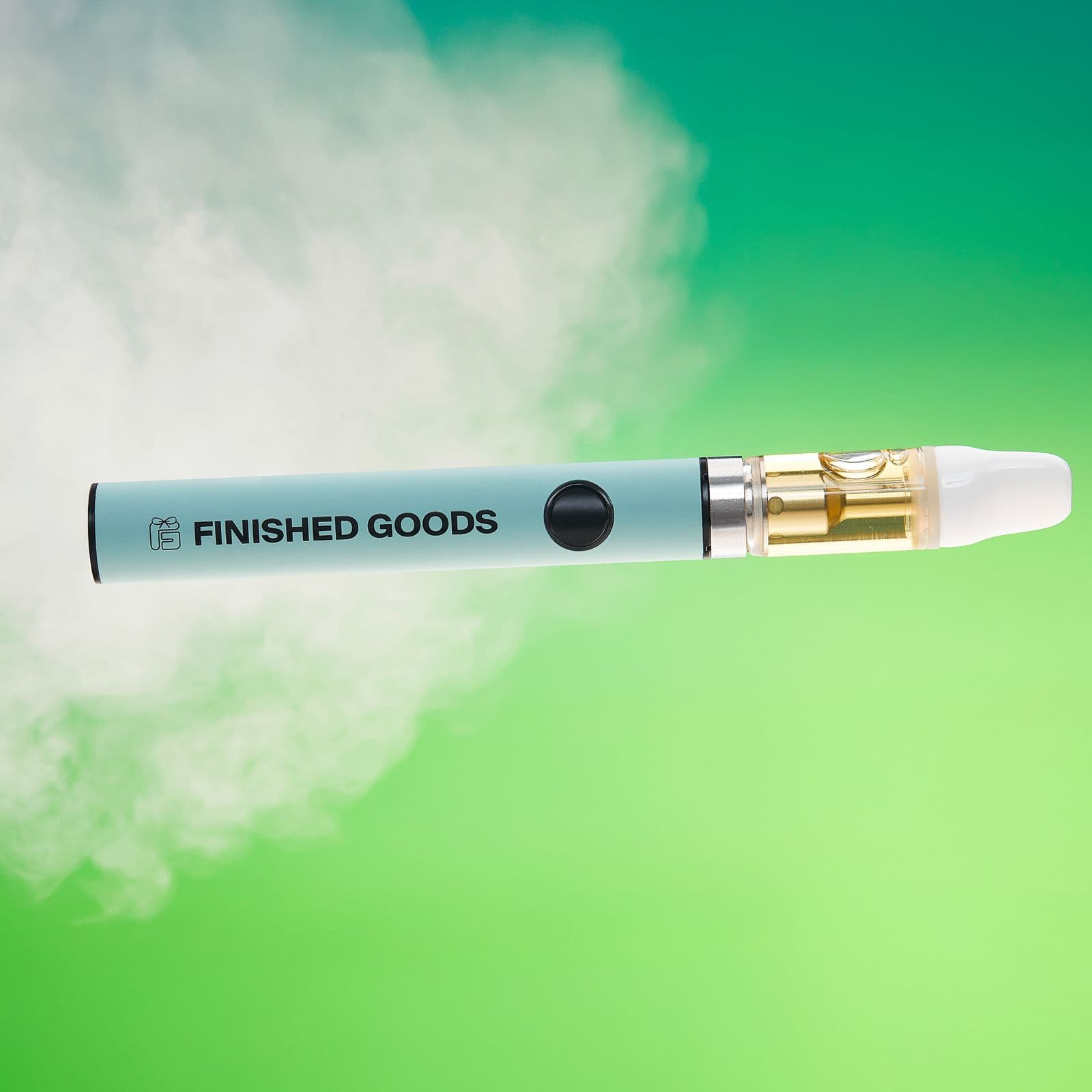
Airflow Is Not Your Clog Problem: Why a Vape Cartridge Clogged Has Nothing to Do With Draw Resistance
Airflow and clogging are two separate systems inside a cartridge. Confusing them leads to the wrong diagnosis. If your vape cartridge is clogged, the issue almost certainly started at the atomizer, not the air channel.
When a vape cartridge gets clogged, the first thing most people check is the airflow. Makes sense on the surface. The cart isn't hitting. Air isn't moving. Must be an airflow issue.
It's not.
Airflow and clogging are two separate systems inside a cartridge. Confusing them leads to the wrong diagnosis, the wrong fix, and the same problem showing up again three days later. If your vape cartridge is clogged, the issue almost certainly started at the atomizer, not the air channel.
What Airflow Actually Controls
Airflow in a vape cartridge determines draw resistance. That's it. Tighter airflow means a more restricted pull, which some users prefer for flavor concentration. More open airflow gives a looser, cloudier hit.
Draw resistance is a preference setting. It affects the user experience, not whether the cart functions. A cartridge with tight airflow and a properly matched atomizer will not clog. A cartridge with wide-open airflow and a mismatched atomizer will.
Finished Goods tunes airflow on every unit: tight, balanced, or open. This is an experience decision, made separately from atomizer selection. They're two independent engineering choices that serve different purposes.
On the Air and Air Mini AIO platforms, Finished Goods includes a user-controlled airflow switch. This feature was brought over from the nicotine vape category, where adjustable draw resistance has been standard for years. It's a user preference feature. Not a clog fix.
Where the Confusion Starts
Here's how the misdiagnosis usually plays out.
A consumer takes a draw and gets weak vapor or no vapor at all. The cart feels "blocked." They assume something is physically obstructing the airpath, so they fiddle with airflow settings, blow into the mouthpiece, or try to clear the channel with a paperclip.
Sometimes this temporarily works. Oil that condensed in the airpath gets pushed back, and the next hit feels normal. But the condensation came from somewhere. It didn't materialize inside the air channel on its own.
What actually happened: the atomizer's saturation rate didn't match the oil's viscosity. Oil either flooded the chamber and seeped into the airpath, or partially vaporized oil condensed in the channel because the heat profile was wrong. The air channel is the place where the symptom shows up. The atomizer is where the problem starts.
Adjusting airflow after a clog doesn't address what caused it. The clog started at the atomizer, not the air channel.
Why Brands Keep Getting This Wrong
Hardware vendors often frame clogging as an airflow engineering problem because it's an easier sell. "Better airflow design" sounds like innovation. It's something you can put on a spec sheet or in a pitch deck. And it's partially true in the sense that a well-designed air channel reduces the chance that condensed oil fully blocks the draw path.
But reducing the symptom is not solving the problem.
A cartridge with an optimized air channel and a mismatched atomizer will still produce condensation in the airpath. The user might not notice it as a "clog" right away, but they'll notice weak hits, inconsistent vapor, and a cart that doesn't perform the same from first hit to last. The oil is still misbehaving at the atomizer level. The air channel is just managing the mess more efficiently.
This is why some brands go through multiple airflow redesigns and still get clog complaints. They're iterating on the wrong component.
The Dual Airflow Channel Claim
Some competitors market dual airflow channels as a clog-prevention feature. Here's what that actually means.
In a dual-channel design, one airflow channel is connected to the atomizer and one is not. When the consumer draws, the second channel activates the heat sensor, which fires the atomizer, which warms the oil near the coil. If there's a partial clog, the warmed oil may soften enough to let vapor through.
This is not clog prevention. It's clog management. The second channel helps pop through an existing clog by warming the oil, but it doesn't prevent the clog from forming in the first place. The atomizer's saturation rate is still mismatched with the oil's viscosity. The clog will return.
A hardware feature that helps you recover from a failure is not the same as hardware that prevents the failure. Dual airflow channels address the symptom after it occurs. Atomizer matching prevents the cause before it starts.
The Real Cause: Atomizer Viscosity Mismatch
Clogging originates at the atomizer. The atomizer core absorbs oil from the reservoir and vaporizes it. When the core's saturation rate doesn't match the oil's viscosity, you get one of two failure modes.
Thick oil (heavy distillate, rosin) can't saturate the atomizer fast enough. The atomizer dries out, residue accumulates, and the vapor path gets restricted from the inside. The user experiences this as a clog.
Thin oil (high-terp live resin, some blends) overwhelms the atomizer and floods the chamber. Excess oil migrates into the airpath and condenses. The user experiences this as a clog too, sometimes with a gurgling sound.
Both outcomes present as "airflow problems" to the person holding the cart. Neither one is caused by airflow.
A properly matched atomizer, one where the ceramic compound is tuned to the oil's specific viscosity, prevents both failure modes at the source. The oil saturates the atomizer at the right rate. Vapor production is consistent. Nothing floods, nothing dries out, nothing migrates into the air channel.
What to Audit Instead of Airflow
If you're a brand dealing with clog reports, stop looking at airflow first. Start with these questions.
What atomizer compound is in the cart, and was it selected for your specific oil type? Most hardware vendors use a single compound across all formulations. If your distillate cart and your live resin cart use the same atomizer core, that's the starting point for your investigation.
Is your vendor treating airflow and atomizer selection as separate decisions? They should be. Airflow is about draw preference. Atomizer selection is about oil compatibility. If your vendor pitches "improved airflow" as the answer to clogging, ask them what they changed about the atomizer compound.
Are you seeing different clog patterns across different SKUs? If your distillate SKU clogs differently than your live resin SKU, that confirms the problem is viscosity-related, not airflow-related. Different oils behaving differently in the same hardware is the strongest signal that the atomizer isn't matched.
Has your vendor offered to test your specific oil in their hardware before you commit? A vendor confident in their atomizer match will do small-batch validation with your actual formulation. A vendor who skips this step is betting you won't notice the failure rate until after you've placed the order.
Airflow Matters, But Not for Clogs
Airflow design is a real engineering discipline. It matters for user experience, for how the cart feels in someone's hand, for whether the draw matches what the consumer expects from the brand. Finished Goods takes it seriously as a separate variable that gets tuned independently.
But it doesn't solve clogs. It never has. The cart that keeps clogging isn't clogging because of the air channel. It's clogging because the atomizer wasn't built for the oil.
Brands that understand this distinction stop chasing airflow redesigns and start asking the right question: what is the atomizer doing with this oil, and was it ever engineered to handle it?
That's where reliability starts. Not at the mouthpiece. At the core.